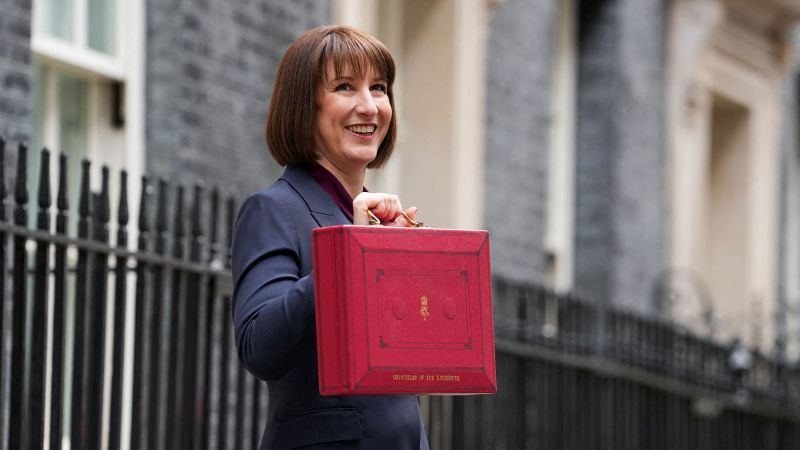
Britain targets the wealthy as it hikes taxes by $52 billion
CNN
The United Kingdom is raising taxes by an eye-watering £40 billion ($52 billion), as the government seeks to plug a hole in its finances by targeting higher earners, wealthy foreigners and businesses.
The United Kingdom is raising taxes by an eye-watering £40 billion ($52 billion), as the government seeks to plug a hole in its finances by targeting higher earners, wealthy foreigners and businesses. UK finance minister Rachel Reeves, the first woman to ever hold the position, unveiled the tax hikes Wednesday in the ruling Labour Party’s first budget since it won a landslide victory in a general election in July. The measures — which will increase annual government revenue by £41.5 billion ($54 billion) by the end of the decade — push the tax take to a record 38% of gross domestic product, according to the Office for Budget Responsibility, the UK government’s fiscal watchdog. “Today, I am restoring stability to our public finances and rebuilding our public services,” Reeves said, arguing that the now-opposition Conservative Party had “failed” Britain, including by inadequately budgeting for required government spending. “The British people have inherited their failure. A black hole in the public finances. Public services on their knees. A decade of low (economic) growth. And the worst parliament for living standards in modern history,” she added. Reeves described her budget as charting a “responsible” course while making tough but necessary trade-offs.


Trump is threatening to take “strong action” against Iran just after capturing the leader of Venezuela. His administration is criminally investigating the chair of the Federal Reserve and is taking a scorched-earth approach on affordability by threatening key profit drivers for banks and institutional investors.

Perhaps no data point better encapsulates the American economy right now than this nugget from Delta’s quarterly earnings:

China recorded the world’s biggest ever trade surplus in 2025, as well as a 20% jump from 2024, capping off a year in which the world’s largest manufacturer defied US trade pressure by ramping up exports to other global markets.

Saks Global, the parent company of luxury retailer Saks Fifth Avenue, filed for bankruptcy protection late Tuesday, according to court documents filed in US Bankruptcy Court in Houston, Texas.

China on Wednesday reported a strong export run in 2025 with a record surplus of nearly $1.2 trillion, as producers braced for three more years of a Trump administration set on slowing the production powerhouse by shifting US orders to other markets.

Microsoft says it will ask to pay higher electricity bills in areas where it’s building data centers, in an effort to prevent electricity prices for local residents from rising in those areas. The move is part of a broader plan to address rising prices and other concerns sparked by the tech industry’s massive buildout of artificial intelligence infrastructure across the United States.

US consumer prices rose 2.7% annually in December, closing out a year that saw slight progress on inflation but continued affordability concerns for many Americans.

The BBC is taking steps to have Donald Trump’s defamation lawsuit against it dismissed, a court document showed.

Amazon executives laid out their vision for Alexa’s future in an interview with CNN at the CES tech convention, where the company launched a new Alexa website and updates to other Amazon products.

After cutting interest rates three times in a row last year, the Federal Reserve indicated last month it probably won’t lower interest rates again for a while. A months-long pause, cemented by key economic data released Friday, may indeed be the best-case scenario for the world’s largest economy.

What is Corporate America so afraid of?

President Donald Trump wants to juice the economy with dramatically lower interest rates, to take credit for a booming stock market and, perhaps most of all, for his handpicked Fed chair to get off the stage.

Apple plans to use Google’s Gemini artificial intelligence model to power its updated version of Siri, which is set to launch later this year, the two companies announced Monday.