Breaking barriers: three films of persons with disabilities to be screened at IFFI Goa
The Hindu
Two years ago, Madhavi Latha Prathigudupu, president of YWTC (Yes, We Too Can!!!) Charitable Trust and a national para swimming champion, thought to herself why there was a dearth of opportunities for persons with disabilities in the mainstream media.
Two years ago, Madhavi Latha Prathigudupu, president of YWTC (Yes, We Too Can!!!) Charitable Trust and a national para swimming champion, thought to herself why there was a dearth of opportunities for persons with disabilities in the mainstream media.
This prompted her to organise a special course for disabled persons in collaboration with Film and Television Institute of India (FTII), Pune.
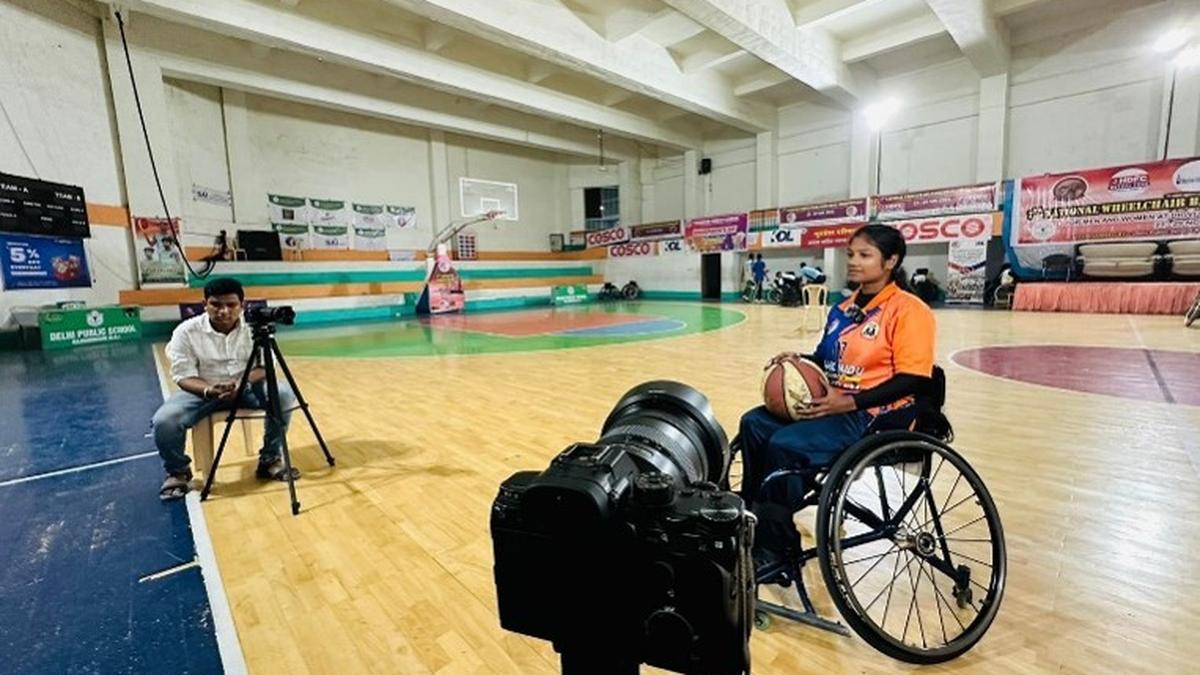
Cut to today, three films made by the trust — Stride, When Opportunity Knocks the Recruiter’s Door, and Beyond the Court: The Indian Wheelchair Basketball Journey — have been chosen for screening at the International Film Festival of India (IFFI) to be held at Goa as part of the Accessible India Accessible Films initiative. Persons with disabilities have donned various roles in the three films, including that of actors, cinematography assistants, voiceover artists, and screenplay writers.
“It is a huge recognition that the National Film Development Corporation of India has chosen to screen these films. It feels like a dream come true,” Ms. Prathigudupu says.
Persons with disabilities rarely get opportunities on or behind the screen in mainstream films; even a character with a disability is played by an able-bodied person, she notes. “If persons with disabilities appear in the mainstream films, it not only gives them an opportunity but also helps us normalise and accept them in different roles,” she adds.
Many are hesitant to cast persons with disabilities because they say they cannot invest time and money to train them. Moreover, the shooting locations may not be accessible to disabled persons. “This is why we organised the course and after that, we wanted to give them an opportunity to work in a film as well. Hence, with the support of Fiserv, we came out with three films,” she added.
These films have sign language interpretations and audio descriptions as well. She says it would help so many persons with disabilities if mainstream films use sign language interpretations and audio descriptions.


Amit Shah reviews Manipur's security, urging the CM to tackle drug cartels and aid displaced communities after ethnic violence.

Kerala's fisherfolk urge political parties to address livelihood concerns, demanding fair pricing, rule enforcement, and better support during elections.

Moderate rainfall in Visakhapatnam brings relief but causes traffic disruptions and power outages across the city.

Shubman Gill’s Gujarat Titans banks on its tried-and-tested formula

Agriculture Ministry reviews unseasonal rains' impact, assesses farm losses, and discusses relief measures for affected farmers.

Premium petrol prices rise by ₹2 per litre, but government claims no impact on the common man amidst global oil tensions.

Kum. Veerabhadrappa’s acclaimed novel Aramane has been adapted into a television serial. Kannada channel DD Chandana (Doordarshan) has launched the serial with the same name. National Award-winning filmmaker Mansore is the director behind the project,

Diya Chitale and Manav Thakkar reach semifinals, while Yashaswini Ghorpade upsets top seed Sreeja Akula at National TT Championships.

DYFI criticizes A.P.'s job calendar for failing unemployed youth, demanding a revision to include 1 lakh posts and higher age limits.

‘Lethargic’ officials who left Chambal sanctuary to the mercy of sand miners will be held liable: SC
Supreme Court holds negligent officials accountable for enabling illegal sand mining in Chambal Sanctuary, emphasizing habitat protection laws.

Work on the Srisailam Left Bank Canal tunnel resumes after 13 months, with completion targeted by 2027-end, says Minister Reddy.

Ancient ‘Vanni’ tree at Sri Meenakshi Sundareswarar Temple tilts; steps on to restore it

Bengaluru Metro penalises 14 passengers for disrupting services with loud singing, following a viral clip of their antics.