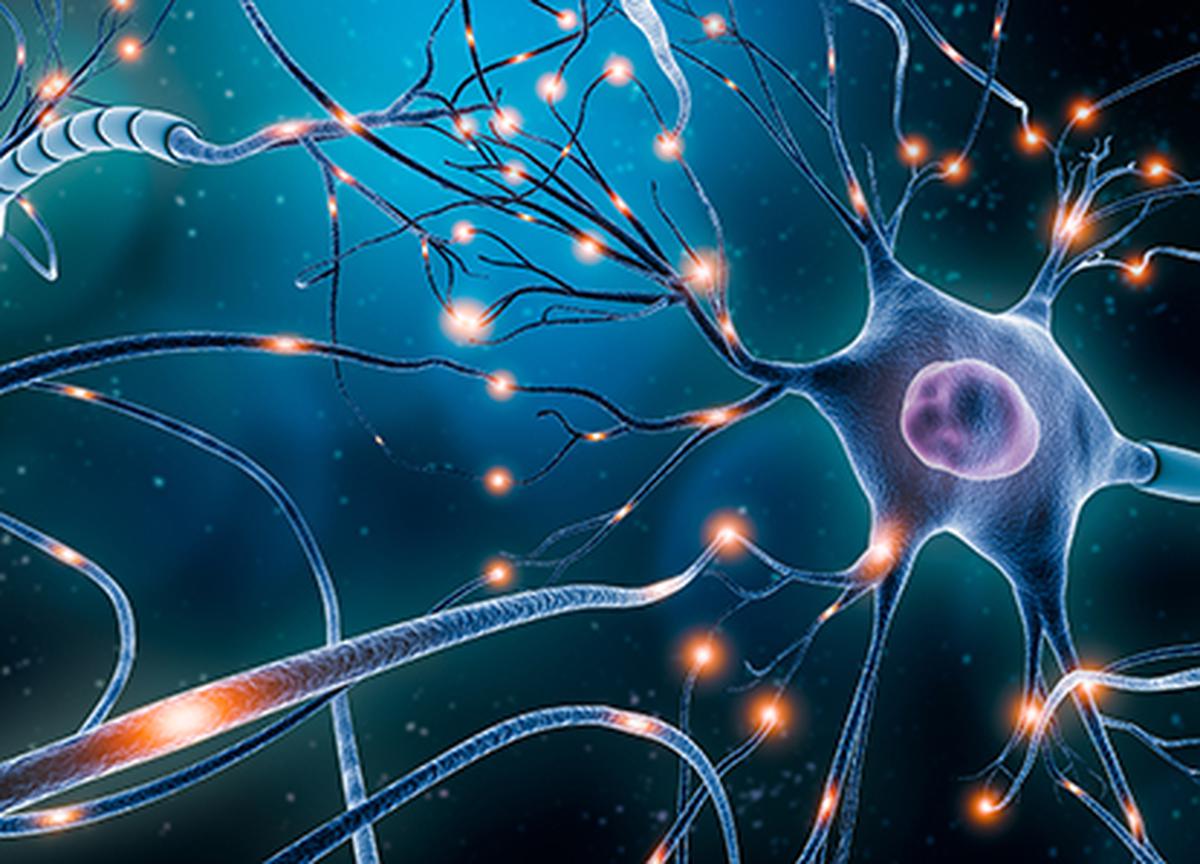
Brain cells in dish learn to play video game
The Hindu
These findings open the door to a new type of research into biological information processors, complementing normal digital computers.
Neuroscientists have shown that lab-grown brain cells can learn to play the classic video game Pong, and could be capable of "intelligent and sentient behavior."
Brett Kagan, who led a study published in the journal Neuron Wednesday, told AFP his findings open the door to a new type of research into biological information processors, complementing normal digital computers.
"What machines can't do is learn things very quickly -- if you need a machine learning algorithm to learn something, it requires thousands of data samples," he explained.
"But if you ask a human, or train a dog, a dog can learn a trick in two or three tries."
Kagan, chief scientific officer at Melbourne-based Cortical Labs, set out to answer whether there is a way to harness the inherent intelligence of neurons.
Kagan and colleagues took mice cells from embryonic brains, and derived human neurons from adult stem cells.
They then grew them on top of microelectrode arrays that could read their activity and stimulate them. The experiments involved a cluster of around 800,000 neurons, roughly the size of a bumblebee brain.


Mercedes-Benz CLA 250+ with EQ Technology review: design, performance, range and features explained. Discover how the new electric CLA combines advanced AI, long range, fast charging and futuristic styling for the next generation of luxury EVs.

AI tool for sparrow conservation

BTS’s comeback with ‘Arirang’ marks a major global music event. When does the album release, and where can you watch their concert live stream? We have all the details

The 2026 U.S. cholesterol guidelines urge starting screening and treatment at 30 to prevent cardiovascular disease effectively.

Olam Festival 2026 in Thiruvananthapuram returns March 27-29 with 120+ vendors, music, art, and cultural zones.

A few storytellers in Thiruvananthapuram share their journeys, challenges, and evolving methods on World Storytelling Day, inspiring young minds.

76-year-old Kurian Jacob from Kerala triumphs with seven medals, including five golds, at the Open Masters Games in Abu Dhabi.

Explore the nature of the human mind as an emergent property of brain activity and complex neural interactions.

CERN's Large Hadron Collider discovers the Xi-cc-plus particle, enhancing understanding of quantum mechanics and baryon behavior.

Vibha Batra’s latest book, Spotless (Hachette India) is a novel in verse for young adults

In its first edition, the Madras Art Salon spotlights the works of journalist and artist Narayan Lakshman at The Botanical Club, a social space in the British Deputy High Commission, Chennai

Cholesterol enhances melanoma cell invasion by making nuclei squishier, revealing a potential treatment target in cancer progression.

The designers reinterpret the Swedish artist’s symbolic forms and colour energy through contemporary resortwear silhouettes