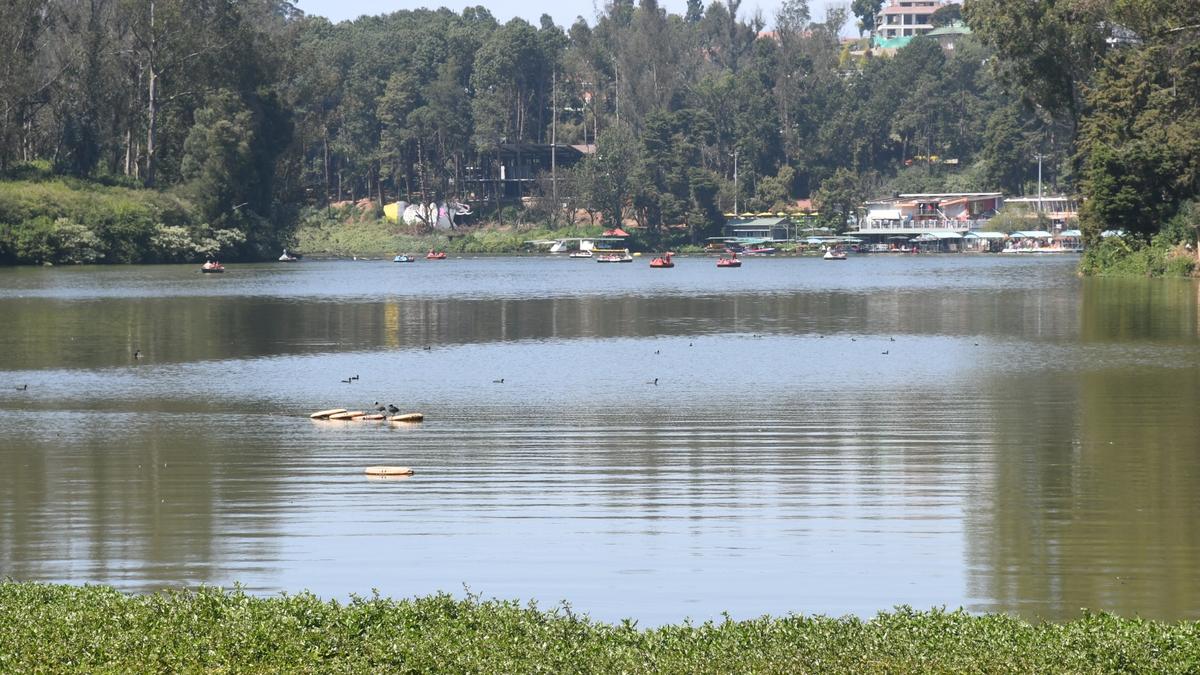
Bird population plummets at Ooty lake, conservationists blame government construction projects
The Hindu
The Ooty Lake's wetland bird population has drastically declined in 2024, raising concerns about its viability as a habitat.
The Ooty Lake has gone from hosting the highest number of wetland birds in the Upper Nilgiris in 2023, to witnessing plummeting numbers in 2024, causing concerns among conservationists about the lake’s continued viability as a key habit for wetland bird species in the district.
The fall in the bird population came to light during the recently-concluded wetland bird census conducted across the State.
According to sources in the Forest Department, only 13 wetland bird species were recorded in 2024, when compared with over 20 that were recorded last year. “The absolute numbers have also witnessed a huge fall, from 602 last year, to 440 birds in 2024,” the official said.
M. Rangasamy, a conservationist based in the Nilgiris, said that the number of Indian spot-billed ducks in the lake in 2023 was over 250 individuals. “However, that number has reduced drastically to less than 100 individuals now,” he said. He added that rare birds such as the Northern pintail, garganey and the Northern shoveler, which have been visiting the lake in recent years during winter, failed to do so in 2024.
N. Moinudheen, an independent researcher and conservationist who has been working on documenting the species diversity of the Ooty lake, said that massive construction projects by the Tamil Nadu Tourism Development Corporation (TTDC), which is building a zipline and rope bridge across the lake, have disturbed nesting and roosting sites of many species of birds that inhabit the Ooty lake.
“Another portion of the area surrounding the lake, which used to be controlled by the Forest Department who operated a deer park is also set to be handed over to the Tourism Department. This area, like many surrounding it, is a key nesting site for cormorants in the Nilgiris. Any protections these birds enjoyed are being systematically dismantled by construction projects that are being undertaken without any Environmental Impact Assessments,” said Mr. Rangasamy.
Keen birders said that among the birds that have declined, or have completely stopped visiting the area are species like the Woolly-necked stork and winter migrants such as the Kashmiri flycatcher.


Shorts News:Cambodia–Thailand ceasefire consolidated after China-led trilateral meeting

CM Stalin says 'Dravidian Model' govt. 2.0 will implement new schemes for women to drive socio-economic development in Tamil Nadu.

“Why should the Indian Hovernment settle penalties imposed by the Sri Lankan Government regarding violation of regulations by [our] fishermen?,” asked Minister of State for Fisheries, Animal Husbandry and Dairying S.P. Singh Baghel.

Deputy Commissioner H.V. Darshan emphasizes asset maintenance for project success and addresses garbage dumping issues in Mangaluru.

India's AI Impact Summit aims for G20-level participation, featuring global leaders and addressing key AI governance and accessibility issues.

Conflicting surveys reveal discrepancies in the number of families affected by the Kogilu demolition, complicating recovery efforts.

Underworld operatives 'Kali' Yogish and Yogish Acharya charged under KCOCA for murder and other criminal activities in Mangaluru.

Visual artist Taarika John's illustrated book explores Kerala's classical art forms, blending rich visuals with cultural insights.

Supreme Court grants temporary relief to Unnao rape survivor, restoring faith in the judiciary amid ongoing protests and legal battles.

Identity cards of delivery executives blocked by aggregator companies after they take part in strike
Delivery executives in Bengaluru face ID blocking by aggregator companies after participating in a nationwide strike for workers' rights.

Mangaluru International Airport conducted a mock bomb threat exercise to enhance security preparedness against potential threats.

The show marked the ninth day of performances at the ongoing Swaralaya Samanwayam dance and music festival

NABARD credited with building strong cooperative institutions