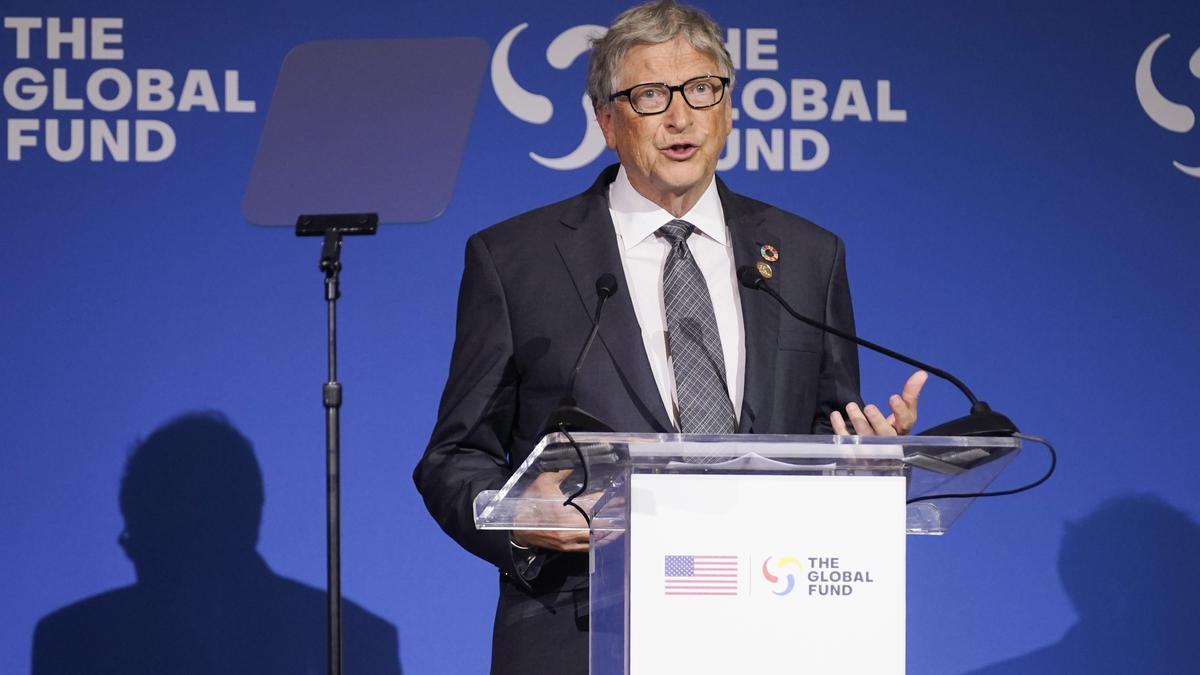
Bill Gates looks to reboot next phase of U.S. nuclear energy technology
The Hindu
Bill Gates is looking to West Virginia to reboot U.S. nuclear energy technology
Bill Gates is looking to West Virginia as he plans for the next phase of his effort to reboot U.S. nuclear energy technology: powering the east coast.
(For insights on emerging themes at the intersection of technology, business, and policy, subscribe to our tech newsletter Today’s Cache.)
Microsoft co-founder Gates, who visited a closed down coal-fired plant in Glasgow, West Virginia on Monday, said he needs to see how his Natrium nuclear reactor demonstration in Wyoming performs before making any announcements about new sites. The Kemmerer, Wyoming sodium-cooled nuclear reactor is taking over the site of a current coal-powered plant and was scheduled to be online by 2028, but is facing delays because its only source of fuel was uranium from Russia, now at war with Ukraine.
However, during a visit to the American Electric Power plant, which closed in 2015, Gates called the West Virginia’s Legislature’s decision last year to repeal the state’s ban on nuclear power facilities “quite impressive" and said he's looking for sites to expand his efforts to the east coast.
West Virginia’s new law has opened the door to discussions with American Electric Power during the last six months, said Gates, who founded TerraPower, the company behind the $4 billion project in Wyoming.
“Really, I think six months ago we really weren’t on their radar much at all, nuclear wasn’t, but the Legislature did say, ‘Okay, we’re open-minded to nuclear’ and that was quite impressive,” he said of the American Electric Power plant, known as AEP.
The Wyoming coal-fired power plant that is being converted for the sodium-cooled nuclear reactor is scheduled to close in 2025, when Gates said its 200 employees will stay on and transition to working with nuclear energy. The demonstration project comes as many U.S. states see nuclear emerging as an option to help transition energy production away from coal, oil and natural gas to reduce greenhouse gas emissions.


Core sector growth in India plummeted to 2.3% in February, amid declining domestic production and impending West Asia crisis impacts.

Stock markets rebound with Sensex rising 325 points, driven by IT and PSU bank stocks amid fuel price concerns.

The Indian rupee plummets 82 paise to a record low of 93.71 against the dollar due to rising crude prices and geopolitical tensions.

Power Minister highlights energy security and renewable transition during Bharat Electricity Summit 2026 amid global tensions.

The rupee hits a record low of 93.08 against the dollar, pressured by rising oil prices and FII outflows.

OpenAI said on Thursday it will buy Python toolmaker Astral, as the ChatGPT maker seeks to strengthen its portfolio against rival Anthropic to gain more share in the artificial intelligence coding tools market.

Crude oil prices drop over 2% as Netanyahu reassures investors amid ongoing Iran conflict and rising energy market concerns.

PPAC designated as nodal agency to enhance data collection on domestic fuel and energy stocks for improved mandate enforcement.

Indian markets plunged over 3% amid soaring crude prices, rupee depreciation, and escalating West Asia geopolitical tensions in March 2026.

Government launches ₹497 crore RELIEF scheme providing credit insurance to exporters affected by the West Asia crisis, focusing on MSMEs.

Crude oil futures rise amid Middle East attacks, pushing Brent above $116 on fears of tightening global supply.

West Asia conflict delays India’s FTA talks with GCC and Israel, while UK and EU agreements proceed as planned in 2024.

Russian Urals oil vessels will reach India on March 21 amid stable fuel prices and diversified LPG imports.