BHU’s Covaxin safety study riddled with major limitations Premium
The Hindu
Criticism of Banaras Hindu University's Covaxin safety study by ICMR due to poor design and limitations.
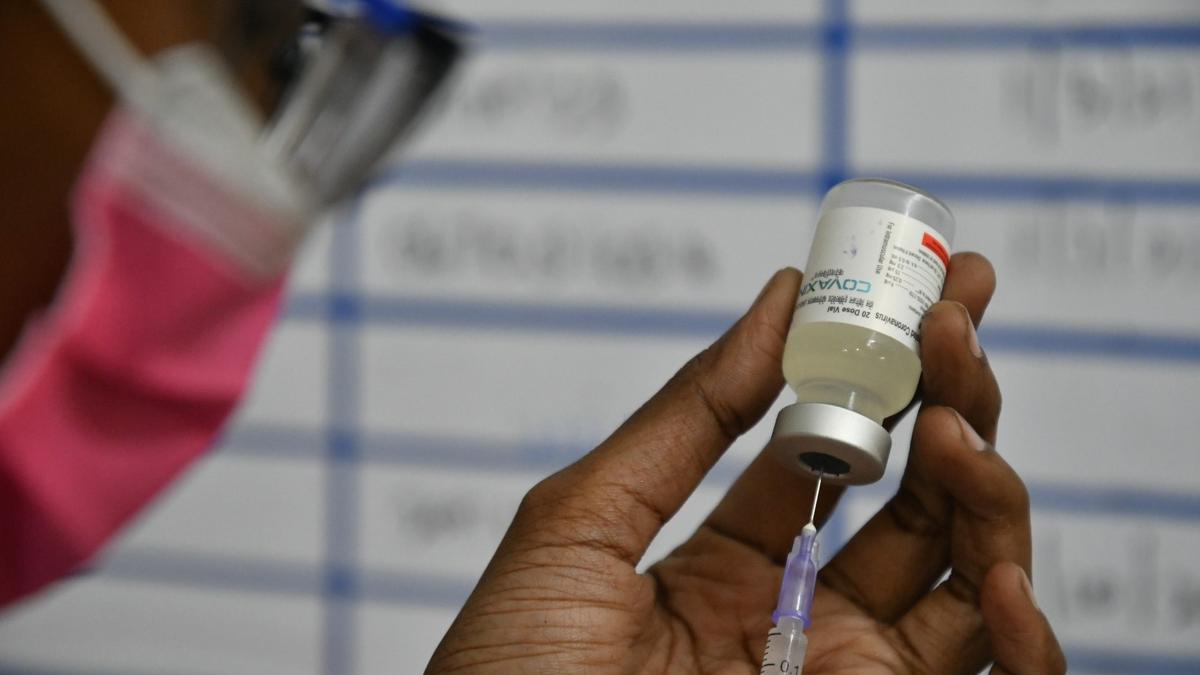
An observational study carried out by researchers from the Banaras Hindu University, Varanasi to assess the safety of Covaxin, particularly the long-term adverse events of special interest (AESIs) one year after vaccination, in adolescents and adults has been criticised by ICMR for the poor study design. However, till date, neither ICMR nor Bharat Biotech has published any Covaxin safety data after the drug regulator approved its roll-out in January 2021 in a “clinical trial mode” and wanted the vaccine recipients to be followed up for safety.
Though the researchers acknowledge all the limitations of the study, which is published in the journal Drug Safety, many of the limitations are so critical that they defeat the very purpose of the study. “Ideally, this paper should have been rejected at the peer-review stage. Simply mentioning the limitations, some of them critical to arrive at any useful conclusion, defeats the whole purpose of undertaking the study,” Dr. Vipin M. Vashishtha, director and pediatrician, Mangla Hospital and Research Center, Bijnor, says in an email to The Hindu. Dr. Gautam Menon, Dean (Research) & Professor, Departments of Physics and Biology, Ashoka University shares the same view. Given the limitations of the study one can “certainly say that the study can’t be used to draw the conclusions it does,” Dr. Menon says in an email.
If the most glaring limitation of the study is the lack of a control group, the absence of data on background rates of adverse events of special interest (AESI) that have been assessed in the vaccinated participants makes it difficult to even find an association between the adverse events and the vaccine. However, Dr. Kishor Patwardhan from BHU and co-author of the paper in a tweet justifies the absence of a control group by saying that “in a longitudinal observational study, a traditional control group might not be feasible or necessary. Instead, researchers use the variability within the cohort over time to draw comparisons and identify associations”.
“The lack of a control arm is a serious limitation of the study and negates any useful inference and interpretation of the study’s findings. Further, they didn’t try to show a real upsurge in the rates of these common ailments in the vaccinated population as the background rates are not mentioned,” says Dr. Vashishtha. “Most of the symptoms the authors describe as adverse effects of special interest are typically seen in a population as a result of COVID, Long COVID or incidental health problems. Refractive error, for instance, is common among adolescents but is listed here as a side effect of vaccination. Thus their conclusion that “nearly one-thirds of participants receiving the BBV152 vaccine reported adverse effects of special interest” is misleading, and most likely erroneous,” says Dr. Rajeev Jayadevan, co-chairman of the National IMA COVID task Force.
Dismissing Dr. Patwardhan’s argument that a control group may not be necessary in a longitudinal observational study, Dr. Menon says: “If the question, as here, is the possibility of adverse effects following vaccination, it is a question about causality. To answer these, it is important to remove as many confounders as possible, such as the possibility that some fraction of participants were infected by the virus prior to or after vaccination. If, in a normal non-COVID year, an equally substantial fraction of people were afflicted by upper respiratory tract infections, that would certainly be relevant to asking if the vaccine was [indeed] responsible for the AESIs picked up by this survey.”
Objecting to Dr. Patwardhan’s claim made in a tweet that the “goal [of the longitudinal study] is often to observe natural progressions and associations rather than to establish direct causal relationships with the use of a control group”, Dr. Menon points out that the paper clearly states that “serious adverse events may occur in 1% of BBV152 [Covaxin] recipients”, which is a statement of specific causality. The only robust way of linking the administration of the vaccine to a specific set of adverse effects is to have an appropriate control group, stresses Dr. Menon. Dr. Vashishtha too says that it is difficult to conclude natural progression without comparing it with the control arm.
The second most critical limitation of the study is the failure to test the participants for SARS-CoV-2 infection/COVID-19 disease and associating all the adverse events solely to vaccination. Since the study lasted from January 2022 to August 2023, the chances that the participants were truly uninfected and all adverse events seen were only due to vaccination are slim. “Serological studies in Uttar Pradesh [where the participants lived] after the Delta wave point to over 80% of the population having been infected. Some of the AESIs in question could have been a consequence of an initial SARS-CoV-2 infection and not the vaccination,” says Dr. Menon.


Discover the Minor Planet Centre, the key hub for tracking and verifying observations of small solar system bodies.

Discover the Minor Planet Centre, the key hub for tracking and verifying observations of small solar system bodies.

In this week's Science for All newsletter, XX explains

Test your knowledge with the quiz on Science films at the Oscars through history

Set between the Siwalik hills and the plains, Butwal offers travellers a mix of regional cuisine, pilgrimage trails to Lumbini and the comfort of Hyatt’s new hospitality landmark

Explore 2026's wallpaper trends in India, highlighting botanicals and handmade designs that enhance modern homes with nature-inspired aesthetics.

Mercedes-Benz CLA 250+ with EQ Technology review: design, performance, range and features explained. Discover how the new electric CLA combines advanced AI, long range, fast charging and futuristic styling for the next generation of luxury EVs.

AI tool for sparrow conservation

BTS’s comeback with ‘Arirang’ marks a major global music event. When does the album release, and where can you watch their concert live stream? We have all the details

The 2026 U.S. cholesterol guidelines urge starting screening and treatment at 30 to prevent cardiovascular disease effectively.

Olam Festival 2026 in Thiruvananthapuram returns March 27-29 with 120+ vendors, music, art, and cultural zones.

A few storytellers in Thiruvananthapuram share their journeys, challenges, and evolving methods on World Storytelling Day, inspiring young minds.

76-year-old Kurian Jacob from Kerala triumphs with seven medals, including five golds, at the Open Masters Games in Abu Dhabi.