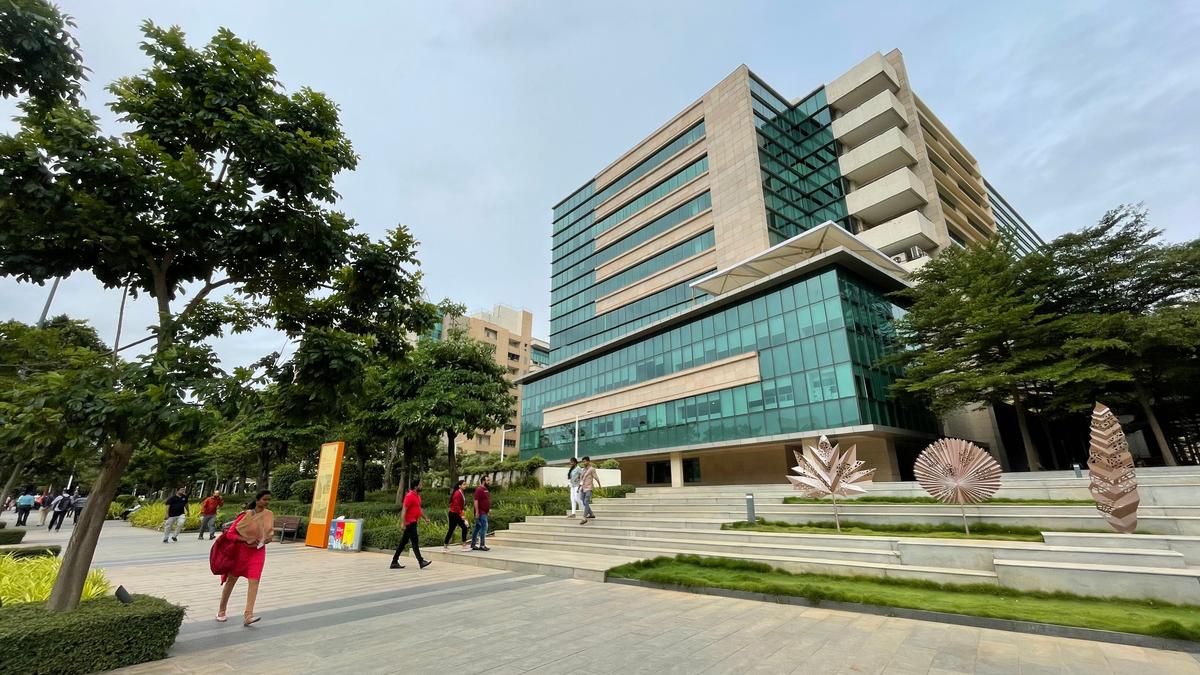
Bengaluru’s tech industry: A golden goose or a workhorse?
The Hindu
Bengaluru’s IT sector is lauded for propelling Karnataka’s economy for years now. But the recent proposal to increase the working hours of IT employees in the State to 14 hours a day, though put on the back burner now, has sent ripples across the labour force
Kiran (name changed), who worked as a coder in Bengaluru with a leading e-commerce firm, used to find the work hours gruelling and exhausting. Pushed to the brink during the pandemic, when six to seven hours of meetings were followed by coding through the evening into the night, they quit overnight. Kiran later found a job with a gig platform in Spain, which gave them the flexibility to work any four days a week. As someone who was forced to make themselves available at the beck and call of the previous employer, Kiran was positively surprised this time.
The IT, ITeS and BPO sectors have been lauded as Bengaluru’s golden goose, propelling Karnataka’s economy for years now. But the recent proposal to increase the working hours of IT employees in the State to 14 hours a day has sent ripples across the 20 lakh-strong labour force in the sector, many of whom are already overworked and burned out.
As they prepare for a massive protest on August 3 at Freedom Park against increasing the working hours, though the proposal has been put on the back burner for now, the techies say the proposal is only the tip of an iceberg of exploitative practices within the industry.
According to a Deloitte report (‘Karnataka: Powering India’s Growth’), which pegged the State’s nominal Gross State Domestic Product (GSDP) at ₹ 22.41 trillion in FY23, Karnataka boasts of the highest per capita GSDP, significantly higher than the national per capita GDP. The most important contributor to this undoubtedly has been the IT/ITeS-BPO sector.
As of 2022, around 1,500 IT firms have set up shop in Karnataka and exported software worth ₹ 6,30,000 crore, about 40% of India’s total exports.
In return, the companies enjoy reduced stamp duty, tax breaks, subsidised land, infrastructure support, exemption from several labour laws, and more.
While the ready availability of a skilled workforce played a major role in turning the State into the industry’s favourite destination, the charm of the sector was irresistible for the professionals, too. Thanks to the IT boom in the 1990s, many middle-class families saw an expansion in their income, made foreign trips for the first time and enjoyed a certain social status that came with the label of ‘a software professional.’


Telangana's Rythu Bandhu budget allocation for FY 2026-27 is expected to decline, affecting agricultural support for farmers.

In Surendranagar, Gujarat, where only a handful of families continue to practise tangaliya weaving, we visit artisanal communities working with brands like Jaypore to revive the intricate craft for contemporary wardrobes

Madras High Court allows police to arrest YouTuber 'Savukku' Shankar if needed, dismissing claims of solitary confinement.

Lula leads Brazil's largest-ever business delegation to India, aiming for trade deals and global governance reforms amidst geopolitical challenges.

AIADMK reveals its first candidate list for Tamil Nadu Assembly election, featuring familiar names and few surprises.

A study reveals antibiotic resistance causes 87% of India's typhoid economic burden, significantly impacting children and families.

How Dikshitar was inspired by Vaduvur Rama to come up with a composition in a raganga raga

Lok Sabha passes Finance Bill 2026 with amendments, completing its budgetary approval before Rajya Sabha's consideration.

Karnataka government to consult legal experts on pursuing action against Adani Group's ACC Ltd. over ₹850 crore in disputed dues.

The FCRA amendment bill aims to create an authority for managing NGO assets after license loss, addressing misuse of foreign funds.

Telangana Minister assures adequate petroleum stocks for three months, warns against illegal fuel carrying amid panic buying rumors.

TMC calls for the removal of Bhabanipur returning officer, citing alleged ties to BJP and concerns over neutrality.

Kerala CM Pinarayi Vijayan condemns UDF's misogynistic attacks on CPI(M) legislator U. Prathibha, highlighting political degeneration.