Bengaluru’s cultural landscape of limited spaces and growing pains
The Hindu
Bengaluru's cultural landscape faces challenges with inadequate, expensive performance spaces, prompting artists to seek alternatives.
A couple of months ago, VASP Theatre, an emerging troupe in Bengaluru, was in for a surprise when they landed at Kalagrama Auditorium in Malatahalli, managed by the Kannada and Culture Department. The auditorium had been double-booked with a dance group scheduled to perform on the same day. VASP had reserved the auditorium well in advance with a deposit. However, they had to eventually cancel the show and refund money to all those who had booked tickets. Worse, the wait to get the refund of the advance from the Department was several weeks.
This incident underscores a more significant issue plaguing Bengaluru’s cultural landscape — grossly inadequate performance spaces for a bourgeoning city. Even as the population and expanse grow, and with it a richer cultural scene and a growing interest among the youth in theatre, music, dance, and various art forms, there are too few affordable performance spaces.
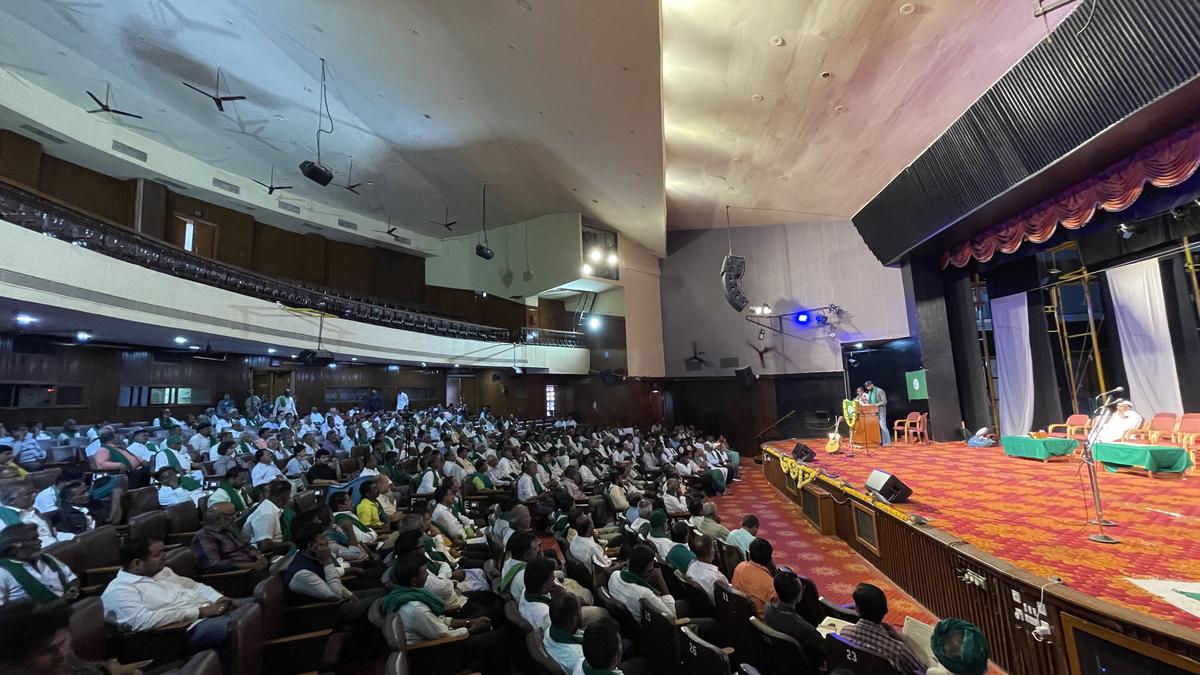
Amidst these challenges, Ravindra Kalakshetra, the nerve centre of cultural activities in Bengaluru, turned 60. Situated on J.C. Road in the heart of Bengaluru, it was built by the government way back in 1963. Since then, there has been no similar publicly-funded facility to match it in terms of seating capacity, connectivity, and affordability. Back then, Bengaluru’s population was 12,92,000, according to the United Nations - World Population Prospects. In 2023, it ballooned to 1,36,08,000, an increase of 953%.
A recent ₹24 crore proposal for the renovation of Ravindra Kalakshetra has now been put on hold following a protest by theatre activists and artists on the grounds that it does not focus on what the artistic community and audience really need. Sreenivas G. Kappanna, one of Bengaluru’s senior theatre artists, says that performance spaces must cater to their audience and artists rather than turning them into commercial spaces.
“Cinemas focus on comfort, such as air-conditioners, seating, and other amenities that a commercial space requires. But a performance space should focus on affordability and creating good technical support for artists,” he said. In fact, the effort to make it “plush” has backfired, he argues. “Ravindra Kalakshetra is one of the best auditoriums in south India; it used to have great wing space, very good acoustics, and one of the biggest stages. However, a couple of years ago the department decided to put in air-conditioners. The ducts ruined the acoustics of the entire space,” he adds
With the installation of the ACs also came a massive increase in rent, due to which many theatre, dance, and music troupes decided to perform without the AC. There has also been a fall in performances at the auditorium over the years, and it mainly hosts government events. “The government must stop investing in amenities that are not required by artists and should focus on increasing cultural activities in the space,” he argues. In 2015, the rent used to be anywhere between ₹1,000 and ₹3,000 per show, depending on the event per show. It is now between ₹7,850 and ₹9,420.
Currently, Bengaluru has close to 25 auditoriums, both government-run and private, that actively host cultural events. Prestige Srihari Khoday Centre for Performing Arts, on Kanakapura Road, is the most expensive space at ₹6.5 lakh per day..


A-G informs Madras High Court no govt. sanction needed for FIR in K.N. Nehru's cash-for-jobs scam case.

President of Karnataka Beary Sahitya Academy U. H. Umar on Wednesday appealed to Madhu Bangarappa, Minister for School Education and Literacy to introduce Beary as the third optional language from Class 6 from the academic year 2026-27.

Karnataka Dalit Sangharsha Samiti (DSS) has urged the State government to begin the process of filling up 56,432 posts only after rectifying the mistakes in fixing the roster and implementing the internal reservation among Scheduled Castes.

Rebel nominations in Karaikal expose tensions within electoral alliances, risking voter fragmentation ahead of the Puducherry Assembly elections.

CCPA prohibits restaurants and hotels from imposing unfair LPG charges, labeling them as unjustified and against consumer protection guidelines.

Andhra Pradesh receives ₹19.47 crore for 44 handloom clusters, benefiting over 10,000 weavers under the National Handloom Development Programme.

Stay updated with The Hindu’s on-ground Tamil Nadu Assembly election coverage and voter insights across key constituencies.

Mettur dam water level reaches 82.770 feet, with inflow at 361 cusecs and discharge at 801 cusecs.

Udhagamandalam faces challenges in tourism and tea sectors due to poor infrastructure, pollution, and urbanization ahead of summer season.

Social activists and journalists from Shivamogga, who placed the demand for a strict law to stop honour killings, have thanked the State government for tabling the Bill and getting it passed in both Houses of the legislature with the support of all other parties.

Erode (East) voters prioritize pollution control, traffic solutions, and urban infrastructure as key issues ahead of upcoming elections.

T. Jeevan Reddy resigns from Congress after 42 years, criticizing party leadership and the influence of defectors.

Kanniyakumari Collector inspects vulnerable and sensitive polling stations