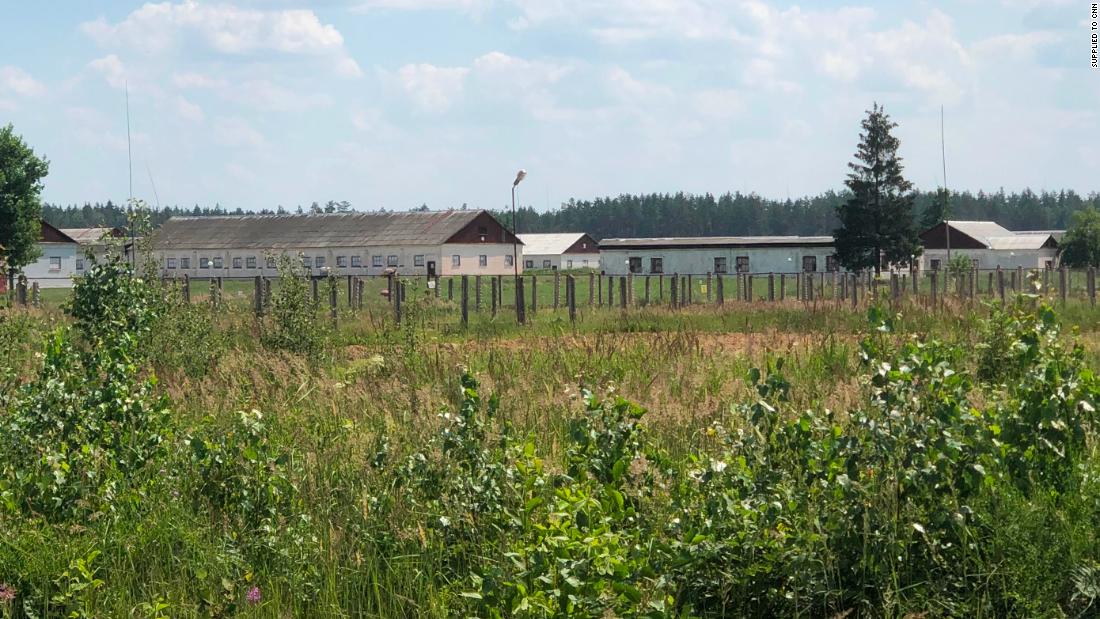
Belarusian dissidents fear the regime will put them into detention camps. It may have already built one
CNN
Three layers of electrified fence. New security cameras. A military guard and a sign saying "Entry forbidden." Windows with bars and reflective glass, on newly refurbished barrack buildings. All empty, bar the occasional security officer, deep in the forest of authoritarian Belarus.
These are the indications, according to videos seen by CNN and witness statements, of a possible prison camp for political dissidents, recently constructed around an hour's drive from the Belarusian capital Minsk, near the settlement of Novokolosovo. It sits on the site of a Soviet-era missile storage facility, which spans over 200 acres. It is unclear how much of the site has been refurbished. Belarus's opposition activists have voiced fears for some time that the authoritarian regime might resort to crude detention camps, if conventional prisons fill up. Concerns are also rising about another wave of crackdowns and arrests in response to demonstrations marking the August 9 anniversary of the disputed presidential election that sparked last year's protest movement. Further unrest may surround a constitutional referendum planned for later this year or early 2022.

A trader made nearly $1 million since 2024 from dozens of well-timed Polymarket bets that correctly predicted US and Israeli military actions against Iran, according to an analysis shared with CNN.

Travelers have been dealing with worsening airport wait times as ICE agents deploy to more than a dozen airports. Follow for live news updates.

President Donald Trump voted in Tuesday’s state House special election by mail even as he suggested on Monday that “mail-in voting means mail-in cheating.”

CNN’s 5 Things AM brings you the news you need to know every morning.

The Supreme Court on Tuesday will consider the legality of a policy championed by President Donald Trump during his first term that prevented scores of migrants arriving at the southern border from starting the process of applying for asylum.

A young, well-liked facilities manager at the Kennedy Center has gone from being described as “in charge of HVAC and toilets” to head of the renowned arts institution.

Democrats in Florida are hoping to capitalize on the party’s recent special election overperformances and come out on top Tuesday in a special state House election for a Palm Beach district that includes President Donald Trump’s Mar-a-Lago residence.

The Supreme Court on Monday appeared ready to limit mail-in ballots, a move that would reinforce the justices’ pattern of shrinking voter protections and that has, at bottom, favored Republican interests and the Trump administration.

An Air Canada plane traveling from Montreal collided with an emergency vehicle on the runway at New York City’s LaGuardia Airport in the late hours of Sunday night, killing two pilots and injuring dozens of people.

Top Senate Republicans on Capitol Hill believe their party is unified behind a plan to reopen the Department of Homeland Security. Now, they need to sell the plan to Democrats.

Markwayne Mullin will serve as Donald Trump’s next Department of Homeland Security secretary, elevating the US senator to helm the agency at the center of the president’s controversial immigration enforcement effort and an ongoing shutdown.

President Donald Trump’s sudden turnabout and, according to him, rapidly advancing peace talks made for an abrupt shift in the administration’s approach to the Iran war.

The Supreme Court’s conservative majority appeared dubious of state laws that allow the counting of mail ballots that arrive at election offices after Election Day as justices heard oral arguments in a challenge to Mississippi’s five-day grace period for mail ballots.