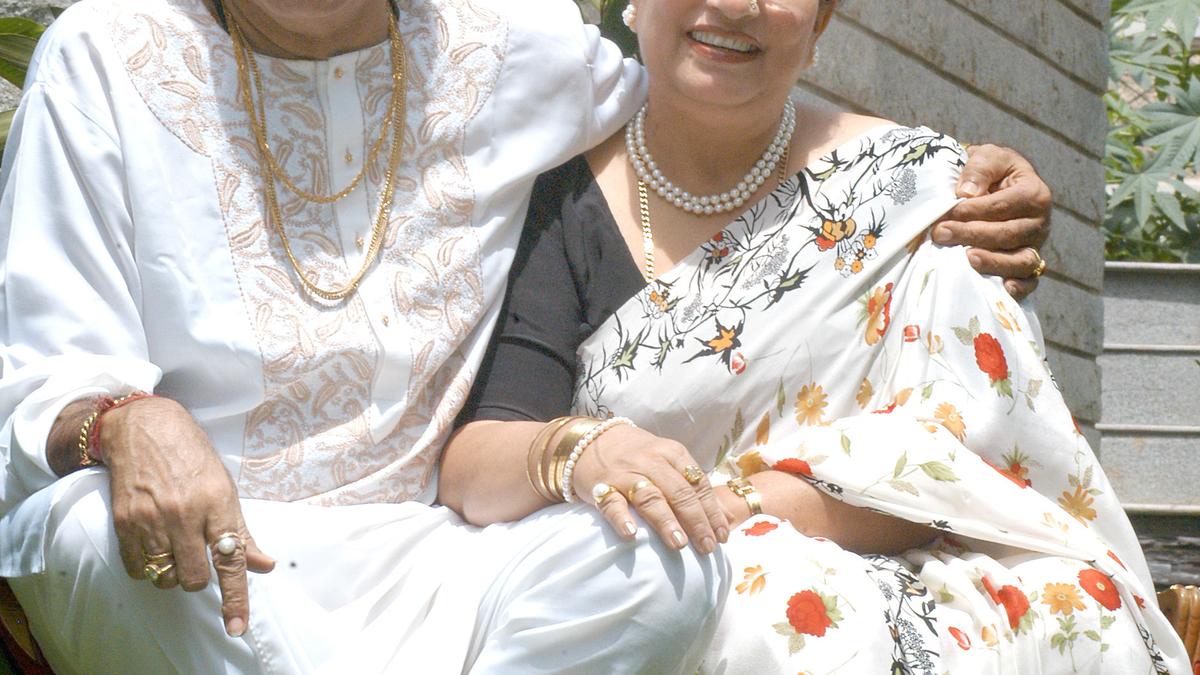
Begum Parween Sultana: the empress of octaves
The Hindu
Get set to be mesmerised by Padma Bhushan Begum Parween Sultana, who will perform in Bengaluru this weekend
What happens when you hear the very voice you revered and listened to most of your life? You choke and struggle to focus on what is to be asked. This was the mood with which the barely 10-minute telephonic interview with the legendary Padma Bhushan awardee Begum Parween Sultana went.
It was a rough 10-minutes because on one hand, you are struggling to not get swayed by the beautiful voice on the other end of the call, and second, your eyes keep a stern watch on the clock ticking by as you listen to her speak.
The singer will be in Bengaluru on March 15 as part of Bhoomija and Prestige Centre for Performing Art’s Holi Re! – A Spectacular Evening of Music and Dance. Known for her exquisite voice range that oscillates flawlessly from the lowest to the highest octave, she leaves you mesmerised with her rendition of ‘Bhavani Dayani’ on one hand or leaves you haunted with ‘Hamen Tumse Pyar Kitna’ from the Hindi film Kudrat. And who can forget her soulful serenade in, ‘Aaj Kaun Gali Gayo Shyam’, composed by Naushad for Pakeezah?
Parween, starts the interview with many blessings and praising The Hindu for being a “wonderful newspaper that has always supported me”. The singer, who trained under her father, Ikramul Majid, guru Chinmoy Lahiri and Ustaad Dilshad Khan, describes the them as “pillars of my life and music.”
“They are different individuals with their own identities and I took something from each of them and created my own identity. I learnt a lot from my father and my music life begins with my him. Without him, Ii wouldn’t be here. Lahiriji, was a great acharya, a music nayak. Unfortunately, he did not live long, but I was blessed to learn from him for five to six years. In fact, he was the one who suggested I continue my riyaz with Dilshadji and introduced me to him. The credit for what I am today goes to all three of them. They are the people who taught me the techniques and how to mobilise my voice,” says Parween.
She adds, “Even today Dilshad saab helps me. He has composed a beautiful Meera bhajan for me, which I will be presenting in Bengaluru for Holi Re. He is a highly qualified artiste and knows music and is himself a popular singer. Most of the time, I sing his compositions, and we have also sung together and have performed in Bengaluru over two dozen times.”
About her very first jugalbandi with her husband and guru Dilshad, Parween recalls: “That was ages ago in Pune at the Sawai Gandharva Music Festival. Pt Bheemsen Joshiji, who was like a brother to me, was the one who suggested that Dilshadji and I sing together. There were over a lakh people who came to listen to us, because, those days there were jugalbandis between two singers and brothers, but we were the first husband-wife duo to do a jugalbandi, which was a rarity then.”


TMMK hosts special Eid prayers in Chennai, emphasizing peace amid ongoing West Asia conflicts and supporting those in need.

Telangana CM Revanth Reddy to inaugurate oil palm factory and release ₹3,590 crore for farmers on March 22.

Maharashtra aims to lead India's orange economy, positioning esports as a viable career for youth, says CM Fadnavis.

Civic group urges BMTC to tackle air and noise pollution from buses in Bengaluru, calling for immediate corrective measures.

Air India mistakenly deployed an unapproved aircraft for Vancouver, prompting a seven-hour return to Delhi.

Explore how murals in Kochi transform streets into vibrant canvases reflecting community, politics, and art beyond the Biennale.

Mamata Banerjee alleges unofficial President's rule in West Bengal, claiming a plot to strip citizenship and divide the state.

Man arrested for allegedly molesting a Malayalam actor in Kochi after repeatedly sending unwanted messages on social media.

Delhi experiences a temperature drop to 13°C with returning fog, while air quality remains satisfactory at AQI 94.

PM Modi and President Murmu extend Eid-ul-Fitr greetings, promoting unity, harmony, and compassion for a progressive nation.

Security forces in Manipur seized 29 firearms and 50 IEDs during operations amid ongoing ethnic violence.

A data jam on March 28 by OpenCity will have participants studying how the Assembly constituencies in and around Chennai are faring on a set of parameters

Matheesha Pathirana will miss the start of IPL 2026, while Harshit Rana's participation remains uncertain for KKR.