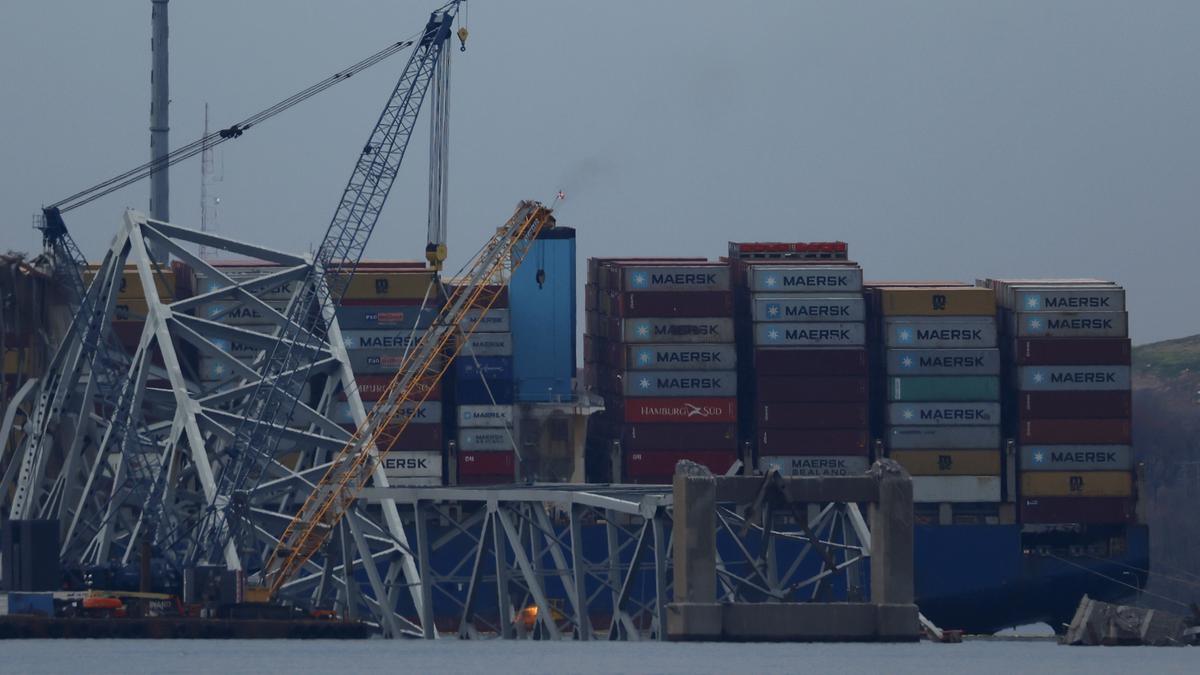
Baltimore bridge collapse | Crews carefully start removing first piece of twisted steel
The Hindu
Teams of engineers worked on the intricate process of cutting and lifting the first section of twisted steel from the collapsed Francis Scott Key Bridge in Baltimore
Teams of engineers worked on March 30 on the intricate process of cutting and lifting the first section of twisted steel from the collapsed Francis Scott Key Bridge, which crumpled into the Patapsco River this week after a massive cargo ship crashed into one of its supports.
Sparks could be seen flying from a section of bent and crumpled steel in the afternoon, and video released by officials in the evening showed demolition crews using a cutting torch to slice through the thick beams. The joint incident command said in a statement that the work was being done on the top of the north side of the collapsed structure.
Also read: Baltimore bridge crash | Embassy in close touch with Indians onboard ship in U.S., local authorities, says MEA
Crews were carefully measuring and cutting the steel from the broken bridge before attaching straps so it can be lifted onto a barge and floated away, Coast Guard Rear Adm. Shannon Gilreath said.
Seven floating cranes — including a massive one capable of lifting 1,000 tons — 10 tugboats, nine barges, eight salvage vessels and five Coast Guard boats were on site in the water southeast of Baltimore.
Each movement affects what happens next and ultimately how long it will take to remove all the debris and reopen the ship channel and the blocked Port of Baltimore, Maryland Gov. Wes Moore said.
"I cannot stress enough how important today and the first movement of this bridge and of the wreckage is. This is going to be a remarkably complicated process," Moore said.


Shorts News:WatchNetanyahu says Trump sees chance of striking deal with Iran

The facility in New Colony will benefit over 17,000 consumers, say officials

Water pipeline leak causes traffic congestion and waterlogging in Miyapur, Hyderabad, prompting detours and delays for commuters.

VCK exits the DMK-Congress alliance in Puducherry, deciding to contest alone due to dissatisfaction with seat allocation.

Bomb threat email prompts security response at Delhi Assembly ahead of budget presentation amid concerns over Khalistan references.

"Dhurandhar: The Revenge" exemplifies how films propagate a violent nationalism, reshaping Indian identity and undermining democratic values.

BJP’s junior ally in Assam, AGP, gets the same number of seats to contest as last time, but a granular analysis reveals slipping ground

Parliament Budget Session LIVE: Follow The Hindu for the latest updates on the Budget Session on March 24, 2026.

At Amar Khamar in Kolkata, a lunchroom rooted in Bengal’s landscape and literature works with women farmers, Sundarbans’ communities and beekeepers to revive rare rice, heirloom ingredients and disappearing food traditions

Delhi experiences a cooler morning at 16.6°C, with daytime temperatures expected to exceed 30°C and moderate air quality.

Know all about Assam's political landscape ahead of the 2026 Assembly Elections, analysing voting trends, turnout, and party dynamics.

Members of LGBTQIA+ communities held protests across Karnataka, categorically opposing the recently proposed Transgender Persons (Protection of Rights) Amendment Bill, 2026.

Congress criticises Modi government, citing reports about Pakistan's diplomatic role amid U.S.-Iran tensions, labelling it a setback for India.