Balancing faith, dignity and constitutional rights Premium
The Hindu
The principles that the Supreme Court lays down in hearing final arguments on review petitions will have a bearing not only on the Sabarimala dispute but also on a host of other controversies as well
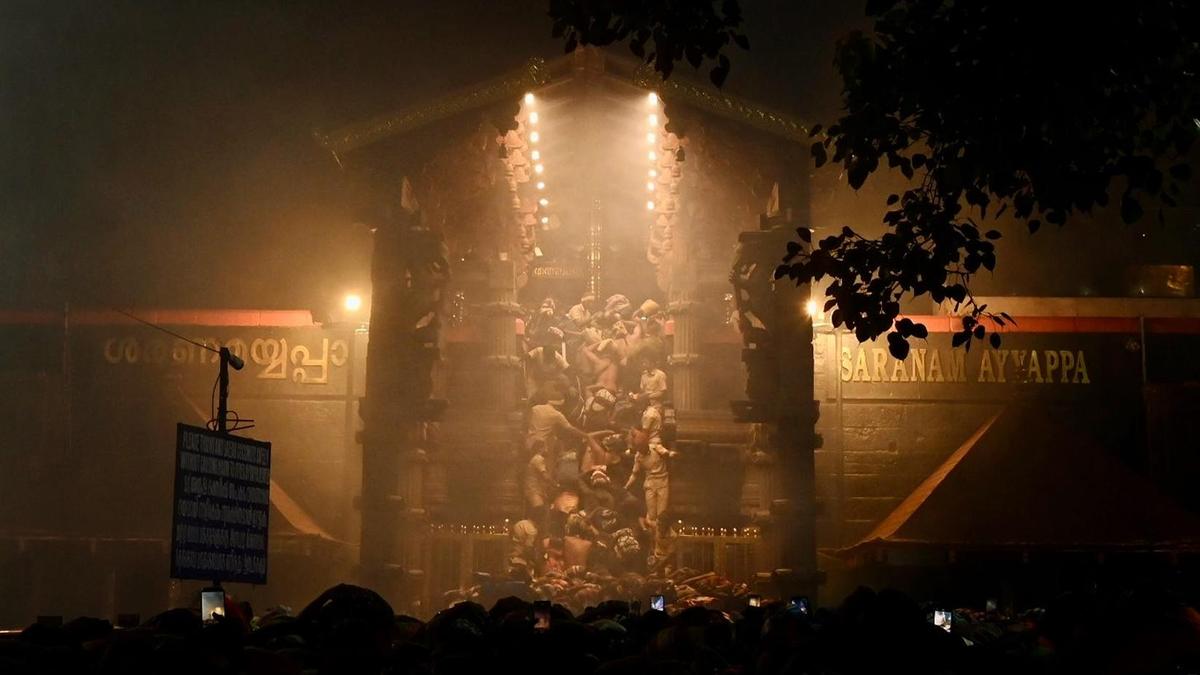
When a five-judge Bench of the Supreme Court of India delivered its verdict, in September 2018, in Indian Young Lawyers Association vs State of Kerala, opening the doors of Kerala’s Sabarimala temple to women of all ages, it provoked a range of reactions. There were protests across the country, especially in Kerala, where many believed that the Court had overlooked, and even disrespected, religious creed. Others saw the verdict as transformative, as outlining a vision that enlivened the Constitution. Now, close to a decade later, the Court will hear final arguments on review petitions that seek to overturn the earlier verdict and the law it laid down.
The original ruling was delivered through a 4:1 majority. There was an opinion from then Chief Justice of India (CJI) Dipak Misra, to which Justice A.M. Khanwilkar joined. There were separate, concurring opinions from Justices Rohinton Nariman and D.Y. Chandrachud and a notable dissent from Justice Indu Malhotra. But despite the cleavage in the rationales adopted, the majority’s findings were clear.
First, the Court ruled that the devotees of Lord Ayyappa did not constitute a separate religious denomination; second, that the bar enforced on women between the ages of 10 and 50 from entering the temple violated the rights of women to freedom of religion; and third, that Rule 3(b) of the Kerala Hindu Places of Public Worship (Authorisation of Entry) Rules, 1965, on which the ban was grounded, violated not only the Constitution but also Section 3 of its parent law, which promised free access to temples for all classes of Hindus.
In her dissenting opinion, Justice Malhotra found, among other things, that fundamental rights in a secular polity needed harmonising, that a generic doctrine of equality cannot override the collective rights of individuals to practise their faith in line with their customs and ideals. She also found that, as a matter of custom, women of a certain age had been excluded from the temple’s precincts, and this constituted a non-derogable “essential religious practice”.
The latter finding represented the central axis on which the case turned. The Constitution recognises both the freedom of religion as an individual right and the rights of religious denominations to manage their own affairs in matters of religion. Both rights are subject to public order, morality and health, and in the case of an individual’s right to freedom of religion also to other fundamental rights.
Balancing communitarian interests with individual conscience has long plagued our jurisprudence. Over the years, when it has been called to resolve tensions of this kind, the Court has used a test that has allowed it to virtually sit in theological judgment over religious practice. That is, it examines and arrives at a factual conclusion on whether a practice in question is essential to the religion or not. This has meant that the Court has effectively determined not only those areas where it might be constitutionally justifiable for the state to intervene but has also determined what kinds of practices are deserving of constitutional protection in the first place.


The Clamorous reed warbler is as loud as they come, but in the urban environment, it is outshouted. Weed clearing in urban habitats brings down its home, the bulrushes. Bulrushes in wetlands are not encroachments, but ‘legal homes’ to birds in the crake and rail family and warblers, so government line agencies ought to tread on them thoughtfully

Uttar Pradesh ATS arrests a dental student for alleged connections to an ISIS online module, probing extremist recruitment activities.

Rajinikanth refutes TVK leader's claims about DMK threats preventing his political entry, expressing gratitude to supportive political figures.

Tamil Nadu CM Stalin celebrates the Union government's approval for archaeological excavations, crediting DMK's persistent advocacy for the win.

Dilip Ghosh will contest Kharagpur Sadar in the 2026 West Bengal polls, aiming for increased BJP votes.

A hotel fire in Pahalgam leads to one death from a reversing fire tender; multiple LPG blasts hinder firefighting efforts.

The Clamorous reed warbler is as loud as they come, but in the urban environment, it is outshouted. Weed clearing in urban habitats brings down its home, the bulrushes. Bulrushes in wetlands are not encroachments, but ‘legal homes’ to birds in the crake and rail family and warblers, so government line agencies ought to tread on them thoughtfully

The people of at least one State will heave a sigh of relief now that the schedule for five Assembly elections — all in April — has been announced.

Four charred bodies discovered in a car near Tirunelveli; police investigate potential murder or suicide.

Five insurgents linked to PREPAK and KYKL arrested near India-Myanmar border; explosives and arms recovered in separate operation.

A.P. DGP pays tribute to Potti Sriramulu on his 125th birth anniversary, honouring his sacrifice for a separate Andhra Pradesh.

Discover the cultural and health significance of neem and jaggery during Ugadi, explained by author Ratna Rajaiah.

A minor fire at Thiruvananthapuram government hospital led to patient evacuations; no casualties reported, situation now under control.