Author Interview | Chedarina Paadamudralu: Tale of a historical exodus
The Hindu
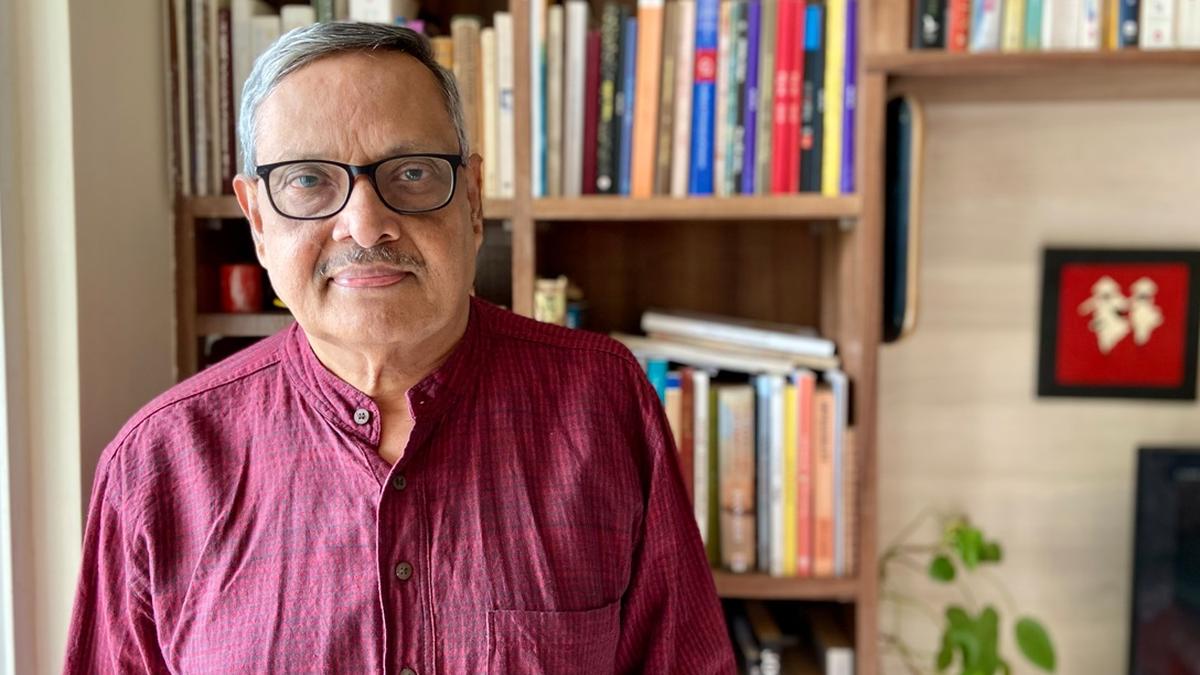
Sudhakar Unudurti's Telugu novel, Chedarina Paadamudralu, delves into the forgotten history of Telugu-speaking labourers who trekked back from Burma during the second World War.
Many might be surprised to learn, as author Sudhakar Unudurti was, about the sizeable Telugu-speaking population in Burma (now Myanmar). Over time, while they gradually assimilated into local culture and blended their language with Burmese, they managed to preserve certain cultural traditions and folk forms from their ancestors. Tidbits like this and many historical anecdotes are featured in his latest Telugu novel, Chedarina Paadamudralu (Faded Footsteps), which won a prize in the competition held by the American Telugu Association (ATA) this year.
Chedarina Paadamudralu (published by ATA) explores the often-overlooked plight of labourers who walked home to India from Burma during the Second World War. The narrative highlights the exodus of Telugu-speaking people, a subject that has not received significant attention from academic researchers or fiction writers. Through the novel, Sudhakar sheds light on this, contributing valuable insights and perspectives on the experiences of these labourers.
Visakhapatnam-based Sudhakar belongs to a family of freedom fighters and activists. His schooling in the Srikakulam district, where he witnessed an armed struggle by peasants and tribals in the 1960s, inculcated his interest in people’s movements. His career as a marine engineer in the Merchant Navy led to an abiding allure for maritime history. He began creative writing post-retirement and has carved a niche for himself as a writer of historical fiction in Telugu.
The writer has been acclaimed for his short story anthologies Toorupu Galulu (2018) and Chalicheemala Kavaatu (2021). He also co-authored Tathaagathuni Adugujaadalu (2019) on Buddhist sites. His novels Yarada Konda and Chedarina Paadamudralu won awards from the American Telugu Association (ATA) in 2020 and 2024. His short stories have been translated into English as an anthology titled East Wind (2023).
Excerpts from an Interview:
What inspired you to write this book and focus on the connection between Burma and the Telugu people?
I read Sheela Veerraju’s novel Maina during my school days. The story begins with the voyage of a ‘Coolie Ship’ returning from Burma amid a raging storm. Ever since, the plight of the labourers travelling to and from Burma caught my imagination, and I learned that the Srikakulam district, where I had spent most of my childhood, was a major source of the labour force that chose to work in Burma. My hometown, Visakhapatnam, has a locality called the Burma Camp. I often wondered about its origins and its residents. My years in the Merchant Navy led to a keen interest in South India’s maritime history. My area of special interest has been the impact of the colonial rule.


Artist Kapila Nahender explores notions of belonging, growth and memories in her show Pockets of Resistance

BTS's comeback concert in Seoul drew over 100,000 fans, featuring their new album "ARIRANG" and a global livestream.

Prasads Multiplex Hyderabad unveiled one of India’s largest HDR cinema auditoriums, the PCX HDR by Barco

From staged funerals to rented fatherhood, Brendan Fraser turns rented intimacy into something disarmingly real in Hikari’s poignant Tokyo fable

Meet Nivrritii Mahesh, a Bharatanatyam dancer who dances with Cochlear implants

In a surprising turn of events, Urvashi theatre, one of Bengaluru’s iconic single screens, has re-opened, with the much-talked-about Dhurandhar: The Revenge running to a full house in the theatre. After the expiry of the 45-year lease, it seemed like curtains would come down on the king-size theatre but for now, it’s good news for fans.

The thrilling ‘Peaky Blinders’ finale is a farewell tour tailored for Tommy Shelby, while passing the baton to a new generation

BTS's comeback concert in Seoul drew over 100,000 fans, featuring their new album "ARIRANG" and a global livestream.

Khalid Rahman is reuniting with Malayalam superstar Mammootty after Unda (2019). The Thallumaala director has teamed up with the veteran for Mattancherry Mafia.

Bollywood actor Akshay Kumar paid tribute to the martial arts grandmaster and Hollywood’s action star, Chuck Norris, who passed away on Thursday, March 19, 2026.

Renowned Odissi dancer Madhumita Raut, aged 59, dies of cardiac arrest, leaving behind a legacy of artistic achievements.

Chuck Norris, iconic martial arts master and actor, dies at 86, leaving behind a legendary legacy and internet memes.

South African naturalist Steve Boyes speaks on ghost elephants, ancestral tracking, and Werner Herzog’s documentary exploring Angola’s elusive highland giants