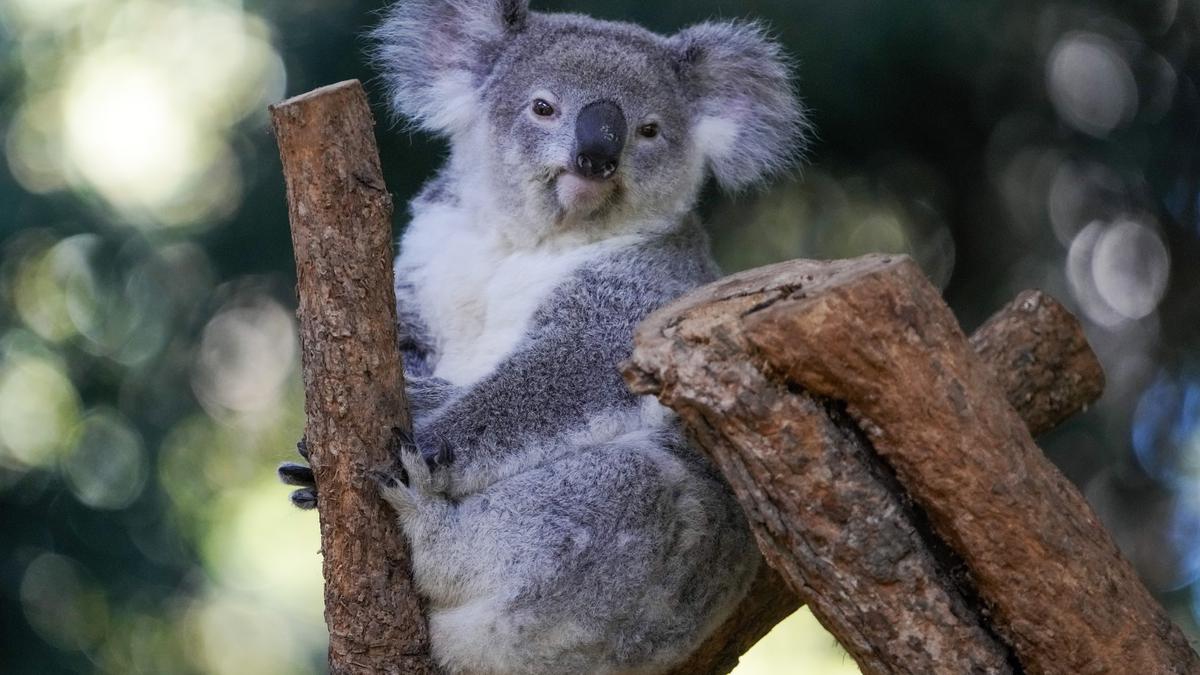
Australian State culls 700 starving koalas after bushfire, stoking controversy
The Hindu
Snipers in helicopters cull over 700 koalas in Budj Bim National Park, sparking concerns about animal welfare and management.
Snipers in helicopters have shot more than 700 koalas in the Budj Bim National Park in western Victoria in recent weeks. It’s believed to be the first time koalas have been culled in this way.
The cull became public on Good Friday after local wildlife carers were reportedly tipped off.
A fire burned about 20% of the park in mid-March. The government said the cull was urgent because koalas had been left starving or burned.
Wildlife groups have expressed serious concern about how individual koalas had been chosen for culling, because the animals are assessed from a distance. It’s not clear how shooting from a helicopter complies with the state government’s own animal welfare and response plans for wildlife in disasters.
The Victorian government must explain why it is undertaking aerial culling and why it did so without announcing it publicly. The incident points to ongoing failures in managing these iconic marsupials, which are already threatened in other states.
Koalas live in eucalypt forests in Australia’s eastern and southern states. The species faces a double threat from habitat destruction and bushfire risk. They are considered endangered in New South Wales, Queensland and the Australian Capital Territory.
In Victoria, koala population levels are currently secure. But they are densely concentrated, often in fragments of bush known as “habitat islands” in the state’s southwest. Budj Bim National Park is one of these islands.


AI tool for sparrow conservation

BTS’s comeback with ‘Arirang’ marks a major global music event. When does the album release, and where can you watch their concert live stream? We have all the details

The 2026 U.S. cholesterol guidelines urge starting screening and treatment at 30 to prevent cardiovascular disease effectively.

Olam Festival 2026 in Thiruvananthapuram returns March 27-29 with 120+ vendors, music, art, and cultural zones.

A few storytellers in Thiruvananthapuram share their journeys, challenges, and evolving methods on World Storytelling Day, inspiring young minds.

76-year-old Kurian Jacob from Kerala triumphs with seven medals, including five golds, at the Open Masters Games in Abu Dhabi.

Explore the nature of the human mind as an emergent property of brain activity and complex neural interactions.

CERN's Large Hadron Collider discovers the Xi-cc-plus particle, enhancing understanding of quantum mechanics and baryon behavior.

Vibha Batra’s latest book, Spotless (Hachette India) is a novel in verse for young adults

In its first edition, the Madras Art Salon spotlights the works of journalist and artist Narayan Lakshman at The Botanical Club, a social space in the British Deputy High Commission, Chennai

Cholesterol enhances melanoma cell invasion by making nuclei squishier, revealing a potential treatment target in cancer progression.

The designers reinterpret the Swedish artist’s symbolic forms and colour energy through contemporary resortwear silhouettes

Discover the inspiring legacy of Bibha Chowdhuri, a pioneering woman in physics and a trailblazer in STEM history.