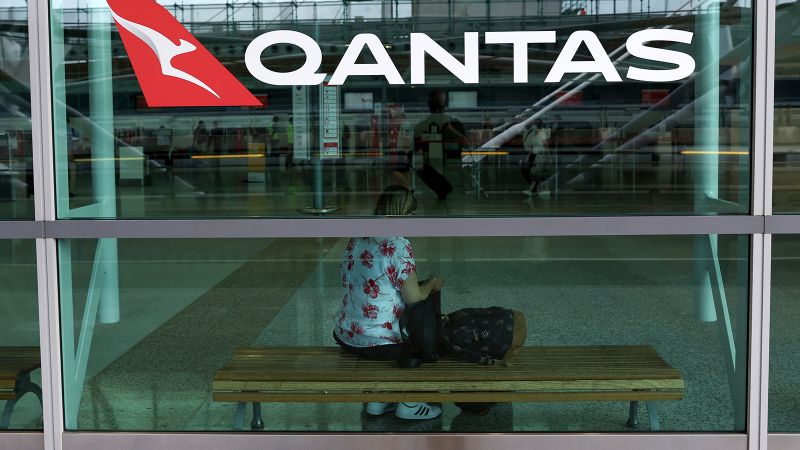
Australia’s Qantas to pay $79 million to settle ‘ghost flights’ case
CNN
Sydney — Qantas Airways has agreed to pay 120 million Australian dollars ($79 million) to settle a lawsuit over the sale of thousands of tickets on already canceled flights, in an attempt to end a reputational crisis that has engulfed the airline.
Sydney — Qantas Airways has agreed to pay 120 million Australian dollars ($79 million) to settle a lawsuit over the sale of thousands of tickets on already canceled flights, in an attempt to end a reputational crisis that has engulfed the airline. The company will split 20 million Australian dollars between more than 86,000 customers who booked tickets on the so-called “ghost flights” and pay a fine of 100 million instead of defending the lawsuit it had previously vowed to fight, Qantas and the Australian Competition and Consumer Commission (ACCC) said on Monday. The fine is the biggest ever for an Australian airline and among the largest globally in the sector, although some Australian banks and casino operators have faced higher penalties. “We recognize Qantas let down customers and fell short of our own standards,” CEO Vanessa Hudson said in a statement. The settlement “means we can compensate affected customers much sooner than if the case had continued in the Federal Court,” added Hudson, noting the court still must sign off on the settlement. If the court approves, the settlement will resolve a dispute that featured prominently at a time when Qantas’s brand value tanked in consumer surveys amid a spike in complaints about cancellations.


Oil prices rose Monday after the United States and Iran threatened fresh attacks on energy facilities in the Middle East, including power plants, signaling that the conflict may yet escalate.

The war in Iran is pushing up prices for already-strained farmers, with higher costs for fertilizer and energy on top of last year’s tariffs. And the increasing pressure on American agriculture could lead to even bigger price tags at the grocery store.

If you only watched Fox News over the weekend, you didn’t hear about President Donald Trump’s widely condemned reaction to Robert Mueller’s death.

Oil prices rose Sunday after President Donald Trump threatened to “obliterate” Iran’s power plants if the Strait of Hormuz is not reopened by Monday evening.

Defense Secretary Pete Hegseth has been taking steps to thwart news coverage of the Pentagon for more than a year. Now he has finally met some resistance.

Defense Secretary Pete Hegseth has been taking steps to thwart news coverage of the Pentagon for more than a year. Now he has finally met some resistance.

Gerald Rodriguez, the general manager of an NPR affiliate in rural Colorado, expected federal funding for public media to shrink. He didn’t expect it to disappear almost overnight.

The much-touted new tax breaks for tips, overtime, seniors and car loan interest have a lot of income tax filers expecting a big bump in their refunds this year – or a big cut in their tax bill.

Looking out his shop window, across the street, just to the right, Paloma Clothing co-owner Mike Roach sees one of Portland, Oregon’s, most expensive gas stations.

Oil and liquefied natural gas tankers moving through the Strait of Hormuz carry around 20% of the world’s supply. But for countries on the Persian Gulf, the waterway is more than just an energy route – it’s a lifeline for more than 100 million people.

A California jury has largely sided with Twitter shareholders who accused billionaire Elon Musk of defrauding them by intentionally driving down the social media company’s stock ahead of his $44 billion acquisition in 2022.

The war with Iran is disrupting global oil flows, damaging energy infrastructure and raising fears of prolonged conflict. But gold, usually considered a safe haven during periods of economic uncertainty, has slumped.

US stocks and bonds fell, oil prices rose and gold had its worst week in four decades as the Iran war continues to ripple through financial markets.