Atal tunnel builder Afcon Infrastructure to raise ₹5,430 crore via IPO on October 25
The Hindu
Afcon Infrastructure Ltd. to open bids for ₹5,430 crore IPO on October 25, with price band of ₹440-₹463.
Afcon Infrastructure Ltd., the company that built the Chenab rail bridge and the Atal tunnel, is set to open bids for an initial public offering of ₹5,430 crore on October 25, according to the company’s red herring prospectus. The bids will close on October 29.
The IPO will consist of a fresh issue of ₹1,250 crore and an offer for sale of ₹4,180 crore. The price band has been fixed at ₹440 to ₹463 a piece. The company plans to use ₹600 crore for repaying debt, ₹320 crore for funding long-term working capital requirements and ₹80 crore for buying construction equipment.
Afcon infrastructure is jointly owned by Goswami Infratech Ltd and Shapoorji Pallonji and Company Private Ltd. As of quarter ended June 2024, the company had 70% of order book coming from government projects in India and another 21% coming from government projects in other countries. About half of Afcon’s projects constitute urban infrastructure. The largest onging project in the company’s order book is the construction of 20 Km of tunnel for connecting Mumbai underground station with Shil phata at Thane. This includes a 7 Km long underground rail sea tunnel.
Key risks to the company include non-receipt of payment, lack of new projects and interest rate risks among other general risks. According to the RHP, Afcon had a floating rate borrowing of about ₹900 crore as of quarter ended June 30 2024.
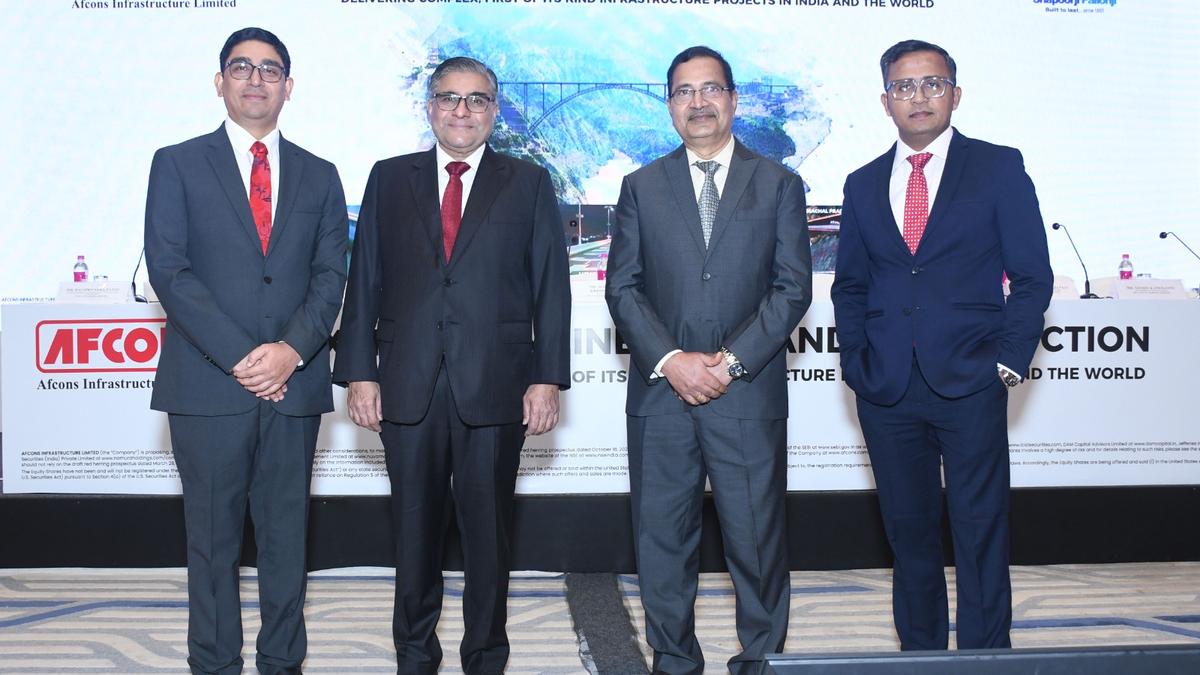
“We are going to use the proceeds for repayment of debt and the companies debt is significantly going to come down and that will strengthen the company’s balance sheet”, said Ramesh Kumar Jha, the Chief Financial Officer of Afcon at the media briefing. The comment assumes significance as the RBI Governor Shaktikanta Das in a recent event had said that cutting rates in the short term would be a “danger”.


The Indian rupee plummets 82 paise to a record low of 93.71 against the dollar due to rising crude prices and geopolitical tensions.

Power Minister highlights energy security and renewable transition during Bharat Electricity Summit 2026 amid global tensions.

The rupee hits a record low of 93.08 against the dollar, pressured by rising oil prices and FII outflows.

OpenAI said on Thursday it will buy Python toolmaker Astral, as the ChatGPT maker seeks to strengthen its portfolio against rival Anthropic to gain more share in the artificial intelligence coding tools market.

Crude oil prices drop over 2% as Netanyahu reassures investors amid ongoing Iran conflict and rising energy market concerns.

PPAC designated as nodal agency to enhance data collection on domestic fuel and energy stocks for improved mandate enforcement.

Indian markets plunged over 3% amid soaring crude prices, rupee depreciation, and escalating West Asia geopolitical tensions in March 2026.

Government launches ₹497 crore RELIEF scheme providing credit insurance to exporters affected by the West Asia crisis, focusing on MSMEs.

Crude oil futures rise amid Middle East attacks, pushing Brent above $116 on fears of tightening global supply.

West Asia conflict delays India’s FTA talks with GCC and Israel, while UK and EU agreements proceed as planned in 2024.

Russian Urals oil vessels will reach India on March 21 amid stable fuel prices and diversified LPG imports.

Warner Bros. dominated the Academy Awards, but Paramount’s looming acquisition of the studio signals the biggest restructuring of the industry in decades and a battle over the future of Hollywood itself

HDFC Bank board calls Atanu Chakraborty’s resignation baffling, affirms robust corporate governance and strong market confidence.