Asteroid YR4 might miss the earth. Will it miss the moon, too? Premium
The Hindu
Discover the potential impact of asteroid 2024 YR4 on Earth and the moon in 2032.
Picture a space rock smashing into the moon. It sends splinters of moon rock flying into the dark void of space. What would that spectacle look like?
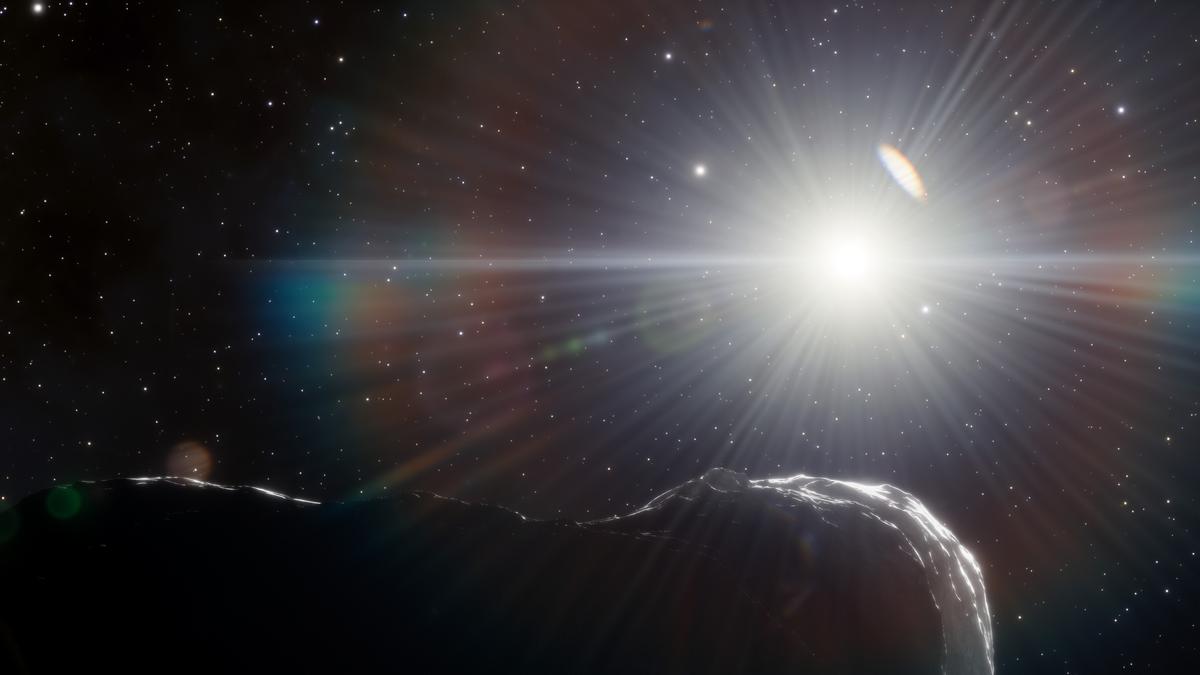
Scientists used the ATLAS telescope in Rio Hurtado, Chile, to discover asteroid 2024 YR4 in December 2024 as a new entrant in the asteroid databases — and it made a splash. Since its discovery, it has kept planetary defense scientists on their toes because of the possibility that it could collide with the earth someday.
YR4 is a near-earth asteroid, an object orbiting the sun whose closest approach to the star is within 1.3-times the earth-sun distance. Such asteroids are classified as potentially hazardous objects if their orbits cross the earth’s and they are more than 140 m wide.
Astronomers first estimated asteroid YR4’s size using wide-field ground-based telescopes operating in the visible range. Infrared observations from the James Webb Space Telescope have since revealed a clearer picture of the asteroid’s size. YR4 is now estimated to be 65 m wide, about the size of a 10-storey building. To compare, the space rock that wiped out the dinosaurs 66 million years ago was 10 km wide.
Even though YR4 didn’t meet the 140-m threshold, its non-small size plus its trajectory were enough for NASA to sound the highest-ever (in its history) asteroid impact alert in mid-February. The agency had announced then that YR4 had a 3.1% chance of hitting the earth in 2032. In a subsequent update, with more data and closer analysis, NASA rolled that update back saying its chance of hitting the earth was actually negligible and that it might strike another body instead.
On April 2, NASA announced that there was a 3.8% chance YR4 could collide with the moon on December 22, 2032, about seven and half years away. But there’s still a 96.2% chance it will miss.
The observatories built by astronomers are constantly on the lookout for new asteroids in the sky and also keep an eye on known potentially hazardous ones. Scientists use observational data they collect to build computer models to figure out the orbits of these objects. (When they enter the solar system, the sun’s gravity puts them in an orbit around itself.) Researchers then have these models check if a future orbit intersects with that of the earth.


Set between the Siwalik hills and the plains, Butwal offers travellers a mix of regional cuisine, pilgrimage trails to Lumbini and the comfort of Hyatt’s new hospitality landmark

Explore 2026's wallpaper trends in India, highlighting botanicals and handmade designs that enhance modern homes with nature-inspired aesthetics.

Mercedes-Benz CLA 250+ with EQ Technology review: design, performance, range and features explained. Discover how the new electric CLA combines advanced AI, long range, fast charging and futuristic styling for the next generation of luxury EVs.

AI tool for sparrow conservation

BTS’s comeback with ‘Arirang’ marks a major global music event. When does the album release, and where can you watch their concert live stream? We have all the details

The 2026 U.S. cholesterol guidelines urge starting screening and treatment at 30 to prevent cardiovascular disease effectively.

Olam Festival 2026 in Thiruvananthapuram returns March 27-29 with 120+ vendors, music, art, and cultural zones.

A few storytellers in Thiruvananthapuram share their journeys, challenges, and evolving methods on World Storytelling Day, inspiring young minds.

76-year-old Kurian Jacob from Kerala triumphs with seven medals, including five golds, at the Open Masters Games in Abu Dhabi.

Explore the nature of the human mind as an emergent property of brain activity and complex neural interactions.

CERN's Large Hadron Collider discovers the Xi-cc-plus particle, enhancing understanding of quantum mechanics and baryon behavior.

Vibha Batra’s latest book, Spotless (Hachette India) is a novel in verse for young adults

In its first edition, the Madras Art Salon spotlights the works of journalist and artist Narayan Lakshman at The Botanical Club, a social space in the British Deputy High Commission, Chennai