Assam’s Kokrajhar district feasts on mushroom, for health and wealth Premium
The Hindu
Assam gave fungi cultivation an investment boost in 2021, as it introduced mushrooms in the midday meal scheme.
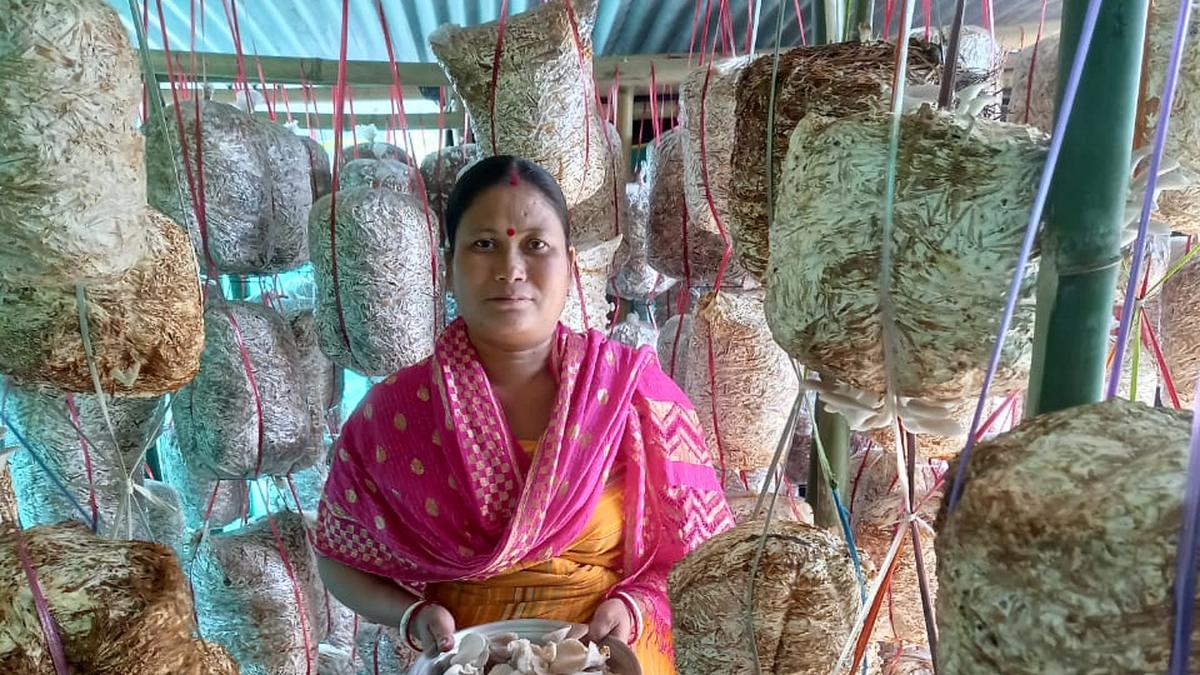
Nutrient-loaded mushrooms introduced into the midday meals in western Assam’s Kokrajhar district, as soups, biscuits, fortified noodles, or mixed with regular food in powdered form, appear to have had a positive nutritional effect on children in schools.
Mushrooms were one of the major ingredients introduced for children and mothers, in addition to vitamin and mineral supplementation.
Also read | Bodoland University develops fungal powder to boost immunity
Data provided by the district authorities revealed that the number of underweight (up to 6 years), wasted, and anaemic children in Kokrajhar district reduced by 56%, 55%, and 76% from 2021 to 2023.
The maternal mortality rate also decreased in the district by 72.37% to stand at 89.79 per lakh live births, less than half of Assam’s average of 205. Similarly, the infant mortality rate decreased by 30.56% to 15.97 per 1,000 live births (the State’s average is 36).
The results — riding on a team of Anganwadi workers, accredited social health activists (ASHA), and field workers of departments such as education, health, and horticulture — did not come overnight.
The seeds of the transformation were sown by Bodoland University’s Department of Biotechnology in 2012. Its experiments on making 23 species of mushrooms such as oyster, shitake, and cordyceps economically viable and affordable, made many farmers start cultivation in their backyards, sometimes even under beds.


Explore Chennai’s thriving late-night biriyani culture, from Adambakkam to Puliyanthope, and from Pudupet to Triplicane, to where midnight food hubs serve fresh, aromatic biriyani to night owls across the city.

Two more bodies recovered from Godavari River after five youths drowned during a bathing incident in Eluru district.

A suspected kidnapping attempt on Himachal CM's aide's son was reported near Mashobra, prompting a police investigation.

Sobha Surendran refutes V.D. Satheesan's claims of a BJP-CPI(M) deal, attributing them to fear of electoral defeat.

V.D. Satheesan praises G. Sudhakaran as a just administrator, highlighting respect amid political differences in Kerala Assembly polls.

Kerala court sentences G. Sandeep to life imprisonment for the murder of Dr. Vandana Das, with appeals for a death penalty pending.

Erode (East) voters prioritize pollution control, traffic solutions, and urban infrastructure as key issues ahead of upcoming elections.

Civil supplies department seizes 55 illegal LPG cylinders, booking 19 individuals to prevent domestic supply shortages in Vizianagaram.

Hyderabad police bust illegal samosa unit, seizing 500 stale eggs and used cooking oil, risking public health.

Eid prayers are held in Delhi's Uttam Nagar under heavy police presence amid heightened communal tensions and security measures.

Tensions rise in Mathura as locals protest cow vigilante's death, prompting a strong response from authorities and police.

Join the Met Centre Hyderabad's open house on March 23 to learn about weather forecasting and its real-life applications.

Kerala CM Pinarayi Vijayan blames Congress and BJP for India's cooking gas crisis, citing failures in energy policy and corporate interests.