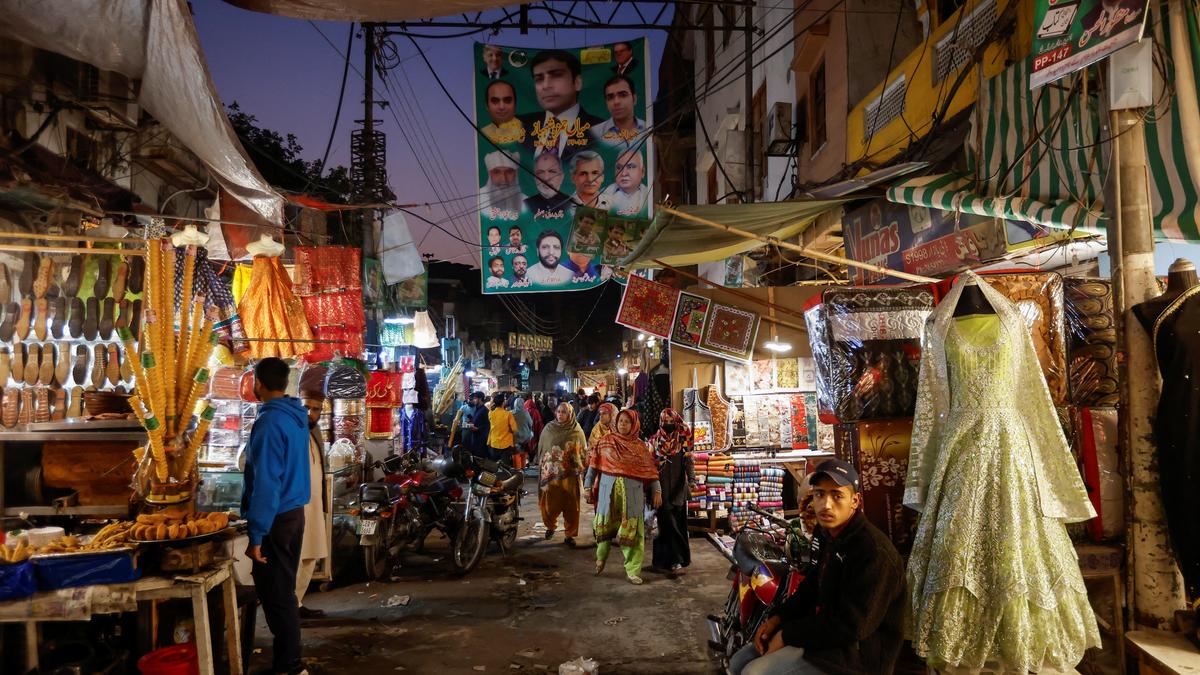
As Pakistan goes to elections, farmers want climate change action, not words
The Hindu
Pakistani farmers hope that the winning party in the general election will fulfill promises to address climate change.
Tending to his wilting wheat crop after months of drought and smog, Pakistani farmer Aamer Hayat Bhandara said his biggest hope for the general election is that whoever wins makes good on a flurry of campaign promises to tackle climate change. Pakistan goes to polls on February 8.
The two frontrunners - the Pakistan Muslim League Nawaz (PMLN) and the Pakistan Peoples Party (PPP) - have both proposed similar climate policies in their manifestos, highlighting growing concern about the effects of global warming after devastating 2022 floods.
"The smog and absence of rain for three consecutive months robbed crops of sunlight...and caused rust — or fungal infection — on wheat," said Mr. Bhandara, 38, a farmer in Punjab province and co-founder of the Agriculture Republic think-tank, which represents small- and medium-scale farmers.
He said changing climate patterns had shortened winters and stretched summers, with heatwaves impacting his rice and corn crops, while untimely rains and hailstorms have battered his wheat harvests. That made the parties' promises for climate action - from boosting renewable energy to investing in early warning systems for floods and heatwaves - welcome reading for him and other farmers at the sharp end of climate change.
"The pledges are wonderful," Mr. Bhandara said. "Heightened climate action not only holds the potential to ease economic pressures but also to generate employment opportunities." He added, however, that "the crux of the challenge is to translate these policies into action".
Pakistan produces less than 1% of the world's greenhouse gas emissions, but ranks 8th among countries most vulnerable to extreme weather linked to climate change, according to the latest edition of the Global Climate Risk Index.
The floods in 2022 killed more than 1,700 people, displaced 8 million and destroyed about a million homes and livelihoods across the country of 220 million - fuelling calls for the Government to prioritise the fight against climate change.


Cuba begins restoring power after a nationwide grid collapse, affecting thousands amid an ongoing energy crisis and blackouts.

The Hindu LIVE updates on March 23 2026 on Iran-Israel war. Iran faces deadline of US President Donald Trump warning to open Strait of Hormuz

Brazil's Lula condemns renewed colonialism and U.S. interference in developing nations at a summit in Colombia.

Saudi Arabia expels Iranian military staff amid escalating tensions and ongoing missile attacks during the U.S.-Israeli war on Iran.

Russia claims control of Potapivka village in Ukraine's Sumy region amid ongoing military efforts to establish a buffer zone.

Iranian missile strikes on Israeli towns cause widespread damage and injuries, marking a significant escalation in the ongoing conflict.

As Gor makes first trip as U.S. Special envoy to South Asia, Delhi watches strategic signals closely
Sergio Gor's inaugural trip as U.S. Special Envoy to South Asia signals strategic U.S. engagement amid regional tensions.

Slovenians vote in a tight election between liberal and populist candidates, impacting the country's future domestic and foreign policies.

Netanyahu asserts U.S.-Israel alliance fights Iranian threats, emphasizing global security after missile strikes on Israeli and European targets.

Israeli settlers attack Palestinian villages in the West Bank, causing injuries and destruction amid ongoing settlement expansion.

Britain asserts no evidence of Iran planning missile strikes on Europe, despite Israeli claims of missile capabilities.

UNESCO reports over half of countries have banned phones in schools due to concerns about attention, cyberbullying, and social media impact.

Analysis reveals a U.S.-operated Patriot missile likely caused a pre-dawn explosion in Bahrain, injuring numerous civilians.