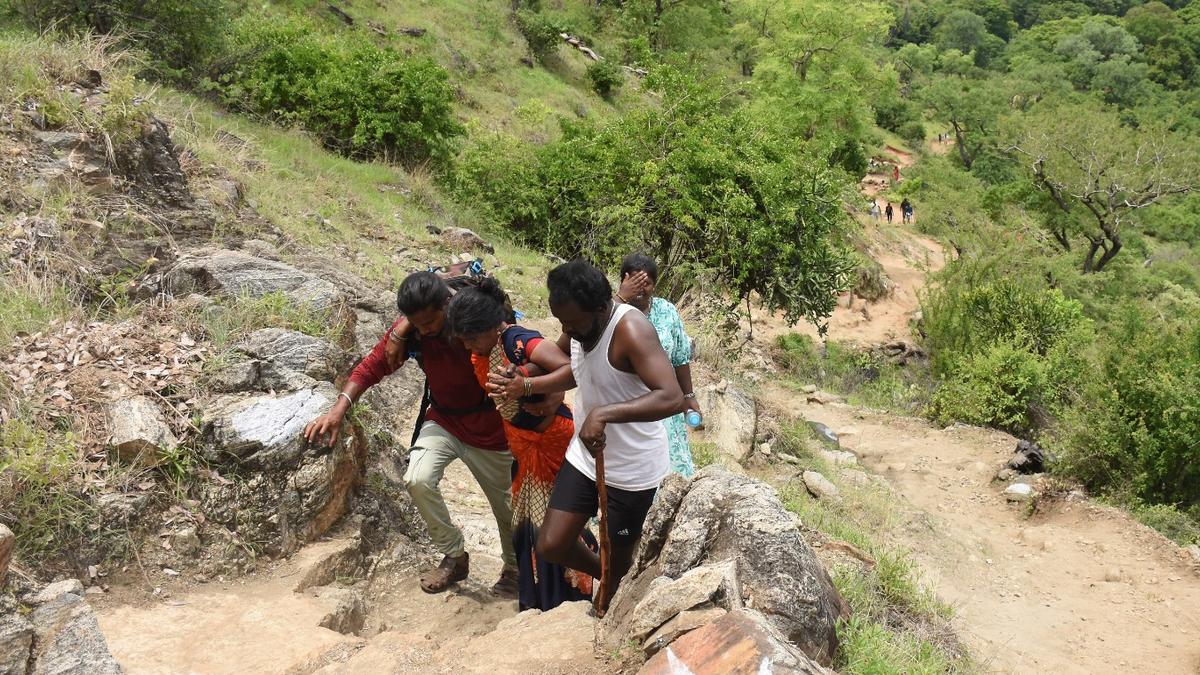
As number of devotees to temple festivals in MTR spikes, conservationists warn of hazards to wildlife, habitat
The Hindu
Pilgrimage to Sri Maasi Kariya Bantan Ayyan Thiru Kovil in Mudumalai Tiger Reserve involves challenging journey through wildlife habitats.
For a pilgrim visiting the Sri Maasi Kariya Bantan Ayyan Thiru Kovil, an Adivasi temple located deep inside crucial tiger and vulture habitats of the Mudumalai Tiger Reserve (MTR), the journey entails an almost hour-long journey by bus from Udhagamandalam to Vazhaithottam in the MTR buffer zone.
Once there, pilgrims have to cross the forest check-post and endure a trip on heavily damaged roads and rocky paths for almost 10 km to reach Adicombai camp.
The tiring trip by road is then followed by a steep descent on foot for just over 2 km, where devotees will descend over 1,000 feet in altitude, braving sheer cliffs and loose sand, before they reach the raging Kedarhalla River, which needs to be traversed before they can reach the temple. Though the walk from Adicombai to the temple and back is less than 5 km, it takes most devotees over three hours to traverse, due to the challenging nature of the terrain where falls and injuries are common.
For the last few decades, this challenging trek to the temple, which had in the past only been undertaken by Badagas and Adivasis, mostly from the Irula and Kurumba communities, has gained popularity among residents in the surrounding districts of Coimbatore, Salem and Erode in Tamil Nadu as well as Gundlupet and other parts of Karnataka. The Forest Department as well as local senior citizens estimate that the number of devotees, which numbered between 500 to 1,000 people in the 1980s till the 2000s, has now increased to somewhere between 10,000 to 15,000 people in 2024.
Other temple festivals that take place in the reserve, in Anaikkaty, Bokkapuram and Siriyur have also seen significant increases in crowds each year, putting an immense strain on local ecology and wildlife populations while contributing to pollution of water resources in the region.
On Tuesday, June 18, 2024, Selvi Mahesh and her family, from Udhagamandalam in the Nilgiris, were on their way to the temple for the third time in recent years. “My husband and I have been coming to the temple along with our family for the past three years. We were told about the temple by other friends who have also made the trip in the past,” she said, adding that the number of visitors has only increased during the three years that she has visited.
Another devotee, Raj, from Gundlupet, said that the Maasi temple, has become more commonly known in Karnataka in recent years. “Part of it is the journey that one needs to take to reach it. I believe that the harder the journey, the greater the chance for our prayers to be answered,” he said, adding that he was visiting the temple with a group of over 20 friends and relatives.


Explore North East India with South Star Rail's three unique 14-day train tour packages from Mangaluru, starting April 25.

A woman and her son sustained burn injuries in a gas cylinder fire in Bagalkot, Karnataka, and were hospitalised.

Directed by Nicholas Kharkongor, the show also stars Angira Dhar, and Ranveer Brar in pivotal roles

T.N. CM Stalin blames Centre's delimitation focus for diverting attention from the cooking gas shortage crisis.

UDF plans to challenge Kerala BJP chief Rajeev Chandrasekhar over alleged asset concealment and criticizes CPI(M) for corruption.

Telangana's Civil Supplies Commissioner assures no fuel shortage, with 20,000 kilolitres of petrol available

Delhi Assembly faces second bomb threat in two days amid Budget session; security measures intensified, but no suspicious items found.

Protect your eyes this summer with simple habits like wearing sunglasses, staying hydrated, and maintaining proper hygiene.

Hyderabad Collector assures no fuel shortage, urges public to ignore rumors and avoid panic buying.

Learn how elderly and disabled voters can easily cast their ballots from home in the 2026 Assembly Elections.

Parliament Budget Session LIVE: Track updates on the Parliament Budget Session as the Transgender Bill moves to the Rajya Sabha. Follow The Hindu for the latest updates on the Budget Session on March 25, 2026.

Congress leaders in Kerala accuse LDF and NDA of a secret deal to undermine their influence in the upcoming Assembly elections.

Agnikul Cosmos successfully test-fires a revolutionary 3D printed booster engine, enhancing launch efficiency and scalability in space transportation.