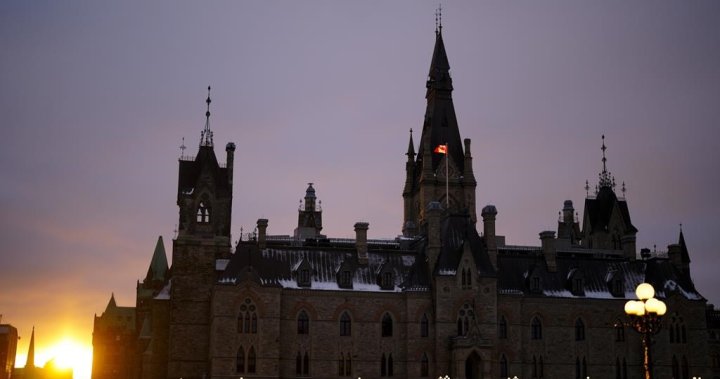
As Canada’s foreign interference inquiry begins, what to expect this week
Global News
The judicial inquiry into foreign interference in Canada’s politics is under a tight timeline to produce ways to harden the country’s defences.
The long-awaited public inquiry into foreign interference in Canadian politics is set to begin Monday with hearings on how much information it can, in fact, make public.
Justice Marie-Josée Hogue’s inquiry, facing tight timelines to report on a complex national security issue, is scheduled to hold five days of hearings beginning Jan. 29. The inquiry said the initial hearings will focus on the “challenge” of how to make as much information public, given that much of the evidence will come from top secret national security documents and sources.
It’s one of the key questions facing Hogue’s commission as it begins a months-long probe into allegations that hostile governments — particularly China — have attempted to influence Canadian politics and politicians, including during the 2019 and 2021 federal elections.
“The issue is … dealing with classified information and making it available to the public,” said Wesley Wark, a senior fellow at the Centre for International Governance Innovation (CIGI) and longtime national security researcher.
“It’s really a factual inquiry, the question of the extent and nature of foreign interference, particularly from China, possibly from Russia, in the 2019 and 2021 federal elections.”
The commission has also requested records related to India and allegations of interference in Canada.
It’s also the beginning of another chapter of the saga of foreign intervention in Canadian domestic affairs, which gripped the House of Commons in early 2023 and has launched multiple parallel probes.
Justice Hogue, a judge in the Court of Appeal of Quebec, was appointed by the Liberal government last September after months of negotiations with opposition parties. Her appointment came after the resignation of former governor general David Johnston, who appointed “special rapporteur” on the issue of foreign interference and tasked with determining whether a public inquiry was needed.


The statement from Global Affairs Canada comes a day after U.S. intelligence leaders unanimously testified that reports denying foreign involvement should be retracted.

It may be the first day of spring, but Ontario’s long winter isn’t over, with more snow and icy conditions expected before a full warm-up arrives

The policy is something of a reversal from a government that killed a similar idea shortly after taking power. Back in 2019, the province said the policy would be unenforceable.

The recall states that 'the ovens in the ranges can experience a delayed ignition of the oven's bake burner, which can create a potential risk of burns.'

U.S. President Donald Trump is widening the cracks between the United States and European NATO members with his calls for allies to help him finish the war he started with Iran.

The legislation from U.S. Rep. Lloyd Smucker would launch a U.S. Trade Representative investigation into whether the Canadian law unfairly burdens American commerce.

The New York Islanders plan on moving their American Hockey League affiliate from Bridgeport, Connecticut, to Hamilton, Ont., for next season.

Mayor Michael Prue said Diageo appeared to lose steam in its attempts to quickly sell a facility in his town as soon as Doug Ford stood down his threat to ban Crown Royal.

Dillon Whitehawk has been found guilty of first degree murder in killing of Keenan Toto, but not guilty in killing of Jordan Denton.

Waterloo’s police chief says snipers may continue to be used at large events as needed, following their deployment during a St. Patrick’s Day street party.

Parents and students in Nova Scotia and Manitoba are dealing with the aftermath of what could have been two deadly school attacks, after FBI intel leads to arrests.

The Toronto Police Association and Ontario Premier Doug Ford both called on the judge who suggested police witnesses may have colluded to apologize.

Most Canadians want the government to ban or regulate the use of algorithms to set prices, a new poll suggests — with half of respondents saying the practice is unfair.