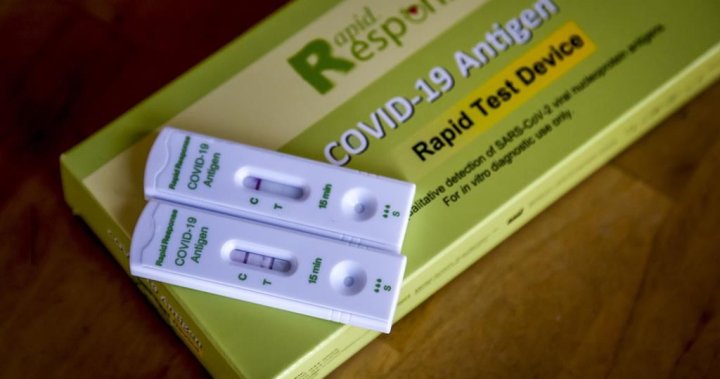
Are COVID rapid tests still reliable with new sub-variants on the rise? What experts say
Global News
Experts say COVID-19 rapid testing can still be considered as an adequate tool to detect the virus – even if they are not perfect all the time.
As new COVID-19 sub-variants move across Canada, experts say rapid tests can still be considered an adequate tool to detect the virus – even if they are not perfect all the time.
“These tiny, tiny changes in sub-variants matter a lot in terms of the biological activity of the virus and its ability to escape our immune system, but rapid antigen tests aren’t nearly so easily fooled,” Colin Furness, infections control epidemiologist and assistant professor at the University of Toronto’s faculty of information, told Global News.
Rapid tests do have a tougher time recognizing specific spikes COVID-19 sub-variants create, but they’re still able to identify the virus itself, Furness explained. However, there are things to keep in mind in order to get an accurate result.
When you test matters a lot as different variants of the virus produce different viral loads, Furness said.
“Now, it’s pretty hard to get a positive test when symptoms begin; usually you have to wait a few days,” said Furness.
“You can also have a negative test and still be infected, simply because you’re not contagious or not contagious enough to trigger a positive test.”
Swabbing not only your nose but your throat is the best way to properly test and get an accurate result amid swirling sub-variants, according to Furness.
Rapid tests detect a part of the virus called the nucleocapsid protein, according to Samantha Yammine, a science communicator in Ontario.


Tensions flared as CAQ leadership rivals clashed over Quebec’s “third link” project in the first debate to replace Premier François Legault.

Toronto police have charged a 60-year-old man with second-degree murder in connection with the death of Xian Wei Shao, whose remains were discovered in a north end home last week.

Finance Minister François-Philippe Champagne says the government has found ways to cut spending by $60 billion but cautions that published spending cuts require important context.

Three Canadians from Quebec who were stranded in the Persian Gulf since Feb. 28 have returned home following a coordinated repatriation effort.

Federal departments announced that they plan to cut more than 12,000 jobs over three years as part of the Carney government’s spending review plan.

Canada’s Integrated Threat Assessment Centre says the U.S.-Israeli war against Iran has heightened an already present threat against Jewish Canadians and public officials.

Edward Warner, his wife Tania and his seven-year-old step-daughter Ayla were coming back from a friend's baby shower on Saturday when they went through an ICE checkpoint in Sarita.

A fire chief from a village that battled flames during Saskatchewan's destructive wildfire season last year says the province's latest budget does not provide enough funding.

Manitoba’s upcoming budget will include more child care funding and a smaller deficit, as the NDP government aims to balance finances by 2027.

A member of the Royal Canadian Air Force in Winnipeg has just been crowned the World's Strongest Firefighter, outlifting athletes from around the world.

Muslims across Canada are celebrating Eid al-Fitr while some reflect on conflict affecting loved ones abroad, as leaders highlight unity, charity and renewal.

The Iran war has raised the price of crude oil beyond US$110 per barrel in international markets, spurring affordability concerns in Canada and around the world.

The statement from Global Affairs Canada comes a day after U.S. intelligence leaders unanimously testified that reports denying foreign involvement should be retracted.