Appeals court won’t lift order requiring Trump to facilitate return of asylum seeker deported to El Salvador
CNN
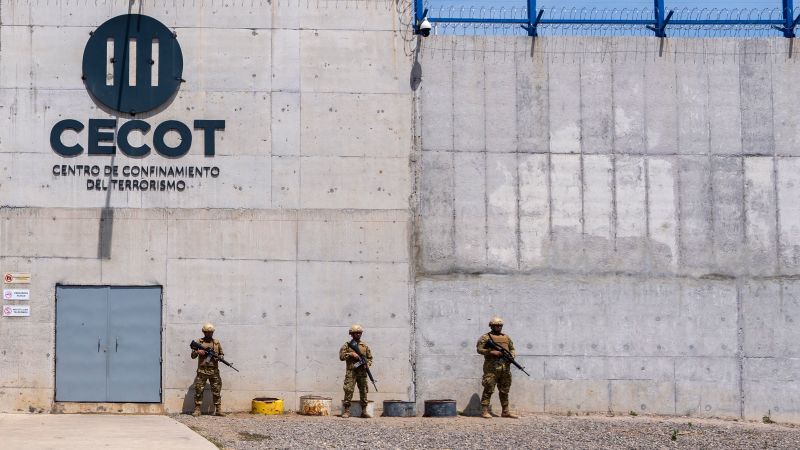
A divided federal appeals court on Monday rejected a request from the Trump administration to put on hold a judge’s order requiring the government to “facilitate” the return of a 20-year-old Venezuelan refugee who was deported earlier this year to El Salvador.
A divided federal appeals court on Monday rejected a request from the Trump administration to put on hold a judge’s order requiring the government to “facilitate” the return of a 20-year-old Venezuelan refugee who was deported earlier this year to El Salvador. The 2-1 ruling from the 4th US Circuit Court of Appeals tees up a likely showdown at the Supreme Court over the order issued in April by US District Judge Stephanie Gallagher, who said the administration had violated a court settlement protecting some young migrants with pending asylum claims when it deported the man, referred to only as “Cristian” in court filings, and directed it to work with Salvadorean officials to bring him back to the US. The high court had endorsed a similar, yet less specific, order from a different federal judge earlier this year in a separate case of a man unlawfully deported to the Central American country. Appeals court Judge DeAndrea Gist Benjamin, an appointee of former President Joe Biden, and Judge Roger Gregory, who was nominated to the court by former President Bill Clinton, voted in favor of keeping Gallagher’s order intact. Judge Julius Richardson, who was appointed to the 4th Circuit by President Donald Trump, dissented. In a scathing solo concurrence, Gregory was critical of the administration’s argument that the lower-court order should be put on hold because the government had made an “indicative decision” that Cristian’s asylum application would be denied if he returned to the US based on its claim that he’s a member of the Venezuelan gang Tren de Aragua. That argument similarly had no sway when the administration asked Gallagher to undo her order. “As is becoming far too common, we are confronted again with the efforts of the Executive Branch to set aside the rule of law in pursuit of its goals,” Gregory wrote. “It is the duty of courts to stand as a bulwark against the political tides that seek to override constitutional protections and fundamental principles of law, even in the name of noble ends like public safety.”


A federal judge on Friday voided various parts of a restrictive press policy rolled out by Defense Secretary Pete Hegseth last year, ruling that they trampled on the constitutional rights of reporters who seek to cover the US military from within its sprawling headquarters.

President Donald Trump is reshaping a Colorado Republican primary by offering one of the candidates a role in his administration and returning his endorsement to the incumbent, whom he called a “RINO” just last month.

More than a month into the Department of Homeland Security shutdown, lawmakers on Capitol Hill are reckoning with their own travel privileges amid anxieties the funding crunch could exacerbate issues at already understaffed airports around the country.

TV host and comedian Bill Maher has been chosen to receive the prestigious Mark Twain Prize for American Humor, two sources close to the Kennedy Center told CNN.

Conventional wisdom has set in that President Donald Trump’s base is sticking with him on the Iran war, but he has alienated significant portions of his voters — and risks alienating more.

US officials are furiously trying to avert a potential monthslong closure of the Strait of Hormuz, privately acknowledging that reopening the key waterway is a problem without a clear solution and dependent at least in part on what lengths President Donald Trump is willing to go to force the Iranian regime’s hand, multiple administration and intelligence officials tell CNN.

The chief executive of Live Nation testified Thursday that it was “disgusting” that a top ticketing employee talked about “robbing fans blind” in internal messages.

Supreme Court revives First Amendment lawsuit from street preacher who called concertgoers ‘sissies’
The Supreme Court on Friday revived a First Amendment lawsuit from a street preacher who used a loudspeaker to call people “whores,” “Jezebels” and “sissies” as they tried to enter an amphitheater to attend concerts in a suburban Mississippi community.

As millions of Americans braced for a series of brutal storms this winter, the senior official in charge of the federal government’s disaster response had been on the job only a few weeks — and had previously claimed on podcasts that he once teleported to a Waffle House.

Air travelers across the US continue to face travel headaches as Transportation Security Administration workers go without full pay. Find the latest live updates here.

Veterans’ advocates are raising concerns that a new agreement between the departments of Veterans Affairs and Justice could take away veterans’ autonomy over their health care decisions and deter them from seeking care, particularly those facing homelessness.

Admirers of Cesar Chavez and public officials are scrambling to respond to claims about the man who has been honored with holidays, statues and school names in communities around the country.

The co-founder of Super Micro Computer and two others were charged with diverting $2.5 billion worth of servers with Nvidia’s artificial intelligence chips to China, in violation of US laws barring exports to that country without a license.