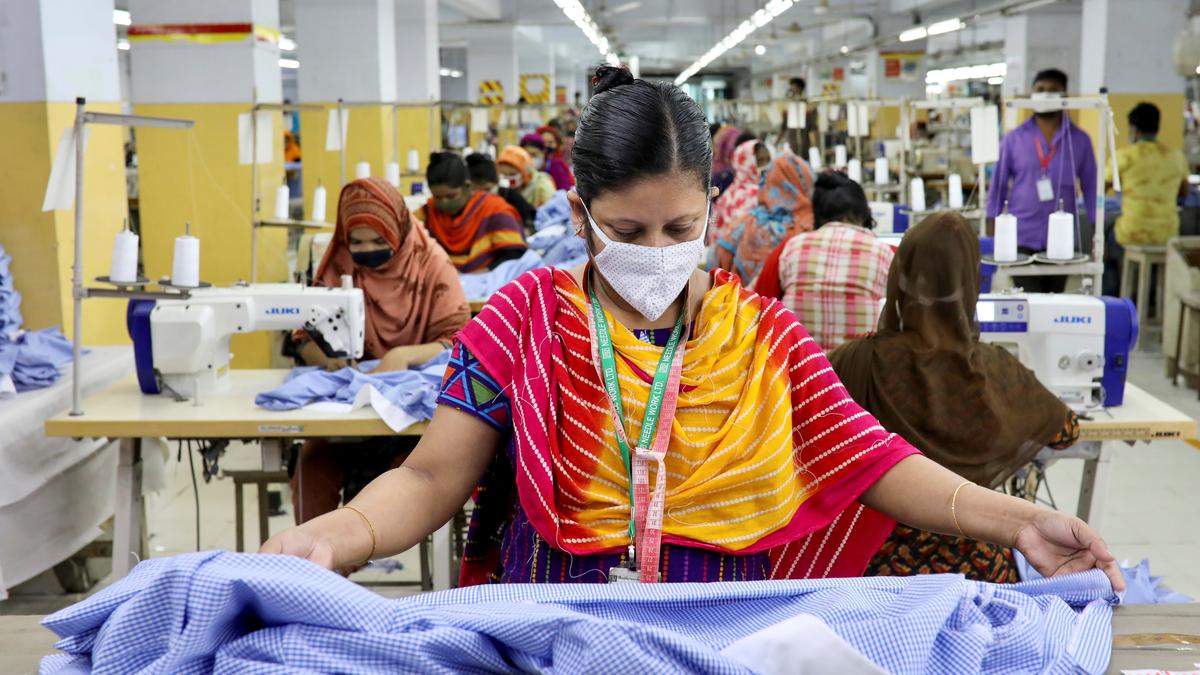
Apparel export body urges govt. to stop using Delhi airport as transhipment hub for Bangladesh exports
The Hindu
COIMBATORE Apparel exports face challenges as cargo from Bangladesh enters Delhi Air Cargo Complex, increasing costs and congestion.
Apparel exports, that slid 3.46 % year-on-year in January, are facing more challenges as 20-30 truckloads of cargo are entering the Delhi Air Cargo Complex every day from Bangladesh for transhipment to third countries.
According to Sudhir Sekhri, chairman of the Apparel Export Promotion Council (AEPC), the continuing Red Sea crisis had raised logistical costs for exporters while leading to a shift in the mode of shipping consignments from sea to air. Permitting Bangladeshi cargo transshipment from Delhi Air Cargo Terminal at this juncture had only increased logistical challenges and transportation costs for Indian apparel exporters.
Almost 20-30 loaded trucks from Bangladesh arrive in New Delhi every day slowing down cargo movement and the airlines were taking undue advantage of this, he alleged. It had led to a steep rise in air-freight rates, delayed handling and processing of export cargo and congestion at the cargo terminal.
The AEPC, hence, requested the Central Board of Indirect Taxes and Customs CBIC) to suspend implementation of a circular dated February 7, 2023 permitting the transshipment of Bangladesh export cargo to third countries via Delhi Air Cargo complex.
Earlier, such transhipment of Bangladesh export cargo was allowed only via Kolkata Air Cargo Complex, he said.
Textile and apparel exports had contracted 2.29% year-on-year in January.


Indian markets plunged over 3% amid soaring crude prices, rupee depreciation, and escalating West Asia geopolitical tensions in March 2026.

Government launches ₹497 crore RELIEF scheme providing credit insurance to exporters affected by the West Asia crisis, focusing on MSMEs.

Crude oil futures rise amid Middle East attacks, pushing Brent above $116 on fears of tightening global supply.

West Asia conflict delays India’s FTA talks with GCC and Israel, while UK and EU agreements proceed as planned in 2024.

Russian Urals oil vessels will reach India on March 21 amid stable fuel prices and diversified LPG imports.

Warner Bros. dominated the Academy Awards, but Paramount’s looming acquisition of the studio signals the biggest restructuring of the industry in decades and a battle over the future of Hollywood itself

HDFC Bank board calls Atanu Chakraborty’s resignation baffling, affirms robust corporate governance and strong market confidence.

RNFI and Jio Payments Bank launch cardless UPI QR cash withdrawals for instant access across urban, semi-urban, and rural India.

RBI approves HDFC Bank's chairman transition plan, affirming the bank's strong financials and competent management.

Markets fall 2% as Israel attacks Iran’s South Pars gas field, pushing Brent crude above $112 and rupee below ₹93.

HDFC Bank shares drop over 4% following chairman’s ethical resignation, raising insider trading and management concerns.

Erran Berger, the Vice President of Product Engineering at LinkedIn, thinks the former type of division of labour is rapidly disappearing

India mandates oil and gas firms to share import and export data to mitigate consumer shortages amid rising global prices.