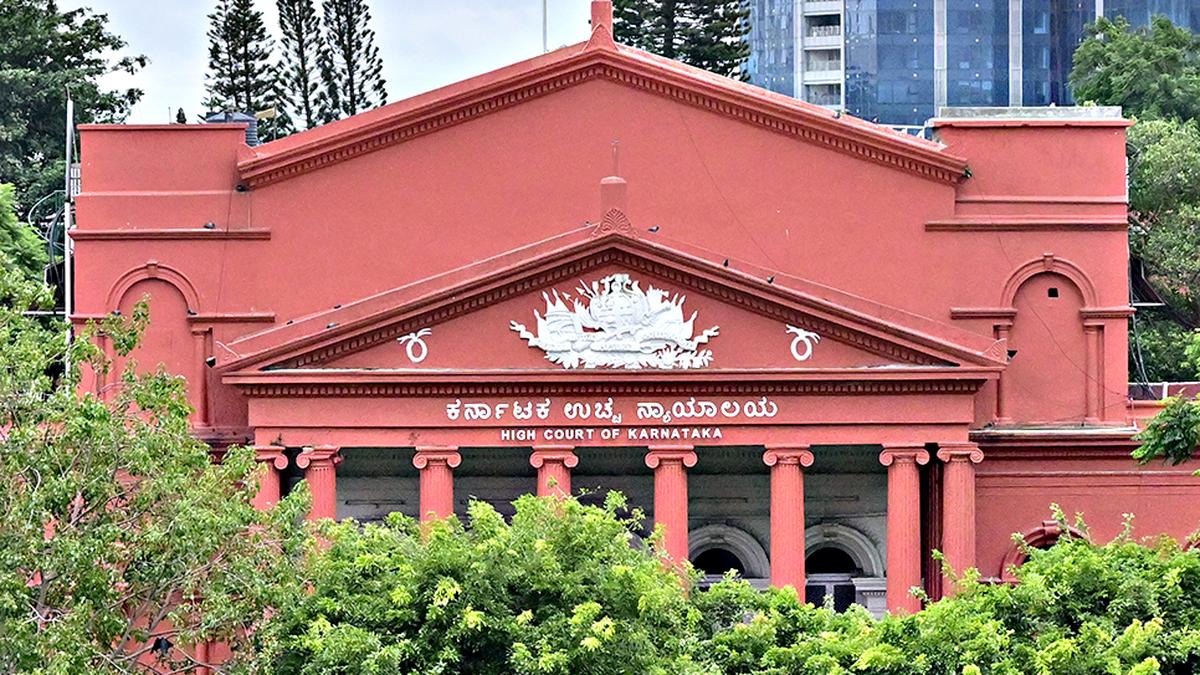
Apex court’s directions for giving grounds of arrest in writing to accused is not applicable for offences under IPC or KCOCA: Karnataka High Court
The Hindu
High Court of Karnataka clarifies grounds of arrest in writing not required for IPC or KCOCA cases, except preventive detention.
The directions of the apex court for giving grounds of arrest in writing to the accused persons under the Prevention of Money Laundering Act, 2002, and the Unlawful Activities (Prevention) Act, 1967, are not applicable to the offences under the Indian Penal Code (IPC) or the Karnataka Control of Organised Crimes Act (KCOCA), 2000, or any arrest under any penal law, the High Court of Karnataka has said. This is applicable to all except in cases of preventive detention.
As provisions of the IPC and the KCOCA do not mandate divulgence of the grounds of arrest in writing, the accused in such cases is entitled only to information under Section 50 of the Code of Criminal Procedure (Cr. PC), which mandates that information of grounds of arrest has to be given to the accused, the High Court said.
“If grounds of arrest is to be informed [in writing] as is held by the apex court in the cases of Pankaj Bansal, Prabir Purkayastha, and Arvind Kejriwal in every arrest on any cognisable offence, it would undoubtedly open Pandora’s box of interpretation of what could be the grounds of arrest, and mushroom huge litigation before the constitutional courts” when there are a large number of criminal cases registered every day in about 20,000 police stations across the country, the High Court said.
Justice M. Nagaprasanna made these observations while holding the arrest of John Moses D. alias Madan Kumar, who is facing about 110 criminal cases for land-grabbing, against whom provisions of KCOCA have been invoked.The court dismissed his petition, in which he had challenged his arrest claiming that grounds of arrest were not given to him in the manner prescribed by the apex court in its three judgments related to the UAPA and PMLA cases.
The High Court pointed out that the provisions of the UAPA and the PMLA make it mandatory to provide the grounds of arrest to the persons arrested under the provisions of these laws.
Moreover, the apex court holds it mandatory to give grounds of arrest in writing in its three judgments — in the cases of Pankaj Bansal, Prabir Purkayastha, and Arvind Kejriwal — owing to the fact that enlargement of an accused for the offences under the UAPA and the PMLA on grant of bail is extremely limited, the High Court said.
“The burden to prove that an accused is not guilty begins at the threshold. It is in fact a reverse burden on the accused. It is, therefore, in such cases the grounds of arrest should be informed to the accused” in the manner prescribed by the apex court, the High Court pointed out.


Post-monsoon wildlife survey starts at Sathyamangalam Tiger Reserve to estimate carnivore and herbivore populations over six days.

Andhra Pradesh establishes a State-Level Task Force to enhance prevention and control of infectious diseases.

Minister Narayana promises comprehensive development and housing solutions for Velampeta slum residents in Visakhapatnam.

Minister H.C. Mahadevappa announces comprehensive development plans for Mudukuthore to enhance facilities for pilgrims and tourists.

District Employment Centre launches free coaching programme for competitive exams at MKU College

AICSU calls for transferring Anjel Chakma murder trial outside Uttarakhand, citing police lapses and racial motivations in the case.

Even considering the glut of some below-par work, these films kept the industry in good standing, both commercially and artistically

Bengaluru's Namma Metro and BMTC extend late-night services for safe New Year’s Eve travel, accommodating increased commuter traffic.

Water level in Mullaperiyar dam on Monday stood at 132.15 feet (the maximum permissible level is 142 ft.) with an inflow of 202 cusecs and a discharge of 1,000 cusecs.

Discover how 2025 transformed India's higher education through regulatory reforms, international campuses, and a focus on outcomes and employability.

Jasprit Bumrah surprises fans with a quiet net session at Gujarat College, showcasing his skill under former coach Hitesh Majmudar.

Union Minister Satish Chandra Dubey reviews NLCIL’s performance, praises its contributions, and inaugurates key projects during his visit.

The 7th State Finance Commission presents its first report, recommending financial resource adjustments for local governments amid evolving economic trends.