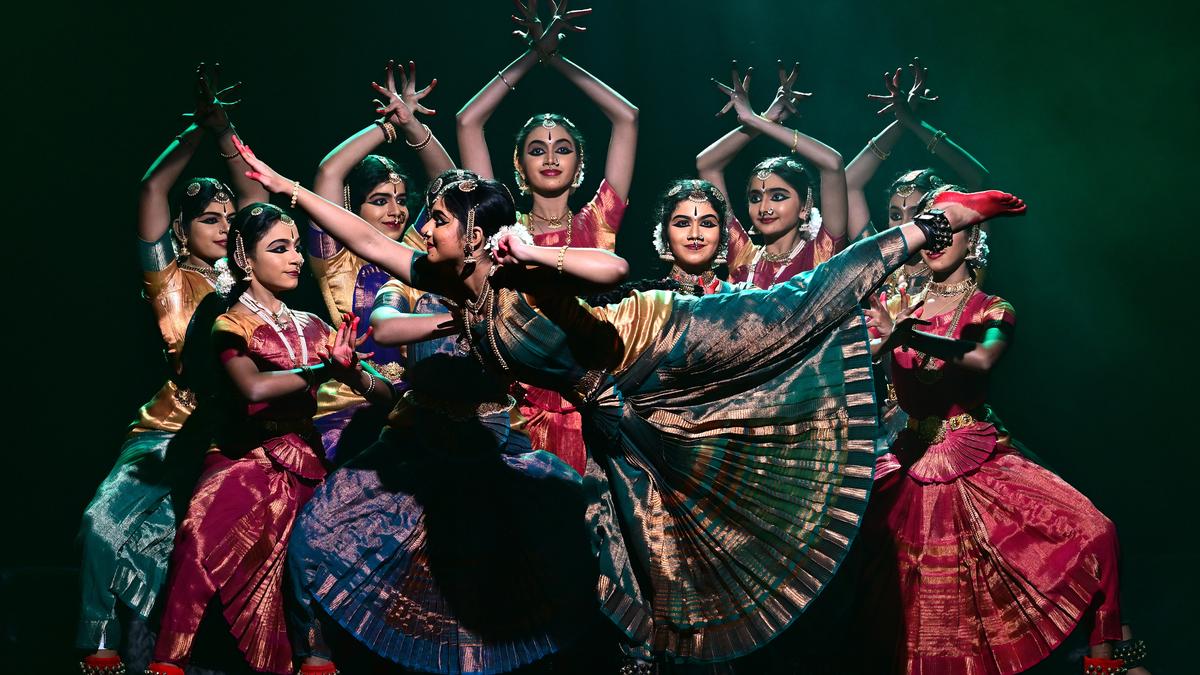
Anitha Guha’s ‘Parishvanga Pattabhishekam’ highlighted the enduring appeal of the epic
The Hindu
Experience the reimagined Ramayana through dance-drama 'Parishvanga Pattabhishekam' with choreography by Anitha Guha.
Over the years, the Ramayana has been reimagined and reinterpreted by various dancers and choreographers, reflecting the richness and complexity of the classic.
As part of Rama Navami celebrations, Bharatiya Vidya Bhavan had organised the dance-drama ‘Parishvanga Pattabhishekam’ by students of Anitha Guha’s Bharathanjali.
Conceived and choreographed by Anitha Guha and with music and lyrics by Neyveli Santhanagopalan, this unique production was named ‘Parishvanga Pattabhishekam’ — a term used in the Valmiki Ramayanam to describe the vatsalyam shown by Rama to Hanuman.
The dance drama, choreographed using both the margam format and dramatic elements, commenced with a dual scene — Rama expressing his sorrow to Lakshmana and Sugreeva discussing his plight with Hanuman. This scene was set to a slow padam to depict Rama’s viraha thapam.
Lakshmana is astonished to see his brother’s inconsolable state. Hanuman, a personification of modesty, bhakti and mischief, is sent by Sugreeva to check the identity of the two strangers. Hanuman discreetly enquires if they were devas or rishis, knowing very well that they could be neither. What followed was a varnam, where Lakshmana narrates a brief account of the Bala, Ayodhya and Aranya kandams. The scene ended with the sealing of friendship between Rama and Sugreeva.
The fight between Vaali and Sugreeva, choreographed and performed by Thiruchelvam, an alumni of Kalakshetra, had all the elements as visualised by Valmiki. It’s a fight without weapons, where two vanaras assert their strength. When Rama mortally wounds Vaali, a shocked Vaali enquires about the righteousness of the act. Rama explains the dharma behind it.
Sugreeva’s Pattabhishekam celebrated by the vanaras was presented through a Kadanakuthuhalam thillana, where the highlight was the use of mukula and kapitha hastha mudras.


South African naturalist Steve Boyes speaks on ghost elephants, ancestral tracking, and Werner Herzog’s documentary exploring Angola’s elusive highland giants

Actor-director Amol Palekar will receive META's Lifetime Achievement award for 2026 on March 25 in New Delhi.

India's artists unite against rising censorship, advocating for creative freedom and support for marginalized voices in the arts.

Written and directed by Kunal, the film also stars Sparsh Shrivastava and Vanshika Dhir

This year, Bharatnatyam artistes will present the Tyagaraja Aradhane as a dance performance

This year, Bharatnatyam artistes will present the Tyagaraja Aradhane as a dance performance

The actor, along with director Sushant Shah, speak about their upcoming series ‘Chiraiya’, Divya’s process of working on the dialect, Sushant’s approach to telling a story about women, and more

An independent video, ‘Feel the Spark’ by Raleigh Rajan with vocals by Ciera Dumas that celebrates Tamil literary giants, garnered 1.4 million views in less than 36 hours.

In ‘Jack Ryan: Ghost War’, John Krasinski is back as the savvy CIA analyst, diving headfirst into a high-stakes mission that unravels a deadly conspiracy and pits him against a rogue black-ops unit

Shriram Bharatiya Kala Kendra’s Shankarlal festival showcased rare ragas, radiant artistry, and inclusive performances, from Pt Madhup Mudgal’s serene morning ragas to Ramana Balachandran’s Saraswati veena.

Explore "Threads that Bind: The Kantha Project," an exhibition in Delhi reimagining kantha as a medium of repair and renewal.

Sean Penn skips the Oscars to meet Ukraine's Zelenskyy, who praises him as a "true friend" amid the war.

The teaser of Tamil star Suriya’s much-awaited film with director Venky Atluri, titled Vishwanath and Sons, was unveiled by the makers on Monday