Angry farmers once forced India’s hardline leader into a rare retreat. As the election looms, they’re back
CNN
Just over two years after they strongarmed Prime Minister Narendra Modi into an exceptional U-turn, India’s protesting farmers are back on the streets – and this time the stakes are higher.
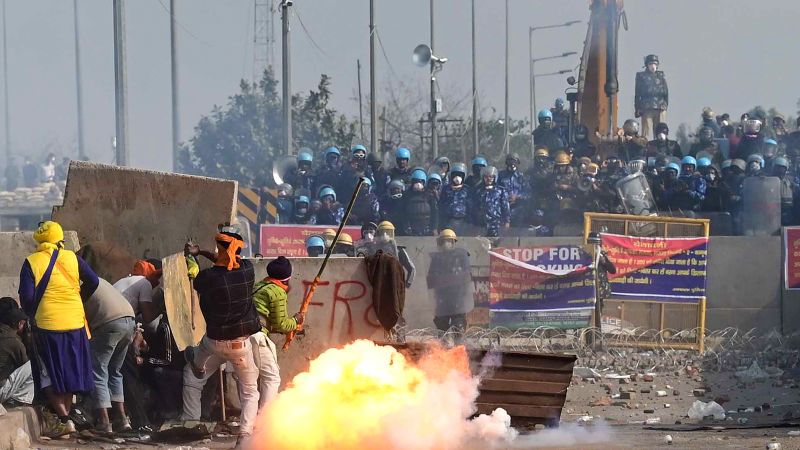
Just over two years after they strongarmed Prime Minister Narendra Modi into an exceptional U-turn, India’s protesting farmers are back on the streets – and this time the stakes are higher. For about two weeks now, thousands of angry farmers have gathered at the borders of India’s capital to demand higher fixed prices for their crops, just weeks before a nationwide election that is expected to see Modi clinch a rare third term in power. A heavy security presence has so far prevented the farmers from marching on New Delhi and violent clashes have seen police fire tear gas and water cannons. Tensions rose further last week after the death of a protester near the Punjab border, according to the state’s chief minister, who has ordered a probe into the case. The scene is reminiscent of 2021, when in a rare break from his uncompromising leadership style, Modi repealed controversial laws aimed at modernizing the agricultural sector following more than a year of mass farmers’ protests. Modi promised “a fresh start,” agreeing to meet the farmers’ demands and work with them to move forward. But the farmers say those promises were broken, and this time, they will not return home until their demands are met.


Democratic Sen. John Fetterman cast the deciding vote Thursday to advance Markwayne Mullin’s nomination to serve as US Department of Homeland Security secretary, crossing party lines to send President Donald Trump’s nominee to the full Senate for consideration.

A US F-35 fighter jet made an emergency landing at US air base in the Middle East after it was struck by what is believed to be Iranian fire, according to two sources familiar with the matter.

In 2025 a record number of more than 22,000 Cubans arrived in Uruguay, according to to the National Migration Agency. CNN’s Dario Klein reports.

For over a month, Transportation Security Administration employees have been showing up to work at US airports without getting paid.

CNN’s 5 Things AM brings you the news you need to know every morning.

Both President Donald Trump and first lady Melania Trump have encouraged Susie Wiles to take the time she needs away from the White House to deal with her treatment, but Wiles argued she does not plan to do so, people familiar said.

A transparency law passed by Congress has forced the release of more Epstein files than ever before, but some lawmakers and victims are exploring ways to push the Justice Department to disclose even more information from the voluminous trove that’s being withheld.

Former US National Counterterrorism Center Director Joe Kent sat Wednesday for an extensive interview with former Fox News host and right-wing podcaster Tucker Carlson, his first public comments since he resigned from his post, citing concerns about the war with Iran.

When Attorney General Pam Bondi and Deputy Attorney General Todd Blanche arrived on Capitol Hill Wednesday afternoon, they hoped to boost members’ confidence on their handling of the Jeffrey Epstein investigation. Within half an hour, Democratic lawmakers had walked out.

Cuba is going dark under US pressure. How the crisis unfolded and why its troubles are far from over
Almost three months after the US effectively imposed an oil blockade on Cuba that worsened its energy crunch, nearly every aspect of Cuban society has been feeling the strain.

The Department of Homeland Security has been ensnared by a partial government shutdown as Congress did not act to fund the agency by the end of Friday. But nearly all DHS workers will remain on the job — even if many won’t get paid until the lapse ends — and the public probably won’t notice much of a change.

The USS Gerald R. Ford aircraft carrier is moving away from operations tied to the Iran war and sailing to the US Navy’s base in Crete for repairs after a fire broke out in the ship’s laundry area last week, a US official said.

An American college student visiting friends for spring break has gone missing in Spain, his family said, adding police have his phone.