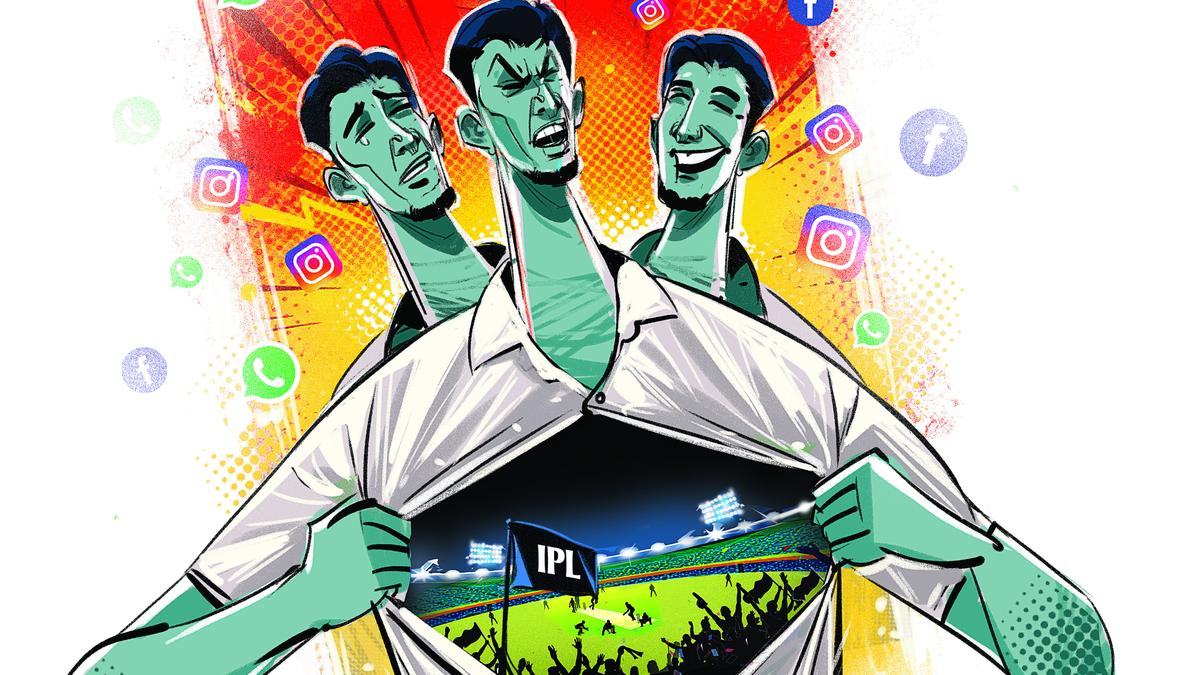
Anatomy of an IPL fan: cricketers, experts and fans examine why the game matters to them
The Hindu
The Indian Premier League: a boisterous circus, a story, a religion, and a mirror of society's emotions.
In the beginning of May, the Indian Premier League (IPL) juggernaut, with more than two-thirds of the fixtures completed, came to an abrupt halt. Stadium lights dimmed. Commentary boxes fell silent. With military tensions mounting between India and Pakistan, the fate of the 18th edition of the franchise-based cricket league hung in the balance.
Then a few days later, just as suddenly, the switch was flipped back on. Players flew out, others flew in. Some teams rose. Others faltered. But the pulse of the IPL? Steady. Loud. Unrelenting. Last week, Royal Challengers Bengaluru (RCB) clinched their first-ever IPL title. With tears in his eyes, Virat Kohli lifted the elusive trophy, in a culmination of years of relentless pursuit, near misses, and unyielding passion. With that, an electrifying season came to an emotional close.
According to Ormax Media’s 2024 sports report, cricket commands 612 million viewers in India. Of these, 86 million are urban IPL franchise loyalists. Google Trends show IPL-related searches topping charts for eight consecutive weeks, barring the brief pause mid-May. In the final week alone, ‘PBKS vs RCB’ clocked over 10 million searches; ‘MI vs GT’ had a search volume of 5 million. This isn’t just consumption, it’s commitment. This is what it means when a game becomes something more than just a game.
The gulf between domestic cricket and the IPL isn’t as wide as it seems. The skill, the level of competition, even the pressure, it’s all there. What changes is the spotlight. “There’s not much of a difference in the game itself,” says Abhishek Desai of the Gujarat Cricket Association. “It’s all about the exposure — playing alongside the world’s best. And the IPL is louder, flashier, and that makes everything feel bigger.”
In India, where even silence can be political, the noise around cricket matters. And the IPL, more than any other format of cricket, understands how to dial it up.
“The IPL is a McDonaldisation of sport, which is a concept frequently spoken of by sports sociologists,” says Aman Misra, a Ph.D candidate at the University of Tennessee. He studies sports communication and the sociology of sports, particularly public memory and media perception of disability. “It’s tightly packaged, highly produced, and modelled on western templates. To make it work, they have to start creating rivalries, they have to manufacture narratives around wins and losses.”
There is a conscious effort to build parasocial relationships, thinks Misra. “The best way to understand it is that even if the league is ‘constructed’, the emotions it sparks are real. Sports reflects society,” he says.


My target is to be in the top-30: Devika Sihag

CSK names James Foster as fielding coach

Mayank Chakraborty becomes Assam's first Grandmaster, ending a three-decade wait for the North-East in chess history.

M.S. Dhoni advises CSK rookie Prashant Veer to save money wisely as he navigates his first IPL experience.

Sanju Samson reflects on his T20 World Cup victory, sharing his excitement for the upcoming IPL with CSK.

North Zone clinches the J.K. Bose cricket title with an unbeaten run, defeating East Zone decisively at Roshanara Ground.

Jay Shah emphasizes long-term planning for India's sports future, urging collaboration for upcoming global events from 2030 to 2036.

Daniil Medvedev defeats Carlos Alcaraz, ending his unbeaten streak, and advances to the Indian Wells final against Jannik Sinner.

Shorts News:Watch: Iranian female footballers safe in Malaysia: Asian Football Confederation

Argentina vs. Spain's Finalissima in Qatar canceled due to escalating West Asian conflict, impacting pre-World Cup match plans.

Smriti Mandhana and Shubman Gill win BCCI's top awards for their exceptional performances in the 2024-2025 cricket season.

Rajnath Singh advocates for stronger public-private partnerships to enhance India's sports economy and global identity, especially in polo.

Kimi Antonelli's historic victory at the Chinese Grand Prix signals a thrilling future for Mercedes and intense internal competition.