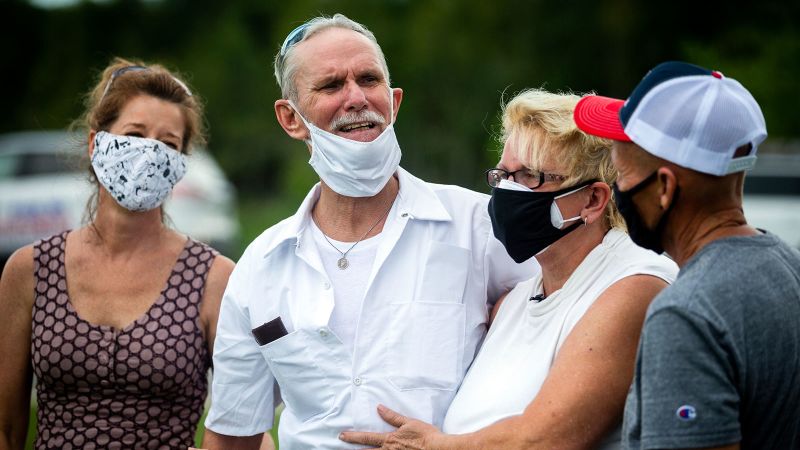
An innocent man spent decades in prison for a Black couple’s murder. Nearly 40 years later, police say they found the killer
CNN
His DNA wasn’t a match for evidence in the murder of a Black couple nearly 40 years ago. Why an innocent man served decades for a crime he didn’t commit
There’s no shortage of laughter in Dennis Perry’s house. Ask him about his grandkids, and he instantly starts to chuckle. And if the subject of fishing or how much he loves his wife, Brenda, comes up, you’re rewarded with a belly laugh. The kids call him “Papa Sunshine,” a nickname befitting a man whose smile you can hear through the phone. That Perry can laugh at all is something of a miracle – especially after all he’s been through. In 2003, Perry, who is White, was convicted and sentenced to two consecutive life sentences in prison for the brutal 1985 slaying of a Black couple named Harold and Thelma Swain at their church in southern Georgia. He has always – emphatically – maintained his innocence: throughout his arrest, his trial and conviction, and every single day of the nearly 21 years he spent incarcerated. In 2020, attorneys with the Georgia Innocence Project and an Atlanta-based international law firm, King & Spalding, presented a judge with a wealth of new DNA evidence to prove what Perry says he knew all along: “You got the wrong man.” In a matter of months, Perry was free from prison, back home in the loving embrace of his wife and the gaggle of kids and grandkids who adore him. But the wrongful conviction stole decades of his life and with Perry’s exoneration came a tidal wave of new questions: How did the justice system get this case so wrong? And if Perry didn’t murder the Swains all those years ago, who did?


United Farm Workers is not participating in annual celebratory events this month of its co-founder Cesar Chavez over what it calls serious allegations the union did not specify

Illinois Lt. Gov. Juliana Stratton will win the Democratic primary for an open Senate seat, CNN projects, a stunning rise for a little-known state officer now on a glide path to Washington.

President Donald Trump promised his endorsement was forthcoming in the GOP Texas Senate runoff and said he wanted whoever he didn’t pick to drop out. But now — preoccupied with the Iran war and a doomed voting bill — he’s missed a critical deadline.

The Senate has kicked off extended debate on the “SAVE America Act” — one of President Donald Trump’s top legislative priorities.

Organized crime in Latin America is proving difficult to defeat with the kind of decapitation strategy apparently favored by US President Donald Trump.

The conservative movement’s internal debate over the Iran war entered a new phase on Tuesday, with the first resignation of a prominent Trump appointee who criticized the war.

Arizona’s attorney general has filed the first-ever criminal charges in the US against a major prediction market company, accusing Kalshi of running an illegal gambling operation in violation of state law.

President Donald Trump’s brief and aggressive attempt to corral an international coalition to police the Strait of Hormuz concluded in disappointment on Tuesday.

House Oversight Chair James Comer on Tuesday issued a subpoena to Attorney General Pam Bondi to appear for a deposition on April 14 as part of the panel’s Jeffrey Epstein probe.

President Trump’s latest comments about the Iran war make him look out of the loop and unprepared.

Travelers are experiencing long security lines at a number of airports as TSA workers continue to work without pay. Follow for live updates.

A senior US intelligence official appointed by President Donald Trump abruptly announced he is stepping down from his post on Tuesday, citing misgivings about the administration’s war with Iran.

CNN’s 5 Things AM brings you the news you need to know every morning.