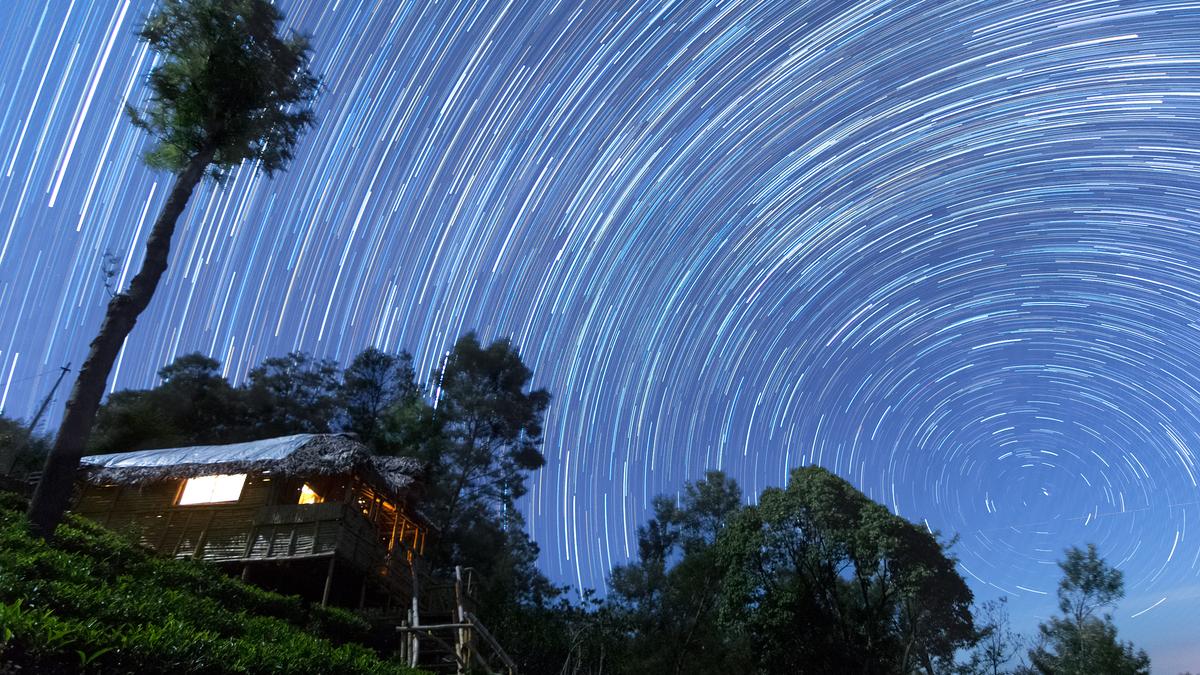
An Indian stargazing guide: From Ladakh to Pench
The Hindu
Experience the awe of stargazing in India's dark skies, from Ladakh to Pench, with passionate guides and enthusiasts.
“You might think that this is a bit much but the first time I lay down and looked at a sky full of stars, I had tears in my eyes,” says Nikhil Balasubramaniam.
Nikhil is not new to the night sky. He has however, lived all his life in Chennai, and has only looked at the blank, dark canvas of the world, through the scruffy blanket of light pollution. It took him a solo trip to the thick forests of the Sathyamangalam Tiger Reserve in Tamil Nadu, to finally be able to look up and experience the vastness of the galaxy.
“I went for my first stargazing trip in 2023 and it was overwhelming. It’s when I realised that I was but a mere speck. Nothing else mattered at that exact moment,” he says.
The 24-year-old video editor is not the first of us humans to philosophise the stars. Bhavandhi Babulal, founder of Starvoirs, who conducted this expedition to Sathyamangalam, says that such reactions are common when he takes tour groups to see the night sky. It has prompted him to set up telescopes in various parts of India on this chase of inky blue skies. He would like more people to experience this feeling of nothing and yet, everything.
“People who grieve and are heartbroken often tend to get emotional on these trips but the skies don’t spare you and me. Once the star bug bites, it doesn’t let go. Take Nikhil for instance. He has been on three trips with us in the last year,” says the founder of this Chennai-based startup which organises stargazing trips across the world including to the Maasai Mara in Kenya.
Astro-tourism is not new to India. Several representatives from this space have attributed the boom in this segment to COVID-19, when human and vehicular movement was restricted and as a result the skies cleared up. “Many people bought telescopes, watched YouTube videos and began stargazing,” says Kailas Belekar, founder and director of Aeronautics & Space Exploration, a Nagpur-based company.
Ladakh was among the first sites in the country to attract stargazers. On the Bortle Scale, a nine-level numeric scale that measures the night sky brightness of a particular location, Ladakh’s skies rank at 1. Kailas says that elevation and fewer layers of clouds, help present clear night skies to spot other galaxies far, far away. The Hanle observatory attracts several thousand visitors a day. As recently as May 2024, the Aurora borealis (commonly known as the Northern Lights) were visible from here.


Decomposed body of a missing 25-year-old man discovered in Dindigul stone quarry, prompting calls for investigation and quarry closure.

SVEEP activities launched in The Nilgiris aim to boost voter turnout at 13 polling booths with low participation rates.

Learn who can vote by postal ballot in the upcoming Tamil Nadu Assembly election, including seniors and persons with disabilities.

Shorts News:Watch: UDF linked to communal forces in Kerala: CPI(M) leader A Vijayaraghavan

Karnataka government postpones Deendayal Upadhyaya event at KSOU Mysuru due to protocol violations and lack of government involvement.

Sameer Wankhede denies bribery allegations involving Shah Rukh Khan’s son in drugs case during Bombay High Court proceedings.

What does it take to design gloves, masks and uniform that factor in the various challenges faced by workers on the waste beat? Indore, Bengaluru and Pune have an answer

Gaurav Gogoi files nomination for Jorhat Assembly seat, marking his electoral debut in the upcoming Assam elections.

A round-up of events and programmes held at colleges in Tiruchi and other Cauvery delta districts

CPI(M) and Congress clash over accusations of aiding BJP, threatening the LDF-UDF duopoly ahead of Kerala Assembly polls 2026.

Shivamogga veterinarians demand accountability for the death of trainee vet Dr. Sameeksha Reddy, citing systemic failures in zoo administration.

BJP launches 'Mana Ooru–Mana Jenda' campaign on April 6 to strengthen grassroots connections and promote development in Andhra Pradesh.

Anuradha Jonnalagadda took over as in-charge Vice-Chancellor of the University of Hyderabad, focusing on continuity during the transition.