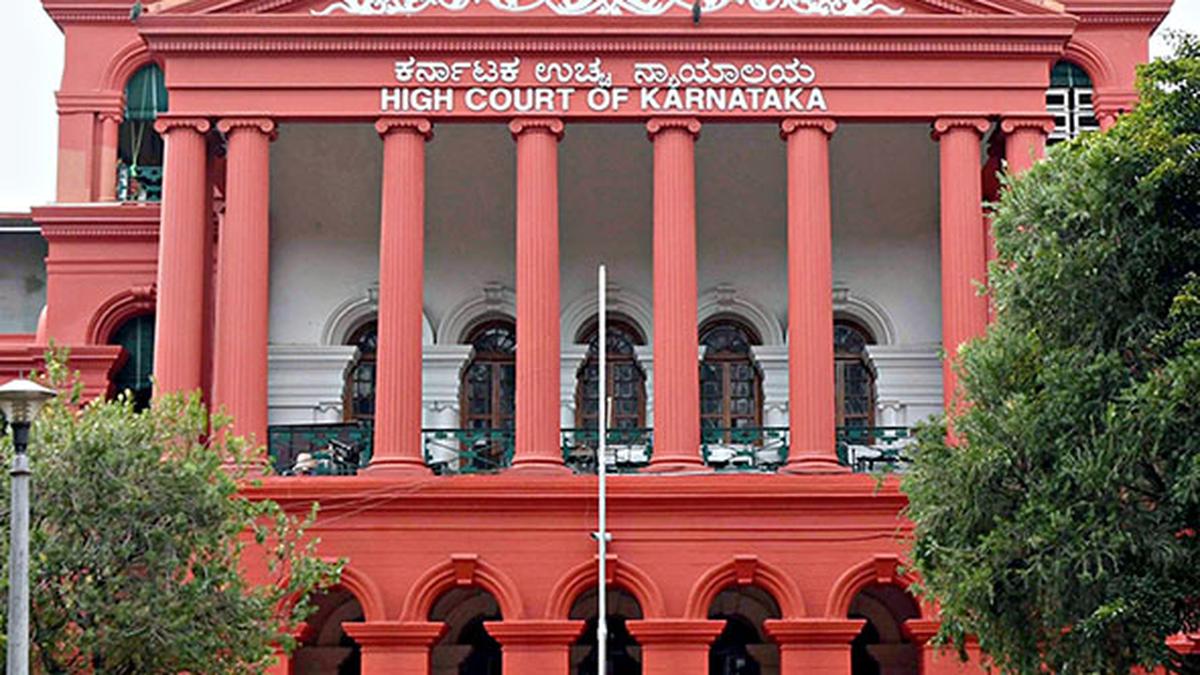
All accused in custody can question lawfulness of arrest for non-service of reasons in writing even if they were arrested before May 15, 2024: Karnataka High Court
The Hindu
High Court of Karnataka grants accused persons right to challenge arrest legality due to non-service of grounds in writing.
In a judgment with far-reaching consequences on legality of arrest and benefitting a large number of accused persons in judicial custody, the High Court of Karnataka has declared that all the accused, except habitual offenders, are entitled to claim legality of their arrest due to non-service of grounds/reasons of arrest in writing to them by the police, even if they were arrested before May 15, 2024.
The High Court said the benefit of law laid down by the apex court in Prabir Purkayastha’s case would be available to accused persons retrospectively, as it related to rights guaranteed under the Constitution.
The apex court, in the judgment in Prabir Purkayastha vs. State (NCT) of Delhi delivered on May 15, 2024, declared that non-service of grounds/reasons in writing to a person arrested under the Unlawful Activities (Prevention) Act vitiates the process of arrest as it infringes upon the right of accused person to be informed about the grounds of arrest under Article 22(1) (an arrested person shall be informed of the grounds of arrest and allowed to consult a lawyer of his or her choice) of the Constitution.
Justice Hemant Chandangoudar passed the order while ordering the release of 20-year-old Hemanth Datta of Arsikere in Hassan district, who was arrested on February 17, 2023, on the charge of murder. The petitioner, who is in judicial custody on rejection of his bail pleas, filed the petition in March 2025 contending that his arrest itself was illegal as no grounds of arrest were served to him by the police.
Citing the judgement in Purkayastha’s case, the High Court said that “... the argument against retrospective application of the principle of procedural justice enunciated in the case of Prabir Purkayastha does not hold good, more so, when the rule of beneficial construction goes beyond the realm of procedural law, and prescribes mitigation or modification of penalty in light of post facto change in substantive law.”
Stating that the legal ratio enunciated in Purkayastha’s case has merely expounded the pre-existing constitutional guarantee enshrined in Article 22(1) of the Constitution, which has been in effect since January 26, 1950, Mr. Justice Chandangoudar said that any violation of the right to be afforded an opportunity to make an effective representation against the arrest or an order of remand in relation to any offence, shall constitute a contravention of the constitutional guarantee under Article 22(1) of the Constitution and the statutory safeguard under Section 50 of the Criminal Procedure Code, even if the arrest is made prior to the pronouncement of the judgment in Prabir Purkayastha’s case.
Meanwhile, the High Court directed that all the trial courts in the State should consider applications for bail made by those in remand and prejudiced on account of non-service of grounds of arrest, even if the accused persons in custody were arrested prior to May 15, 2024.


Telangana faces 13,929 healthcare vacancies, primarily in doctors and nurses, as recruitment efforts aim to address the shortage.

For most patients with TB who are severely underweight, nutritional support is an essential and not optional part of treatment

Family of custodial death victims demands harsh punishment for nine convicted policemen to prevent future abuses of power.

Rajinikanth refutes TVK leader's claims about DMK threats preventing his political entry, expressing gratitude to supportive political figures.

CM announces Cabinet Sub-Committee on Musi rejuvenation; rehabilitation for all displaced

Ramanathapuram identifies 145 polling stations as sensitive, ensuring security with paramilitary forces ahead of assembly elections, says DEO.

BJP Puducherry president V. P Ramalingam files nomination for Raj Bhavan, joined by Union Minister Mandaviya and Khushbu Sundar.

History-sheeter 'Thoppai' Ganesh shot dead by police in Chennai after attacking officers during attempted escape.

The government plans to amend the FCRA, introducing new regulations for NGO asset management and accountability for key functionaries.

The draft policy for “Responsible Digital Use Among Students”, released on Monday by the Department of Health and Family Welfare, has recommended that parents set structured routines with clear screen-time rules and prioritise privacy, safety, and open conversation with children on digital well-being.

Police Observer Sushant Kumar Saxena conducts surprise inspection at Shencottai police station, reviewing warrants and security arrangements ahead of elections.

Andhra Pradesh government to launch key projects in April, focusing on industrial growth and infrastructure development, says Nara Lokesh.

Lok Sabha refers the Corporate Laws (Amendment) Bill to a JPC amid opposition concerns over CSR provisions dilution.