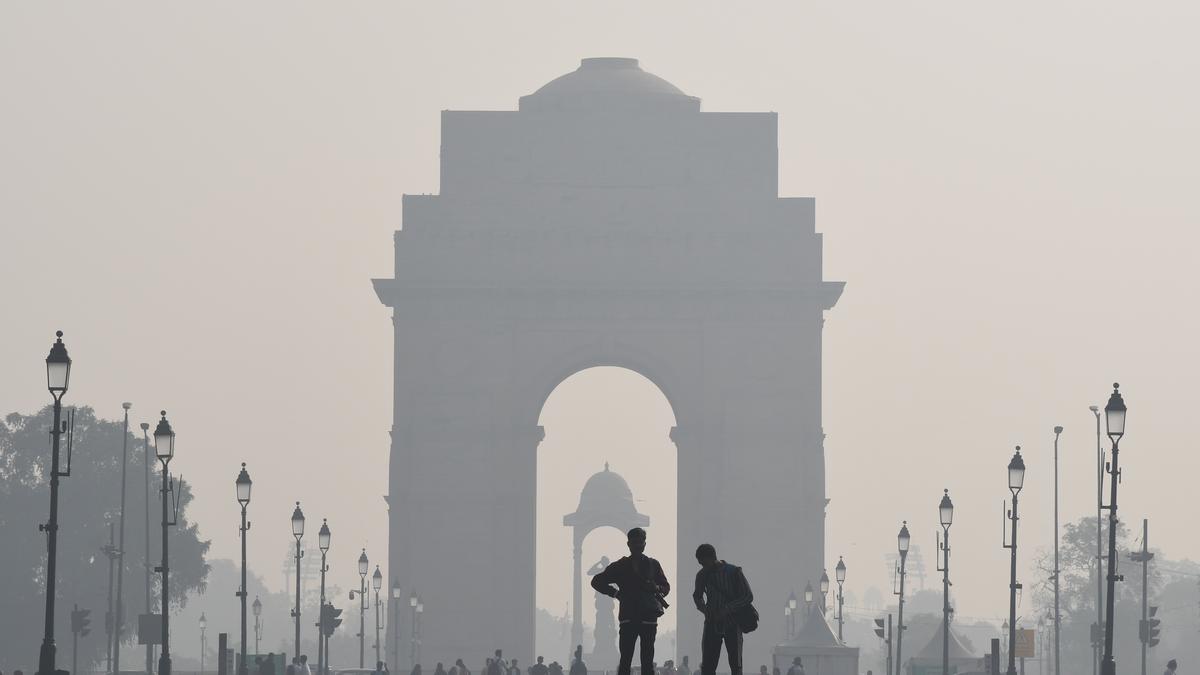
Air quality in Delhi poor, no major relief predicted
The Hindu
According to the SAFAR, the air quality in Lodhi Road was recorded at 149 which falls in the ‘moderate’ category
Delhi’s air quality was recorded in the poor category for the third consecutive day on October 25 and a major improvement is unlikely over the next few days, according to monitoring agencies.
The city’s average air quality index (AQI) stood at 238 at 10 am, worsening from 220 at 4pm on Tuesday.
The average AQI was 196 in neighbouring Ghaziabad, 258 in Faridabad, 176 in Gurugram, 200 in Noida and 248 in Greater Noida. According to the Centre’s Air Quality Early Warning System for Delhi, the city’s air quality is likely to oscillate between the poor and very poor categories over the next four to five days. An AQI between zero and 50 is considered good, 51 and 100 satisfactory, 101 and 200 moderate, 201 and 300 poor, 301 and 400 very poor, and 401 and 500 severe. Delhi’s air quality had turned very poor on Sunday for the first time since May, mainly due to a drop in temperature and wind speed, which allowed pollutants to accumulate.
Several incidents of firecracker burning were also reported from parts of Delhi on the occasion of Dussehra on Tuesday. In accordance with the practice of the last three years, Delhi had last month announced a comprehensive ban on the manufacture, storage, sale, and use of firecrackers within the capital city. A public awareness campaign, ‘Patakhe Nahi Diye Jalao’, will be soon reintroduced to discourage the burning of firecrackers.
Unfavourable meteorological conditions and a cocktail of emissions from firecrackers and paddy straw burning, in addition to local sources of pollution, push Delhi-NCR’s air quality to hazardous levels around Diwali every year.
The city government had Monday directed all district magistrates to conduct inspections in their areas to ensure strict implementation of all pollution mitigation measures.
Delhi Environment Minister Gopal Rai said the government has identified eight more pollution hotspots in addition to the existing 13 in the national capital, and special teams will be deployed there to check pollution sources.


Union Minister Kiren Rijiju meets Tamil Nadu Bishops and pastors to discuss minority welfare and counter anti-BJP narratives.

Japan may consider minesweeping in the Strait of Hormuz post-ceasefire, says Foreign Minister Motegi, amid ongoing regional tensions.

Delhi University job fair guidelines excluding School of Open Learning students spark protests over equity and access to opportunities.

Rwanda's Fanny Utagushimaninde, at 15, becomes the youngest player to score a T20 international century.

Assembly polls 2026: Follow updates from The Hindu on the upcoming elections in five States, on March 22, 2026

Currently, only the services in the 32 series stop at the section of the road adjacent to the Broadway terminus, temporarily closed on account of reconstruction work. Small traders association tells R. Ragu that ensuring the services now accommodated at the temporary terminus at Island Grounds stop at NSC Bose road would benefit visitors to the markets in Parrys

The Hindu photo feature on Aragam which is now known as book village. Photos and text by Imran Nissar

The silent reading movement in the Mylapore-Mandaveli-RA Puram area showed up first at Nageswara Rao Park around two years ago, with modest ambitions, when Balaji launched it along with other reading enthusiasts from the region. This initiative has now moved parks, and seems to set to get entrenched in one. Due to renovation work at Nageswara Park, the reading session became irregular. With the Nageswara Rao park work gaining more surface area, it had to be shifted elsewhere. And it seems set to continue with a newly discovered green patch in RK Nagar in the Sundays to follow.

Explore Tamil Nadu's upcoming four-cornered election contest, featuring key players DMK, AIADMK, TVK, and Naam Tamizhar Katchi.

Trump plans to deploy ICE officers for airport security unless Democrats fund the Department of Homeland Security amid ongoing shutdown.

Cuba experiences its second nationwide blackout in a week, exacerbated by an ongoing U.S. oil blockade and energy crisis.

Kamal Haasan urges Tamil media to avoid the term "censorship" in films, advocating for artistic freedom and recognition of certification.

Pottalurani residents boycott elections again, demanding closure of fish waste processing units impacting health and environment.