AI summit: Why education needs to be rethought for AI rollout Premium
The Hindu
Explore the India AI Summit 2026's vision for transforming education through responsible AI, addressing challenges and fostering innovation.
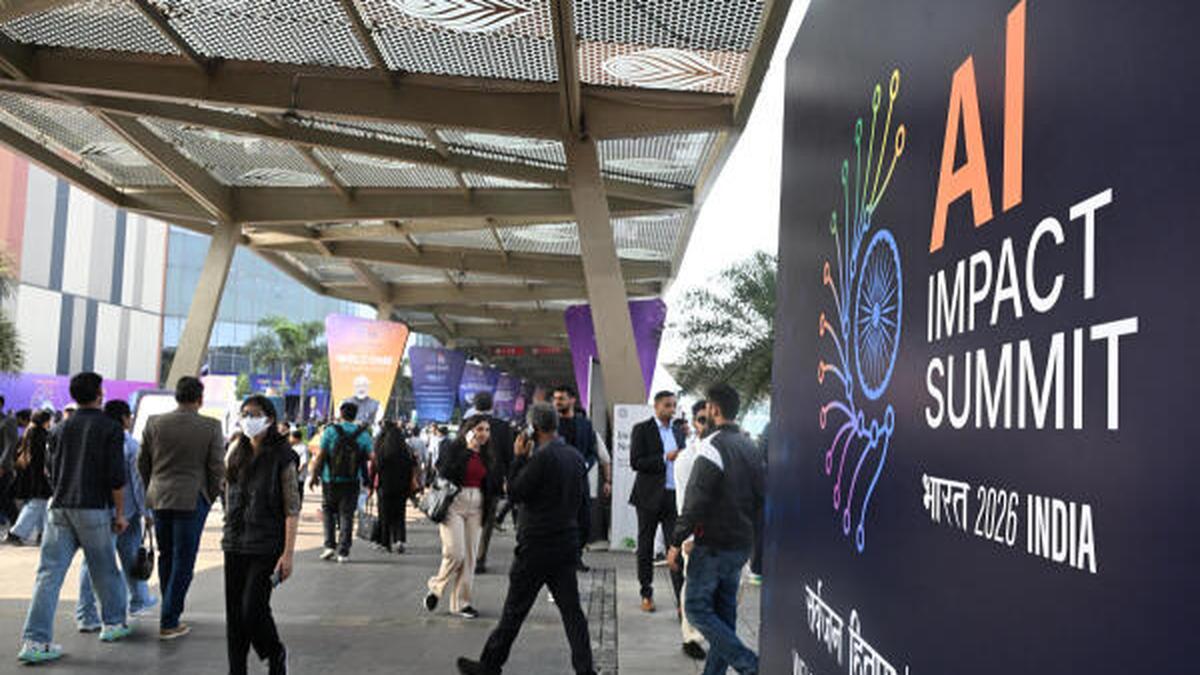
The recently concluded India AI Summit, 2026 has raised the stakes on AI in Education. The energy at the Summit was palpable and Education was a major undercurrent across the Summit. For us to properly realise the benefits of AI, we must consider a much deeper engagement with the challenges of education first!
There is a strong focus on where data resides and how it is used for inference. Most governments are rightly concerned about this, not just for security reasons, but also for reasons of providing far more accurate and contextual use of AI. This includes not just the models, but also the required infrastructure to operate at scale in India.
The vision is to secure data, use voice as primary access channel, build domain specific stacks, and establish AI as a multilingual, inclusive, responsible, omnipresent, bias-free ,and contextual digital public infrastructure. The need is to build indigenous ability at every level of the stack, from hardware to software, from models to GPUs to ubiquitous agents. Interestingly mechanisms are being built to include private copyright content into the training of foundational models, while protecting the revenue rights of the copyright owners. The operational levers to enhance innovation and entrepreneurship are also being put into place – AI into the curriculum, scholarships for students, local/national centres of excellence, funding for research & startups, and many others.
This is without doubt going to be a long and complex journey for policy makers, legal experts and educationists. Many countries have created their own frameworks, but going from those to practice will need hard work and changes in legal and implementation frameworks. Good starting points are more education around AI risks, the implementation of the DPDP Act, effective guardrails and a stated guideline around the use of AI.
This is something I have been espousing for a while now, even when I was providing inputs for the NEP in 2018. India needs an EDU Stack. Early work done by EkStep in DIKSHA has built a foundational platform and architecture for content. And now SAMARTH is in place for education management. But beyond that, very little has been done. An EDU stack needs to focus on secure and reliable core capabilities for content, teaching, learning, assessment, grading, certification and allied activities. Planned as a digital public good, it needs to have built in safeguards and barriers to use.
IIT Madras has been tasked by the Ministry of Education with building the Bharat EduAI stack. The Centre of Excellence in AI for Education has been incubated with the aim of “building sovereign, context-aware AI tools for learning and teaching, ensuring no demographic is left behind in India’s digital transformation”. Bodhan.ai will cover the learning workflow, build foundational assets, scale the infrastructure and with a focus on public widespread and long-term evidence-based deployment to educational institutions. It has posed over 200+ research problems including around LLMs, Language, Agents and Responsible AI, and are soliciting active participation in solving some of these problems.


A.P. DGP pays tribute to Potti Sriramulu on his 125th birth anniversary, honouring his sacrifice for a separate Andhra Pradesh.

Discover the cultural and health significance of neem and jaggery during Ugadi, explained by author Ratna Rajaiah.

A minor fire at Thiruvananthapuram government hospital led to patient evacuations; no casualties reported, situation now under control.

BJP reveals 144 candidates for Bengal Assembly polls, featuring Suvendu Adhikari contesting against Mamata Banerjee in Bhabanipur.

A look at Puducherry Assembly elections in 2021, highlighting the current CM N. Rangasamy and key ministers from AINRC and BJP.

Parliament Budget Session LIVE: Follow The Hindu's latest updates on the Parliament Budget Session on March 17, 2026.

Assembly Elections 2026 LIVE: Follow the latest updates on elections from across West Bengal, Tamil Nadu, Kerala, Assam and Puducherry.

Nvidia chief Jensen Huang on Monday said he expects the artificial intelligence chip powerhouse to bring in at least a trillion dollars in revenue through next year.

Political crossovers intensify in Kerala ahead of the 2026 Assembly elections, challenging traditional party loyalties and alliances.

Ten Lee Pharma employees were injured when their mini-bus overturned in Miyapur; all are in stable condition.

Discover how to turn creative passion into a sustainable business by mastering finance, IP, and strategic growth.

Arjun Krish and Ria Dinesh win Best Telefilm at Kerala State Television Awards for their impactful short film, F for Freedom.

redBus data reveals a significant 76% rise in solo women travelers from Karnataka since 2019, highlighting increasing independence in travel.