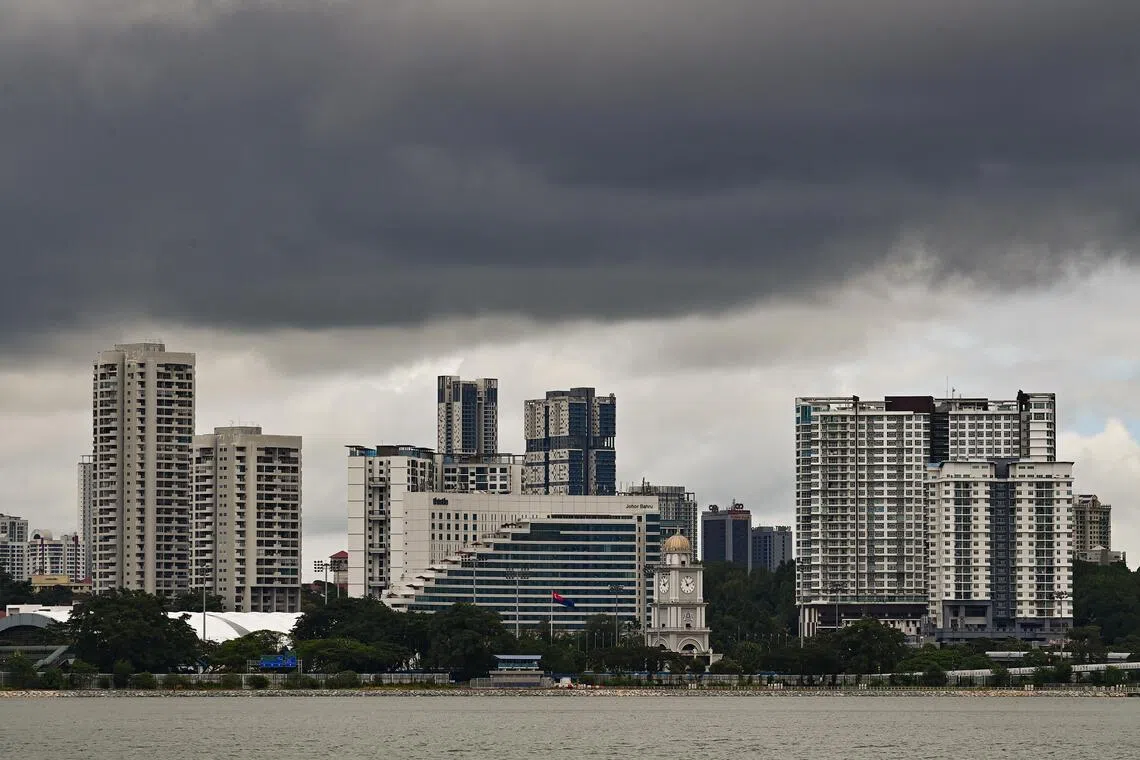
After Sabah quake, should Malaysian property investors rethink risk?
The Straits Times
Following the Sabah earthquake, Malaysian property investors are questioning how seismic risk could impact property values and buyer confidence. Read more at straitstimes.com.
KUALA LUMPUR – When Ms Mastura Malak bought her first home in Kajang, on the outskirts of Kuala Lumpur, in 2018, she thought about location, price and capital appreciation. Earthquake risk did not enter the equation.
The 37-year-old mother of three paid RM245,000 (S$79,615) for the property. Two years later, she added a condominium in the coastal resort town of Desaru, Johor, for RM400,000. Both have since appreciated. For her, like many Malaysians, property is a means to long-term financial security – not a seismic gamble.
Then, just before 1am on Feb 23, the ground shifted.
A 6.8-magnitude earthquake struck off Sabah, sending tremors as far as Peninsular Malaysia and Singapore. There was no tsunami warning, no major structural damage and no reported casualties. The shaking lasted only seconds.
But Malaysia is a country where homes are often a family’s largest investment – a wealth-building tool, a retirement buffer, an inheritance asset. Seismic risk has rarely featured in buying decisions.
The Feb 23 tremor in Sabah has changed that calculus, at least for some property buyers, and prompted an uncomfortable question: What happens to property values and buyer confidence if a stronger quake strikes closer to urban centres?


BERLIN, March 23 - The leaders of Germany's centre-left Social Democrats (SPD) said on Monday the party needed to push ahead with promised reforms to tax and social welfare following the \"catastrophic\" loss in the state election in Rhineland-Palatinate at the weekend. Read more at straitstimes.com.

BUDAPEST, March 23 - Hungarian Prime Minister Viktor Orban ordered a probe on Monday into what he called a wiretapping of his foreign minister as his government sought to deal with the fallout from a media report about its links to Russia before an April election. Read more at straitstimes.com.

Explore how China leverages AI and digital innovation to enhance its soft power through cultural exports like video games and online literature. Read more at straitstimes.com.

The policy could save 20 per cent on fuel purchases, which has spiked since the Middle East war. Read more at straitstimes.com.

COPENHAGEN, March 23 - Denmark holds an election on Tuesday, with opinion polls showing a narrow lead for Prime Minister Mette Frederiksen's centre-left bloc, boosted by her defiant stand against U.S. President Donald Trump's push to take control of Greenland. Read more at straitstimes.com.

Anyone who fails to comply faces a year in prison and a fine of HK$100,000 (S$16,400). Read more at straitstimes.com.

LJUBLJANA, March 23 - Slovenia's political parties looked set for urgent coalition talks on Monday after no clear winner emerged from an election that could sway the Alpine country's domestic and foreign agenda. Read more at straitstimes.com.

MOSCOW, March 23 - U.S.-Israeli strikes near the Bushehr nuclear power plant in Iran are extremely dangerous and Russia has shared its concerns with the United States, Kremlin spokesman Dmitry Peskov said on Monday. Read more at straitstimes.com.

LONDON, March 23 - When Sarah Mullally is enthroned as the Church of England's first female Archbishop of Canterbury on Wednesday, she will inherit a task that has eluded her predecessors: uniting a divided 85-million-strong global Anglican Communion. Read more at straitstimes.com.

There are indications that the Arab stance against the Islamic republic is hardening. Read more at straitstimes.com.

PARIS, March 23 - Lionel Jospin, Socialist prime minister of France from 1997 to 2002, has died. Read more at straitstimes.com.

DUBAI, March 23 - At least five people have died in Oman over the past 24 hours after vehicles were swept away by floodwaters, authorities said on Monday. Read more at straitstimes.com.

About 6,700 police officers, 10,000 public officials and 4,800 safety personnel were deployed. Read more at straitstimes.com.