Afghan evacuees in limbo: Humanitarian parole leaves 1,000s facing uncertainty in US
Voice of America
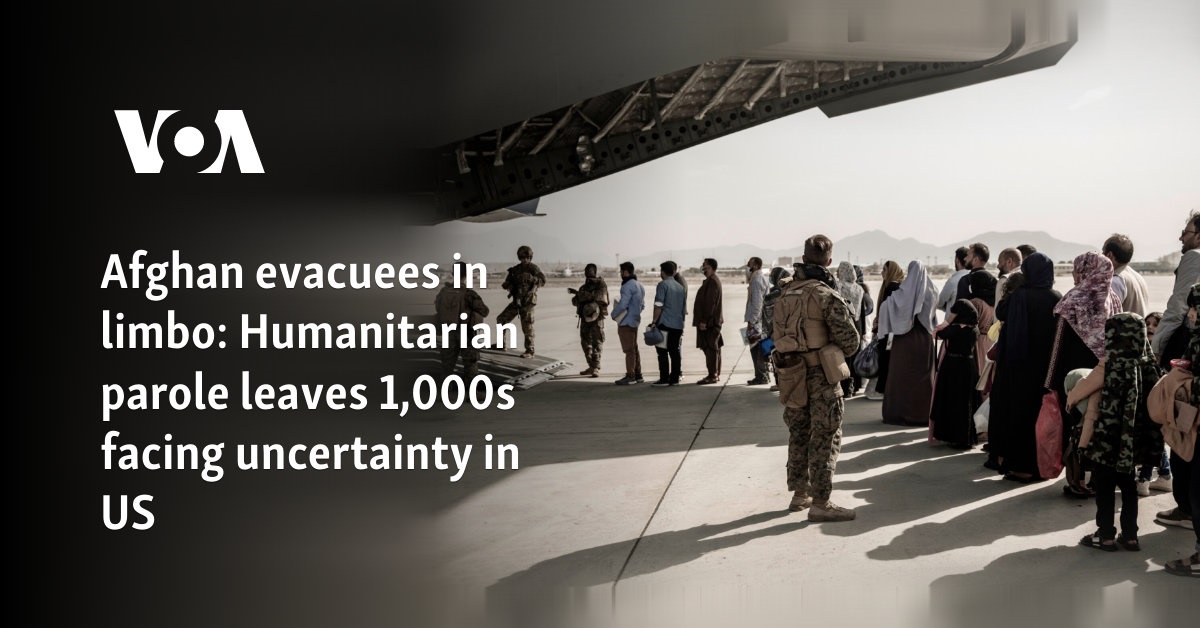
FILE - In this image provided by the U.S. Marine Corps, evacuees wait to board a Boeing C-17 Globemaster III during an evacuation at Hamid Karzai International Airport in Kabul, Afghanistan, Aug. 30. 2021. FILE - Afghan residents play in an informal cricket match at Fort McCoy, Wisconsin, Sept. 29, 2021. FILE - An Afghan man is wrapped in a bear hug by his daughter as he picks up his children from school, in Alexandria, Virginia, April 7, 2022. The family was evacuated from Afghanistan and is trying to make a new life in the U.S., while in immigration limbo.
In 2021, the United States began one of its biggest humanitarian evacuations in history as it withdrew from Afghanistan, resettling more than 80,000 Afghans fleeing Taliban rule in the initial weeks of Operation Allies Welcome. However, they were brought into the U.S. through the humanitarian parole process that gives temporary immigration status to the displaced persons. But how has this temporary status affected Afghan evacuees in the U.S.?
