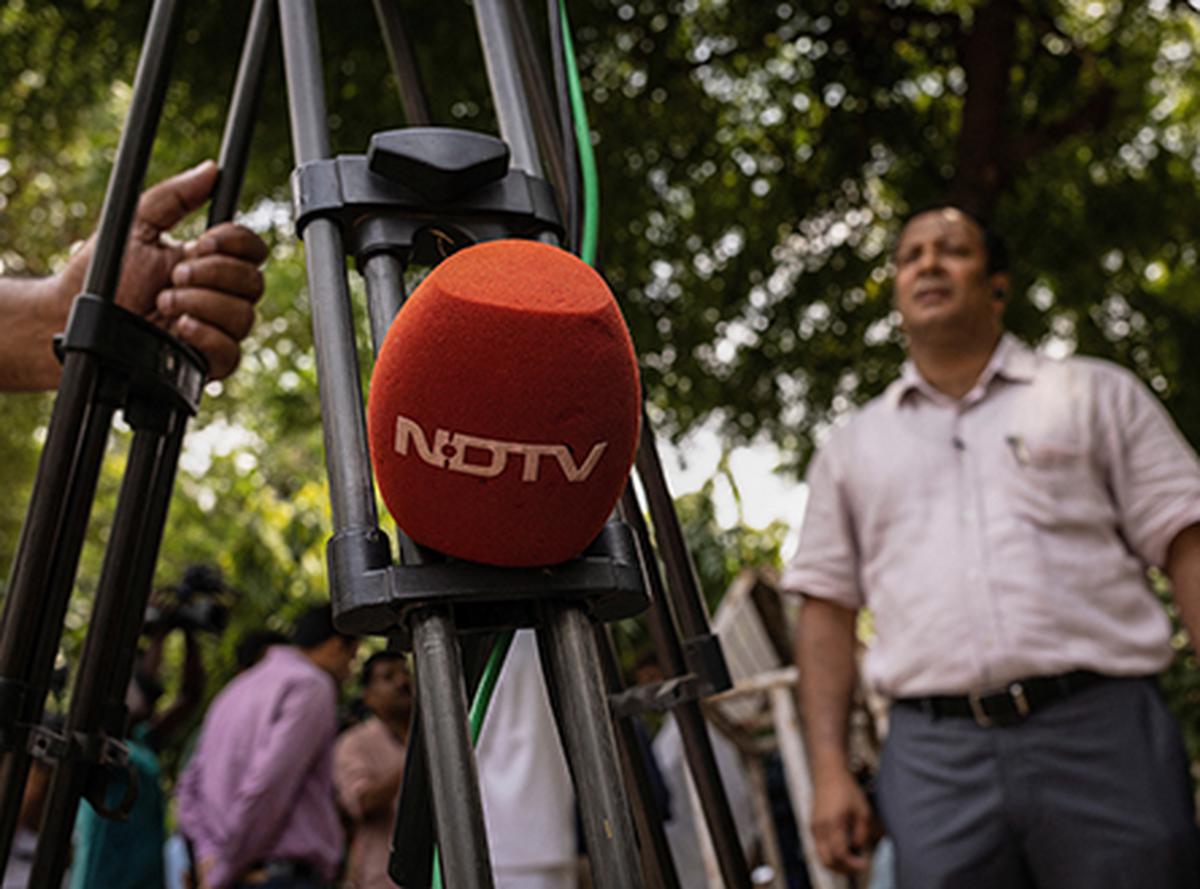
Adani group's NDTV open offer subscribed 32%; poised to be largest shareholder
The Hindu
Gautam Adani, the richest Asian and the founder chairman of Adani group, last month told the Financial Times that he intends to scale up NDTV.
Billionaire Gautam Adani's group has found investors willing to sell over 53 lakh shares of NDTV despite the deep discount to the stock's current trading price, giving it the rights — which it may or may not exercise — to nominate a chairman of the broadcaster.
The open offer, made after Adani group acquired a little-known firm that gave it an indirect holding over 29.18% stake in New Delhi Television (NDTV), closes on December 5, according to a stock exchange notification.
Against the offer to buy 1.67 crore shares, or 26% of equity — from NDTV's minority investors at a price of ₹294 a piece, Adani group has received offers for 53.27 lakh shares, according to data available on the National Stock Exchange (NSE) website.
Corporate investors have offered the most at 39.34 lakh shares while retail investors have offered a little over 7 lakh shares. Qualified institutional buyers (QIBs) have tendered 6.86 lakh shares, according to the NSE data, which did not identify either the corporates or QIBs who have offered to sell their shares.
The offer price of ₹294 per share is a deep discount to the ₹414.40 closing price of NDTV stock on the BSE on Friday.
The shares tendered so far equal to 8.26% of NDTV. Together with 29.18% stake, Adani group has already acquired the ports-to-energy conglomerate at 37.44% stake — larger than 32.26% holding of founders Prannoy Roy and Radhika Roy.
Prior to Adani group's hostile takeover, promoters held 61.45% stake in NDTV. This included 1.88 crore shares or 29.18% held by RRPR Holding Pvt. Ltd.


L&T confirms 95% of its West Asia project sites are safe, while addressing logistics challenges amid ongoing regional conflicts.

Mines Ministry to auction 19 critical mineral blocks on March 23, expanding strategic resources for clean energy and technology sectors.

Mines Ministry to auction 19 critical mineral blocks on March 23, expanding strategic resources for clean energy and technology sectors.

Five top firms lose ₹1 lakh crore in market value, with HDFC Bank experiencing the largest decline of ₹56,124.48 crore.

HDFC Bank terminates three senior officials over client onboarding issues at its DIFC branch amid ethical concerns following chairman's resignation.

Air India CEO warns of potential flight cuts and reduced travel demand due to rising fuel costs amid ongoing Gulf conflict.

Options are widely used by retail traders to speculate on the value of the stock for immediate gains and such behaviour in large scale can distort the market

India achieves 1 billion tonne coal production for the second consecutive year, ensuring stable energy supply and economic growth.

Generic drugmakers in India launch affordable Semaglutide versions, targeting a $1 billion diabetes and weight loss market.

Indian and Asian refiners eye Iranian oil purchases as U.S. waives sanctions amid energy crisis linked to the Iran-Israel war.

Iran war impacts pesticide prices, warning of a 20-25% rise and increased risk of counterfeit products during the kharif season.

India's forex reserves fell by $7 billion to $709.76 billion, according to RBI data for the week ending March 13.

Natco Pharma will launch its Semaglutide injection (multi dose vials) in the domestic market on Saturday.