Adani case: Supreme Court can transfer probe if proof of agency bias is strong
The Hindu
Supreme Court refuses plea to drop SEBI from Adani probe, emphasizes need for unbiased investigation and transparency.
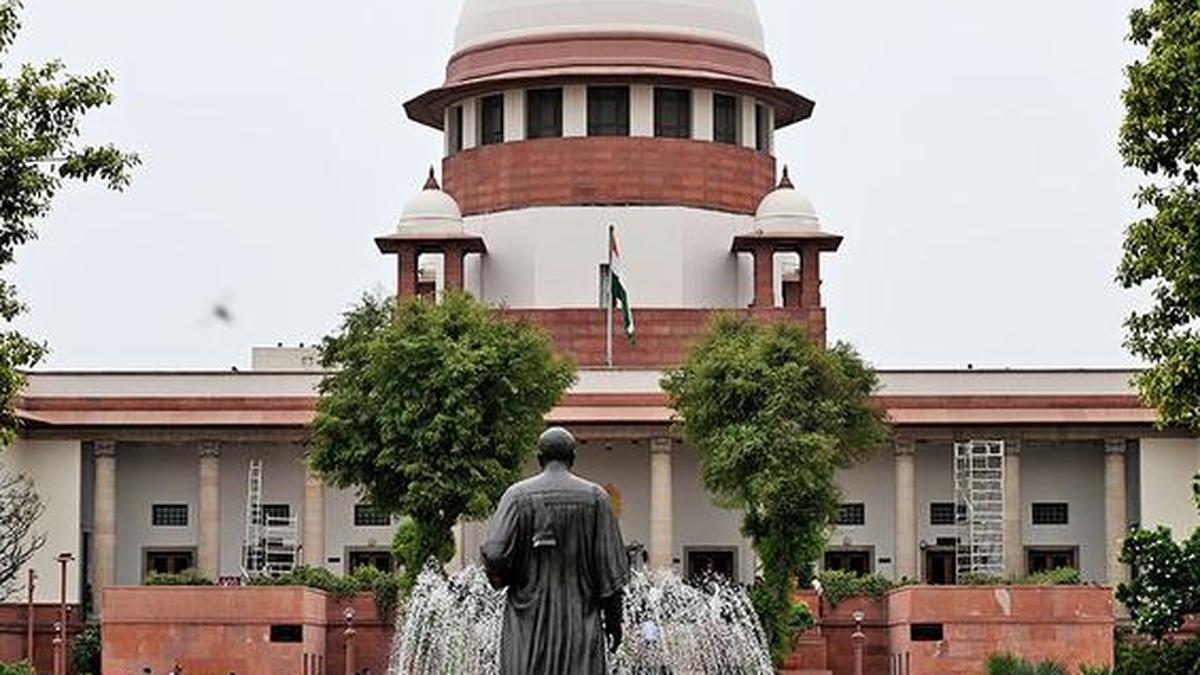
The Supreme Court had said cogent evidence of bias or portrayal of inadequacy would convince it to transfer a probe to an independent agency or a court-appointed Special Investigation (SIT) while refusing a plea to drop Securities Exchange Board of India (SEBI) from investigating Hindenburg’s allegations of share price manipulations and other irregularities against the Adani group.
The judgment was delivered by a three-judge Bench headed by Chief Justice of India D.Y. Chandrachud on January 3 this year.
In fact, the court had said the SEBI’s conduct of the investigation “inspired confidence”. The court patted SEBI on the back for conducting a “comprehensive investigation”. At the time, SEBI had concluded 22 of the 24 investigations. It was waiting for inputs from “external agencies/entities” before deciding on the future course action to take in the remaining two probes. This was the last report on the status of the investigation in the Supreme Court.
The court’s judgment had brought quietus to criticism about SEBI’s probe into the Adani Group for the past eight months. However, a storm is gathering with Hindenburg’s latest allegations against SEBI chief Madhabi Buch.
The shortseller has accused Ms. Buch of having a stake in obscure offshore entities used in what it alleged was ‘the Adani money siphoning scandal’.
The Opposition has taken to the social media. Leader of Opposition in the Lok Sabha Rahul Gandhi has tweeted that the integrity of the SEBI has been gravely compromised by the allegations against its Chairperson.
The apex court, in its January 3 judgment, had acknowledged its power under Article 32 and Article 142 of the Constitution to transfer an investigation from the “authorised agency” to the CBI or constitute an SIT. However, it had said this was a rare power, to be used only if there was strong evidence on record that the investigation was prima facie tainted or biased and its continuation would lead to a “failure of justice”.


CPI-M accepts DMK's five-seat offer for Tamil Nadu Assembly elections, prioritizing INDIA bloc unity over seat demands.

Ricky Rai, son of former underworld operative Muthappa Rai, on Monday appeared before the Bengaluru Traffic Police for questioning in connection with a case involving a Lamborghini performing dangerous stunts at Anil Kumble Circle on March 21.

The Dispur election heats up as 'CongBJP' defections shape a high-stakes contest between veteran candidates from BJP and Congress.

Bengaluru's M. Chinnaswamy Stadium conducts readiness drill ahead of IPL 2026, ensuring upgrades and technical preparations are complete.

First-level randomisation of EVMs completed in Nagapattinam for upcoming elections, ensuring transparency and security.

A district-level committee in Krishnagiri has been formed to assess and verify seizure claims of goods and cash.

Minister Anam Ramanarayana Reddy pledges government support for local fishermen and farmers facing challenges in Andhra Pradesh.

MP M. Sribharat urges collective efforts to revive Visakhapatnam Steel Plant, highlighting key reforms for crucial recovery and growth.

141 candidates have filed nominations for Kozhikode's Assembly elections, with scrutiny on March 24 and campaigning intensifying.

BJP's Vijayendra accuses Congress of using money to influence Bagalkot bypolls, urging voters to reject their tactics.

First randomization of electronic voting machines completed in Tirunelveli and Tenkasi districts for upcoming Assembly elections.

RPF seizes 10.12 kg of unclaimed cannabis worth ₹5.06 lakh from a train in Mangaluru.

Kolar's groundwater levels rise to 50-100 ft due to the K.C. Valley project, ensuring clean water and improved health outcomes.