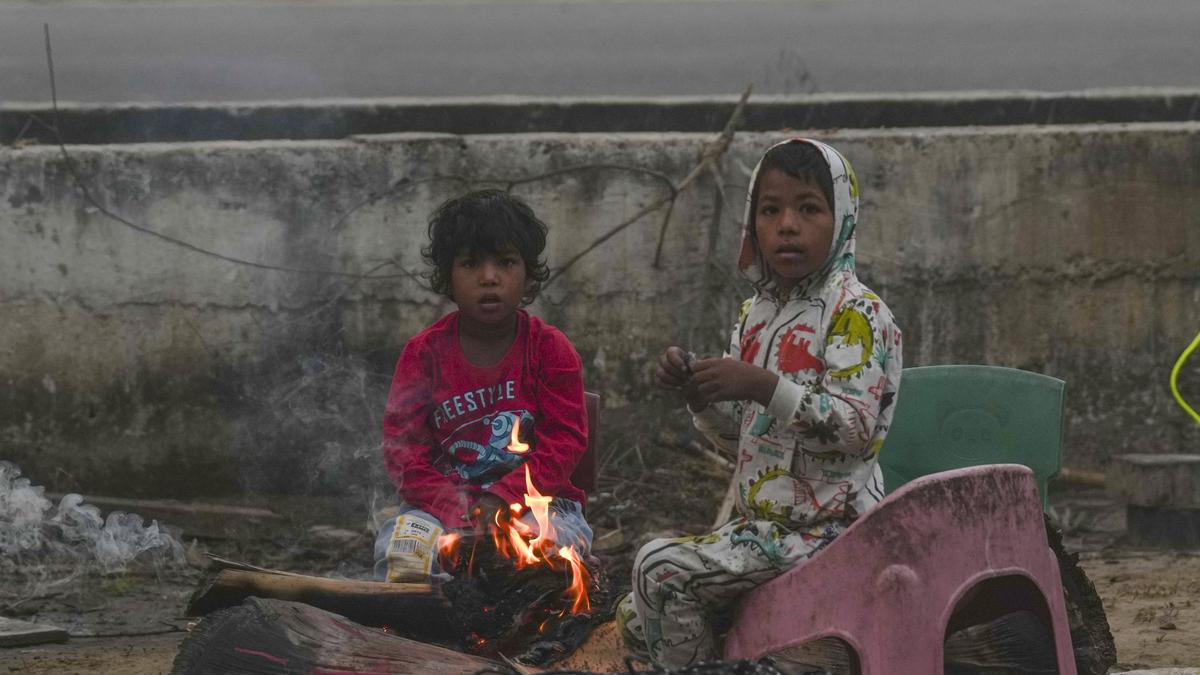
About 182 million children in poor nations lack nurture; pollution, climate change risk factors: Study
The Hindu
Child development impacted by environmental factors, highlighting importance of early childhood care and education programs in LMICs.
In low- and middle-income countries (LMICs), three-fourths of those aged three or four years lack -- nearly 182 million children -- access to adequate nurture, thereby risking healthy development, according to a new series paper, published in The Lancet journal.
Child development is also affected by air pollution, climate change, and exposure to chemicals, which are emerging environmental risk factors, said an international team, including researchers from the Centre for Chronic Disease Control (CCDC), New Delhi.
Explained | India’s crèche scheme and the laws that govern childcare facilities
The series builds on the foundation of the first 1,000 days of life -- referring to the time period starting conception until two years old -- and highlights how the 'next 1,000 days' (from age two to age five) is a crucial window of opportunity for providing nurturing care to children, the researchers said.
During this stage of "next 1,000 days", children are often not in direct regular contact with health or education services, with fewer than one in three children aged three or four attending early childhood care and education programmes in LMICs, said the researchers.
The authors called for an increased investment for this stage of child development, with a particular focus on improving access to high quality childhood care and education programmes, which should involve adequately paid and trained teachers and reasonable teacher-student ratios.
These programmes should also include child-centred play, evidence-based curricula, and warm, stimulating, and responsive classroom interactions, they said.


Saudi Aramco reduces crude supply to Asia for April, citing disruptions from the Iran-Israel conflict affecting trade routes.

Tencent launched a tool on Sunday to integrate its WeChat messaging platform with the OpenClaw agent

An Air Canada flight collided with a Port Authority vehicle at LaGuardia Airport, causing significant damage and police response.

Saudi Arabia and the UAE face missile attacks, with casualties reported and air defenses engaged amid escalating regional tensions.

Slovenia's parliamentary election results show a tight race between liberals and populists, signaling potential political instability ahead.

IEA chief warns of a potential energy crisis worse than the 1970s, with 11 million barrels lost daily amid regional conflicts.

Cuba begins restoring power after a nationwide grid collapse, affecting thousands amid an ongoing energy crisis and blackouts.

The Hindu LIVE updates on March 23 2026 on Iran-Israel war. Iran faces deadline of US President Donald Trump warning to open Strait of Hormuz

Brazil's Lula condemns renewed colonialism and U.S. interference in developing nations at a summit in Colombia.

Saudi Arabia expels Iranian military staff amid escalating tensions and ongoing missile attacks during the U.S.-Israeli war on Iran.

Russia claims control of Potapivka village in Ukraine's Sumy region amid ongoing military efforts to establish a buffer zone.

Iranian missile strikes on Israeli towns cause widespread damage and injuries, marking a significant escalation in the ongoing conflict.

As Gor makes first trip as U.S. Special envoy to South Asia, Delhi watches strategic signals closely
Sergio Gor's inaugural trip as U.S. Special Envoy to South Asia signals strategic U.S. engagement amid regional tensions.