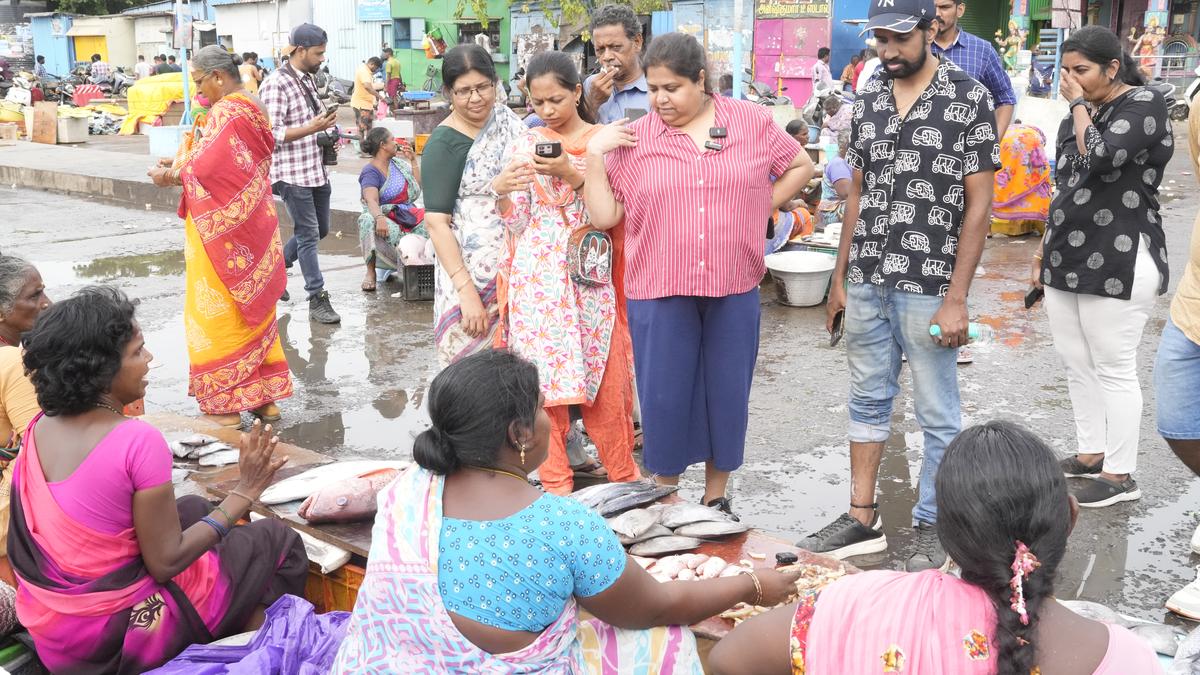
A trail through Kasimedu in Chennai with fresh fish fry and a side of stories
The Hindu
Explore the bustling Kasimedu fish market in Chennai with food blogger Shabnam Kamil on a unique seafood trail.
To the calming backdrop of the ocean , Kasimedu fish market bustles with activity. At 7am on August 24, a group of curious Chennaiites gathers around food blogger Shabnam Kamil, who is set to lead the Kasimedu Trail, organised in collaboration with Made of Chennai, an initiative by The Hindu. “When I first came here a few years back, it felt daunting, based on the portrayal of the area but my perception changed upon subsequent visits,” shares Shabnam.
Fishermen pluck fish off their nets and load them into baskets, which are quickly transported to the selling stalls. By 7am, the best catch has already been sold. “All the big fish move quickly during the bidding that happens earlier; we have the smaller ones,” says a fisherwoman. For a market that opens around 1:30am, this hour is nearly dusk.
The market is divided into different zones: the harbour where boats dock, the selling stalls, the cutting stalls, the dry fish area, and the ice factories. The stalls are filled with crabs, squids, prawns, small sharks, seer fish (vanjaram), barracuda (seela), red snappers, ladyfish (kizhanga), and more.
B Revathi, a fisherwoman at one of the stalls, says she has been selling fish for the past four years. “I like this work. My husband catches the fish, and I sell them,” she says. She describes how she prepares fish for curry: “You can make them into puttu, fry them, or use them in kuzhambu. For the kuzhambu, I use tamarind water, onion, tomato, green chilli, coriander powder, turmeric, chilli powder, salt, and pepper. No other masalas,” she explains.
At the cutting stalls, we meet the YouTube-famous Kasimedu ‘Speed’ Selvam, known for his swift knife skills. Casually gutting and chopping fish, he shares, “Only when there is a fishing ban or during the month of Purattasi is business slow. Otherwise, we keep getting work. Sometimes we get fish that are very difficult to process — they have a lot of scales. I take leave the next day.”
As we move towards the dry fish — or karuvadu — market, the salty air thickens. B Mathiyazhagan displays baskets of dry fish ranging from anchovies to squid, king fish, and a larger quantity of ribbon fish. “Karuvadu is generally high in protein. This vaalai karuvadu (ribbon fish) is good for leg pain or body pain,” he says. Shabnam chimes in, “They recommend this if someone has chikungunya, right?” and he affirms. Nearby, a vat full of ribbon fish soaks in brine, while the previous batch sun-dries beside it.
Shabnam then leads the group into the ice factory — the last stop. The air suddenly turns cold, but no ice is visible. K Manoharan, who has been in service for 40 years, lifts a wooden tile on the floor with a crowbar, revealing a container of water slowly freezing. “It takes 24 hours for each container to freeze. We have a gas chamber and get water in tankers. We use salt to speed up the freezing process. Each block is about 140 kilograms, and there are almost 200 of them,” he explains.


The government plans to amend the FCRA, introducing new regulations for NGO asset management and accountability for key functionaries.

The draft policy for “Responsible Digital Use Among Students”, released on Monday by the Department of Health and Family Welfare, has recommended that parents set structured routines with clear screen-time rules and prioritise privacy, safety, and open conversation with children on digital well-being.

Police Observer Sushant Kumar Saxena conducts surprise inspection at Shencottai police station, reviewing warrants and security arrangements ahead of elections.

Andhra Pradesh government to launch key projects in April, focusing on industrial growth and infrastructure development, says Nara Lokesh.

Lok Sabha refers the Corporate Laws (Amendment) Bill to a JPC amid opposition concerns over CSR provisions dilution.

SHG members in Kanniyakumari use snakes and ladders to raise election awareness and boost voter turnout.

Government accelerates consultations for early implementation of the Women’s Reservation Act to ensure women’s representation in 2029 elections.

CM A. Revanth Reddy distributes ₹1 crore insurance cheques to families of deceased Electricity department employees, enhancing financial security for workers.

The Bengaluru Traffic Police (BTP) registered 634 cases of drunk driving during a week-long special enforcement drive conducted across the city between March 16 and March 22.

GHMC intensifies action against property tax defaulters, seizing properties and offering a One Time Settlement scheme for payments.

CCB arrests three drug peddlers in Mangaluru, seizing ₹2.5 lakh worth of MDMA and other valuables.

TVK's 28 candidates in Puducherry include former BJP MLAs, a sitting Independent, and a retired police IG.

BRS submits notice on private member bill to Speaker