A peek into the legacy of Bengaluru’s St. Joseph’s Boys’ High School Premium
The Hindu
Gowri Mirlay Achanta points to the silver in her hair and says, with a laugh, “Every strand of my grey hair talks of the trauma of teaching 6000 teenage boys.” The effort, clearly, was worth it. Achanta, who has taught history at St. Joseph’s Boys’ School since 1985, was greeted with warmth by the many old boys as she delivered a talk recently on Schooling Bangalore: The legacy of St. Joseph’s Boys’ High School.
Gowri Mirlay Achanta points to the silver in her hair and says, with a laugh, “Every strand of my grey hair talks of the trauma of teaching 6000 teenage boys.” The effort, clearly, was worth it. Achanta, who has taught history at St. Joseph’s Boys’ School since 1985, was greeted with warmth by the many old boys as she delivered a talk recently on Schooling Bangalore: The legacy of St. Joseph’s Boys’ High School.
Over around 45 minutes of the talk at The Bangalore Room, Indiranagar, punctuated often by applause and laughter, Achanta traced the history of this 166-year-old institution, linking it to Bengaluru’s larger colonial experience, global events, including the two world wars, the complex history Catholic church and the lived experiences of many young men who were educated at St. Joseph’s.
The year was 1799. Tipu Sultan, the ruler of Mysore, was dead at the age of 47, killed by the British during the Fourth Anglo-Mysore War. The British took over Srirangapatna and later, in 1809, moved their Cantonment to Bengaluru. “Obviously, a lot of European people settled here. And, once they did, they needed schools, hospitals, markets…,” says Achanta.
The Archbishop of Bangalore approached a certain group of priests, the Missions Etrangeres de Paris (MEP), and asked them to start a school here. “This was in 1858, one year after the First War of Independence,” she says. The school, which was then located at St. Johns Hill, Frazer Town, was named St. Joseph’s Seminary. “They had a seminary, an orphanage, and this little school,” she says.
The school stayed in this location until 1898, going through many changes in these 40-odd years. However, they began finding Frazer Town too desolate and decided that they no longer wanted to stay there. They wanted to move to the cantonment. “So, they bought a piece of land called Rocklands on Museum Road and moved the school there. It has been there ever since,” she says.
Using archival photos, old documents, and the school’s in-house annual magazine, Gowri traces the school’s evolution over two centuries. She begins by showing sepia-toned staff photographs to illustrate how the staff has changed. For instance, a photograph taken in the late 1800s depicts an all-male, mostly white staff dominated by the black-cassocked MEP fathers, while another, taken in the mid-1900s, offers a glimpse of nearly 17 women teachers, two in sarees.
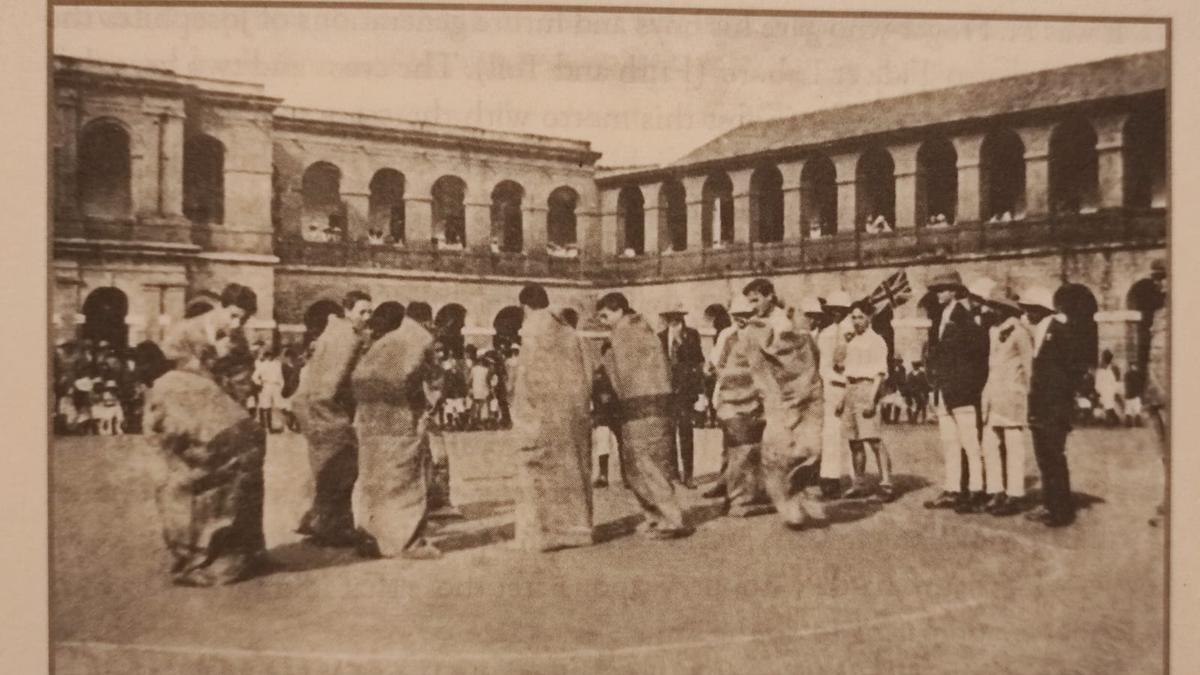
Other exhibits at the talk include photographs of boys involved in sporting activities, images of Josephites who fought in the First World War, a glimpse of the school infirmary, and hat ads in the annual magazine.


First-level randomisation of EVMs completed in Nagapattinam for upcoming elections, ensuring transparency and security.

A district-level committee in Krishnagiri has been formed to assess and verify seizure claims of goods and cash.

Minister Anam Ramanarayana Reddy pledges government support for local fishermen and farmers facing challenges in Andhra Pradesh.

MP M. Sribharat urges collective efforts to revive Visakhapatnam Steel Plant, highlighting key reforms for crucial recovery and growth.

141 candidates have filed nominations for Kozhikode's Assembly elections, with scrutiny on March 24 and campaigning intensifying.

BJP's Vijayendra accuses Congress of using money to influence Bagalkot bypolls, urging voters to reject their tactics.

First randomization of electronic voting machines completed in Tirunelveli and Tenkasi districts for upcoming Assembly elections.

RPF seizes 10.12 kg of unclaimed cannabis worth ₹5.06 lakh from a train in Mangaluru.

Kolar's groundwater levels rise to 50-100 ft due to the K.C. Valley project, ensuring clean water and improved health outcomes.

Three smugglers arrested in Sangareddy with 574 kg of ganja valued at ₹2.87 crore during a police operation.

Mysuru MP urges a 'flex-free Mysuru' by discouraging birthday banners, promoting responsible celebrations to preserve the city's heritage.

Farmers of Kalakudi demand payment for paddy bags procured at DPC

BJP's seal on a 2019 Election Commission letter ignites controversy in Kerala, prompting claims of careless handling by CPI(M).