A nuanced and compassionate understanding of Rohingya’s flight is the need of the hour Premium
The Hindu
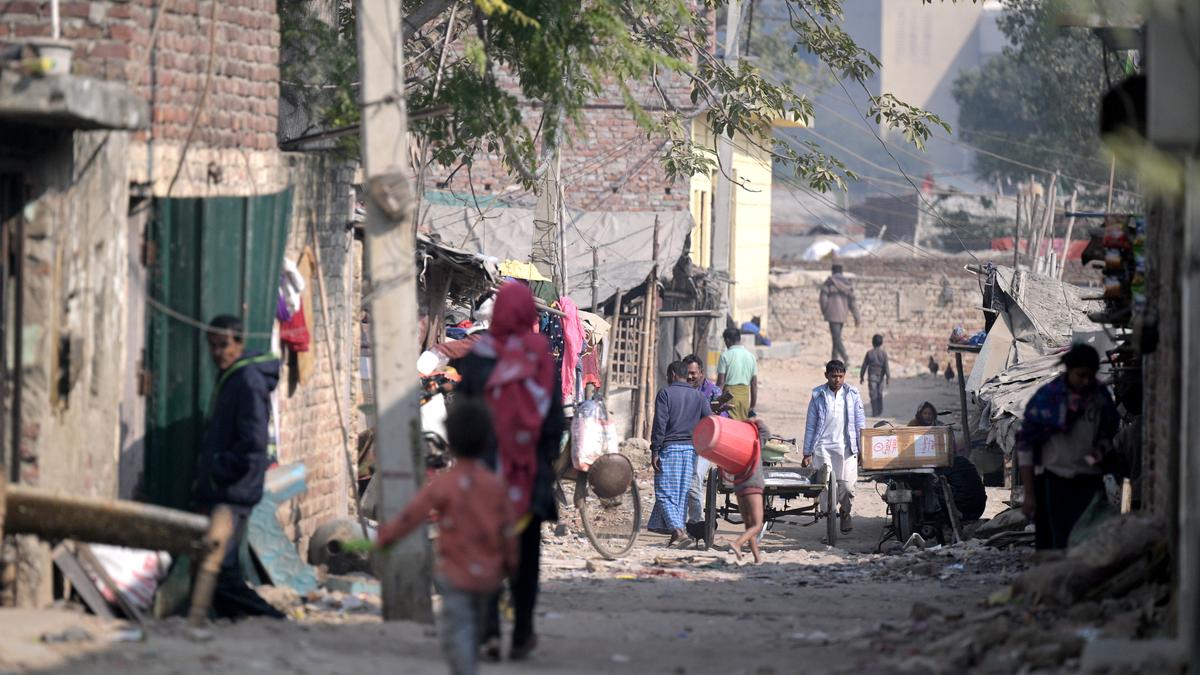
The presence of Rohingya community within India is progressively becoming an issue of political blame-game and some political actors are busy pedalling mass anxiety without factoring in the complex multiplicity of vectors related to the issue, including the growing importance of the issue globally.
The presence of Rohingya community within India is progressively becoming an issue of political blame-game and some political actors are busy pedalling mass anxiety without factoring in the complex multiplicity of vectors related to the issue, including the growing importance of the issue globally. Thus it is creating a situation where the presence of Rohingyas is becoming a manifestation of classic tale of poor and illegal immigrants in global north or global south as they are vilified and blamed for the rise in crime. They are dehumanised and subjected to dog-whistle tactics of mainstream politicians to induce mass anxiety.
In Uttar Pradesh, in July 2023, the police had reportedly detained 74 Rohingya Muslims — 55 men, 14 women, and five minors — in 2023. Now, in Muslim majority former State of J&K , the BJP recently gave a new turn to the issue by appealing to J&K Lt. Governor Manoj Sinha to initiate a CBI probe into the rising number of Rohingyas and Bangladeshi settlers in J&K. It termed their settlement as a major “political conspiracy”. They have accused the ruling National Conference government of protecting the settlers by providing them with power and water connections because they were members of a “particular community.” The J&K Chief Minister Omar Abdullah, who assumed office only in October, 2024, urged the central government to formulate a clear policy to determine the fate of the Rohingyas in the Union Territory, terming the condition to be a ‘humanitarian dispute’. He reportedly said, “The central government should decide what to do about them. If they can be sent back, they should be sent back. But if we cannot send them back, we cannot let them starve or freeze to death.” Stating that the Rohingyas must be treated with “dignity”, the Chief Minister said, “They are human beings and must not be treated like animals.”
In the national capital, within the same time-frame as the Delhi Assembly elections approach, the AAP accused the BJP of orchestrating a conspiracy to bring and settle Rohingya refugees in Delhi. AAP leader Manish Sisodia had reportedly referred to Minister Hardeep Puri’s social media post on August 17, 2022, where he reportedly announced the relocation of Rohingya refugees to EWS flats in Delhi’s Bakkarwala area. In the social media post, Minister Puri had said, “India has always welcomed those who have sought refuge in the country. In a landmark decision, all Rohingya refugees will be shifted to EWS flats in Bakkarwala, Delhi. They will be provided basic amenities, UNHCR IDs, and round-the-clock Delhi Police protection.”
In this season of points scoring over Rohingya presence in India, multi-dimensional nuances related with the community both at the national, regional and global levels, including the historical context which has deep connections with India, are being ignored. A key argument in support of their deportation is that their stay in India may endanger national security. However, there is no evidence to this effect, a fact underlined by security officials, including in the sensitive region of J&K. The number of Rohingyas living outside, particularly in Bangladesh, as stateless population, is more than two million which is four times that of those who are in that country. As per the Arakan Project, in 2019-20, the approximate number of Rohingyas living in Bangladesh, Saudi Arabia, Pakistan, India, the UAE and Malaysia was 9,47,000, 5,00,000, 3,50,000, 40,000, 50,000 and 1,50,000, respectively. Bangladesh hosts the maximum of number of refugees and they have come to the country in several phases. The most recent was in August 2017 as 720000 Rohingyas were expelled from Rakhine in Myanmar on account of the army’s allegedly disproportionate use of force after attacks by the Arakan Rakhine Salvation Army on military’s posts. The magnitude of the displacement in 2017 can be gauged from the fact that Maungdaw district, comprising the townships of Maungdaw and Buthidaung, with a population of over 7,50,000 Rohingyas, witnessed a near-total exodus.
The issue requires unpacking within its regional as well as broader context. Within the subcontinent, in actual terms, the presence of Rohingya is nothing new. They had been migrating from Myanmar in the last three-decades and the trigger for the migration of the Rohingyas is persecution. To understand the problems of statelessness of the Rohingyas, one has to factor in the contestations of history, identity, colonialism and conceptualisation of modern-day nationhood. Myanmar’s version is that the Rohingyas came from Bangladesh to Rakhine and their language is Chittagonian, which has similarities with Bengali. Myanmar calls Rohingyas ‘Bengalis’, which goes against the universally agreed right of the community to ‘self-identify’. It is said that the British, when they gained control of Rakhine, facilitated the flight of the Rohingyas as sharecroppers. The community contests this version. Its members affirm that they are native to Rakhine and have a distinct language.
In this battle of versions, little attention is paid to the fact that till the British empire imploded in 1947-48 in Myanmar and India and new nation-states were created, including Myanmar and East Pakistan (which became Bangladesh in 1971), the border between the coastal Rakhine and neighbouring Bangladesh’s Chittagong district was porous. The seeds of the exclusionary citizenship project in Myanmar, which directly impacted Rohingyas, were sowed by General Ne Win, a military dictator who ruled the country from 1962 to 1981. General Ne Win’s administration identified 135 national races of Myanmar, excluding the Rohingya. Building on that, his successor President San Yu passed a citizenship law in 1982. The law recognised three categories of citizens, namely, citizen, associate citizen and naturalised citizen. Full citizenship is granted to the descendants of residents who lived in Myanmar prior to 1823 or were born to parents who were citizens at the time of birth. 1824 is the year when the first Anglo-Burmese war took place. Associate citizens are those who acquired citizenship through the 1948 Union Citizenship Law. Naturalised citizens are those who lived in Myanmar before January 4, 1948, the date of the country’s independence, and applied for citizenship after 1982. Thus Rohingyas were stripped of citizenship rights in 1982 and thus started more than four decades of institutionalized discrimination and oppression.
The 2008 Constitution drafted and promulgated by the military is still in operation and it has 135 national races enshrined. The authorities in Myanmar argue that the Rohingya are not a distinct ethnic group and that they are ‘Bengalis’. However, facts demonstrate that the Rohingya were once part and parcel of the country’s political and electoral landscape. A Rohingya leader, who had been a Member of Parliament, had even served as a federal minister in the early 1960s. Till 2010, the Rohingya even participated in national elections, though they were declared non-citizens in 1982. It was only in 2015 that the authorities took away their voter cards. Facing criticism, including at the Security Council and General Assembly, President Thein Sein and his successor Aung Sung Suu Kyi’s National League for Democracy’s governments often cited the national verification card (NVC) process as their commitment to grant citizenship to anyone who fulfilled any of the three criterion. However, there was a catch as the Rohingya could only declare themselves as ‘Bengalis’ as Myanmar does not accept the Rohingya as an ethnic group. The 2014 census failed to officially enumerate the Rohingya as they boycotted the exercise. The fact is that the anti-Rohingya narrative of several decades created a situation where even a seemingly democratic and liberal party like the ruling National League for Democracy (NLD) exacerbated the situation of Rohingyas. The NLD oversaw two phases of violent expulsions of Rohingyas in 2016 and 2017.


Trump postpones military strikes on Iranian power plants for five days amid escalating tensions and ongoing diplomatic discussions.

Shorts News:Watch: NATO chief: 22-nation group forming to secure Strait of Hormuz

Saudi Aramco reduces crude supply to Asia for April, citing disruptions from the Iran-Israel conflict affecting trade routes.

Tencent launched a tool on Sunday to integrate its WeChat messaging platform with the OpenClaw agent

An Air Canada flight collided with a Port Authority vehicle at LaGuardia Airport, causing significant damage and police response.

Saudi Arabia and the UAE face missile attacks, with casualties reported and air defenses engaged amid escalating regional tensions.

Slovenia's parliamentary election results show a tight race between liberals and populists, signaling potential political instability ahead.

IEA chief warns of a potential energy crisis worse than the 1970s, with 11 million barrels lost daily amid regional conflicts.

Cuba begins restoring power after a nationwide grid collapse, affecting thousands amid an ongoing energy crisis and blackouts.

The Hindu LIVE updates on March 23 2026 on Iran-Israel war. Iran faces deadline of US President Donald Trump warning to open Strait of Hormuz

Brazil's Lula condemns renewed colonialism and U.S. interference in developing nations at a summit in Colombia.

Saudi Arabia expels Iranian military staff amid escalating tensions and ongoing missile attacks during the U.S.-Israeli war on Iran.

Russia claims control of Potapivka village in Ukraine's Sumy region amid ongoing military efforts to establish a buffer zone.