A novel that captures the reconversion of Catholic fishermen to Hinduism
The Hindu
A rare tale of religious conversion and conflict in Tamil Nadu's coastal village, vividly depicted in a novel.
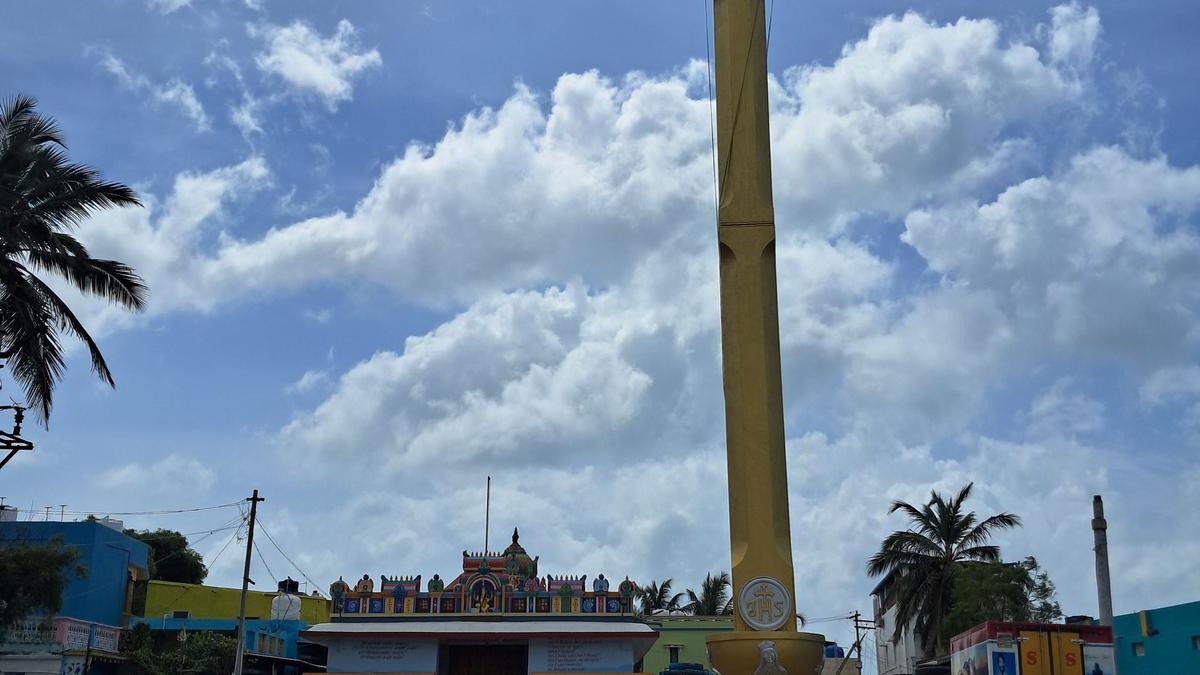
A Vinayagar temple in front of a church, especially in the southern coast of Tamil Nadu where the entire fishermen community converted to Catholicism centuries ago, is a rare sight. The Siddhi Vinayagar Temple, facing Our Lady of Lourdes Church at Idinthakarai in Tirunelveli district, is only a few decades old. Behind it lies a tumultuous history that led to the reconversion of a significant section of the fishermen to Hinduism in the 1960s. It is a story vividly told in the novel Alaivaikaraiyil by Rajam Krishnan, whose centenary is celebrated this year. Alaivaikaraiyil is the fictionalised name for Idinthakarai.
“At least 200 of us become Hindus and join the larger population outside. There is an organisation called the Hindu Parishad. They are ready to offer us all help. After all, we were Hindus in the past. St. Xavier converted us to Christianity,” says Benjamin, one of the characters. He says this while convincing his friends and relatives who faced police brutality for refusing to sell shark fins to contractors appointed by the church.
As Rajam Krishnan says in the preface, the Idinthakarai fishermen had been paying taxes and offering shark fins to the church ever since their conversion to Christianity. “In 1965-66, a section of fishermen, realising the value of fins, refused to part with them. This angered the church and some priests, who excommunicated the protesting fishermen. The Vishwa Hindu Parishad (VHP) brought them back to Hinduism,” she writes.
A vivid scene in the novel captures the confrontation between the fishermen and the church contractor. Blood oozes from Jebamalayan’s hands. Irudhayam Mama (uncle) lies curled up on the sand. ‘Aatha’ (the mother of the novel’s hero Mariyan) is shouting. Samsalamma is cursing someone. Siluvai Moduthavam is holding a club and vows to root out those who were against the church.
“I suffered heavy losses this year. Ask them to give me at least half the fins from the catch. I have paid ₹4,000 for this contract,” contractor Periya Sayubu pleads with Benjamin, a friend of Mariyan. “Did we ask you to bid for the contract? Even at last year’s auction, we made our stand clear...,” Benjamin retorts, collecting the bag of fins from Issac.
Reading the novel, written in the fishermen’s dialect of southern Tamil Nadu, is no easy task for an outsider. Yet Rajam Krishnan, an outsider herself, delved deep into the daily lives of the fishermen. Until the arrival of Joe D’Cruz, who won the Sahitya Akademi Award for Korkai, Alaivaikaraiyil remained the only authentic work on the lives of the region’s fishermen.
Standing near the Vinayagar temple — now attached to the Murugan temple in Tiruchendur — is Anbu. His father Soosai Anthony was one of the fishermen who resisted the church’s diktat in real life protests in 1966. “The local parish priest and the Bishop excommunicated them, a decision that led to a clash, and the police ravaged our village. My father was tied to a post and beaten. I still remember my mother rushing to the spot and seeing him vomit blood,” recalls Anbu. His father resembles Mariyan’s father Irudhyaraj in the novel, who is kept in a secret room in the church and tortured by the police.


Leader of Opposition R. Ashok on Tuesday alleged in the Legislative Assembly that the ruling Congress government is planning to shut down Bengaluru’s only Government Flying Training School (GFTS) at Jakkur to develop an exclusive club for MPs, legislators, and senior bureaucrats.

The highlight of every edition of the Whitefield Art Collective is the Kala Car, an exhibit that showcases the creative and artistic prowess of art students. Over the years, this clever play on words has titled vehicles that have either been rescued from the scrap yard or sponsored or auctioned or all of the above.

Devotees flock to Sri Kanaka Durga Temple for serene Pushparchana celebrations during Vasantha Navaratri, adorned with fragrant floral decorations.

CAG audit reveals Arvind Kejriwal's bungalow renovation exceeded budget by 342%, costing ₹33.66 crore instead of ₹7.91 crore.

Unexpected hailstorm and evening showers in Hyderabad catch commuters off guard on March 24, 2026 evening, providing relief from the intense afternoon heat.

EVMs and VVPAT units dispatched to Erode's eight Assembly constituencies ahead of polling on April 23, 2026.

Indigo Airlines may halt Bengaluru–Shivamogga flights; MP Raghavendra seeks to persuade the airline to continue services.

181 offenders held in month-long crackdown on harassment

39 enforcement officials in Hyderabad trained to enhance road safety measures in school zones for better child protection.

Hyderabad bucks congestion trend as traffic speeds improve despite a surge in vehicles on its roads.

‘Love Mocktail 3’, the latest installment of the hit Kannada franchise from Darling Krishna-Milana Nagaraj, is winning hearts in Karnataka, weathering the challenge of the action-packed juggernaut ‘Dhurandhar: The Revenge’

VSU professor R. Madhumathi awarded by Venus International Foundation for her exceptional contributions to education and social service.

Utter darkness envelops busy road next to Tirunelveli counting centre during night