A new sense of urbanisation that is dominating Premium
The Hindu
Will our future cities be driven by religion as the core, and not work, industry, and modernism, which have been an essential feature of the last seven decades of urbanisation?
There have been two events in the media glare in the last nine months in India, namely, the inauguration of two very important institutions, i.e., the new Parliament building, which is a political institution, and the Ram temple, a religious institution, which raise pertinent issues. Both of these were inaugurated by the Prime Minister of India. Does this mean that the elected representative of the people can comfortably take over both the roles of democracy and worship? Will our future cities be driven by religion as the core, and not work, industry, and modernism, which have been an essential feature of the last seven decades of urbanisation?
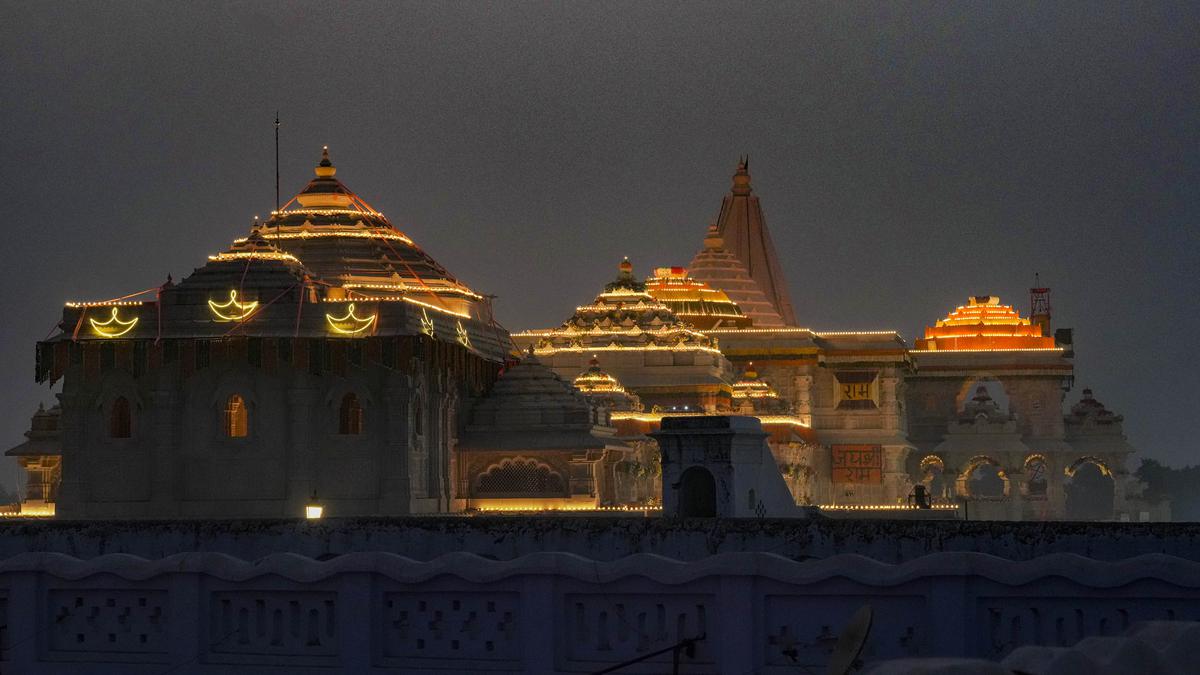
It is estimated that around ₹85,000 crore will be spent in infrastructure building in Ayodhya. Will religious cities be the new paradigm of urban development in India?
The cities and urban development in the last two centuries draw a rural to urban migration premise for sustaining industrialisation. Metros are colonial cities according to the current discourse and new cities such as Ayodhya, Kashi and Pushkar must be built. The colonial cities were meant for the transport of goods, taxation and then sending them by ship.
Cities also bring in elements of modernism, not just in architecture but also in the entire gamut of culture, literature, human behaviours and the like. There are anecdotes of how this modernist feature was embedded in the development model of the Indian city. Innovative design and modernist features brought in by Le Corbusier, and the influence of Habib Rahman, who was brought in by Jawaharlal Nehru to design some of the important buildings in the national capital, laid an emphasis on modern technology and mass production techniques and material to design and manufacture high quality and cheap goods that are accessible to many. Likewise, almost all modern towns were developed with spaces for theatre, culture, art, and recreation. This was primarily the driving feature in modern cities.
The building of new towns met several needs — from providing jobs and homes for refugees and absorbing excess population from the older urban areas, to generating economic development in the local region and serving as symbols of the new modern India that was emerging, though not completely ideal and commensurate to the needs, but quite inclusive in design and what was built.
In the current phase, a new sense of urbanisation is dominating. And the old understanding that cities are considered to be centres of enlightenment, workplace, and habitat is being challenged. Cities should not just be centres of workplaces but also centres of yatras, pilgrimage and so on. Thus, we find big corporates also landing in a small town such as Ayodhya and investing heavily in its infrastructure.
Thus, the new conundrum in India is for a new form of urbanisation; a new revivalism of the faith where the cities and towns and where the system should be aligned to the religion of the majority, and not separate from it.


Erode (East) voters prioritize pollution control, traffic solutions, and urban infrastructure as key issues ahead of upcoming elections.

G. Sudhakaran, former CPI(M) minister, files as "people's independent" in Ambalapuzha, challenging the LDF and sparking electoral tensions.

CPI(M) meeting in Chennai to decide on seat-sharing with DMK amid disputes over seat allocation for the Tamil Nadu Assembly election.

Probe launched into trainee vet's death after hippo attack, raising safety concerns at Shivamogga zoo.

Explore Chennai’s thriving late-night biriyani culture, from Adambakkam to Puliyanthope, and from Pudupet to Triplicane, to where midnight food hubs serve fresh, aromatic biriyani to night owls across the city.

Two more bodies recovered from Godavari River after five youths drowned during a bathing incident in Eluru district.

A suspected kidnapping attempt on Himachal CM's aide's son was reported near Mashobra, prompting a police investigation.

Sobha Surendran refutes V.D. Satheesan's claims of a BJP-CPI(M) deal, attributing them to fear of electoral defeat.

V.D. Satheesan praises G. Sudhakaran as a just administrator, highlighting respect amid political differences in Kerala Assembly polls.

Kerala court sentences G. Sandeep to life imprisonment for the murder of Dr. Vandana Das, with appeals for a death penalty pending.

Erode (East) voters prioritize pollution control, traffic solutions, and urban infrastructure as key issues ahead of upcoming elections.

Civil supplies department seizes 55 illegal LPG cylinders, booking 19 individuals to prevent domestic supply shortages in Vizianagaram.

Hyderabad police bust illegal samosa unit, seizing 500 stale eggs and used cooking oil, risking public health.