A maximalist tour: 4 design spaces Premium
The Hindu
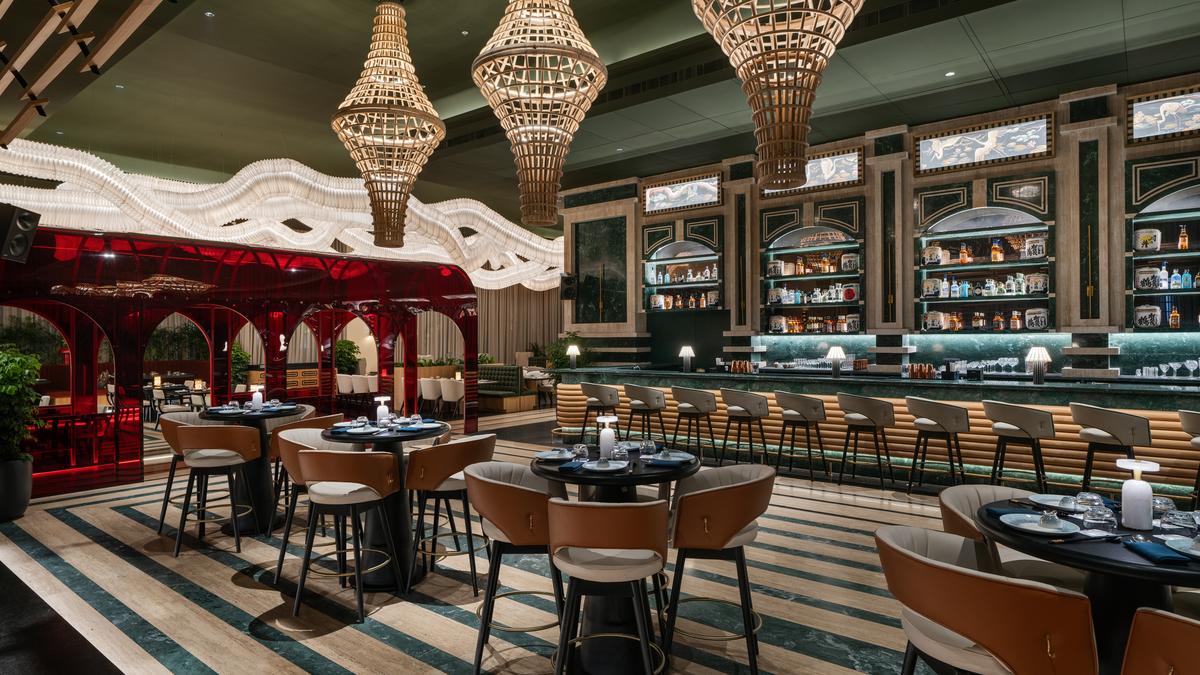
Maximalism in design trends for 2025, seen in vibrant colors, bold patterns, statement furniture, and dramatic lighting.
Maximalism, whether in the form of bright colours, pattern drenching, statement furniture, or dramatic lighting, is a design trend going strong in 2025. Notably, there is a significant shift towards maximalism not just in residential interiors but also in commercial spaces such as offices, cafés, restaurants and boutique stores. “Today’s commercial environments are no longer confined to sterile or muted aesthetics. They are becoming more expressive, layered, and bold,” says Pooja Gupta, founder and principal designer of I Design Studios. “Businesses are recognising the power of design in storytelling and customer engagement. Maximalism offers the perfect canvas to do just that. Through a rich mix of colours, eclectic patterns, and tactile textures, we help brands create immersive spaces that reflect their identity, evoke emotion, and leave a lasting impression on every visitor,” she adds.
This trend reflects a broader shift in how spaces are being viewed and utilised.
“Purely functional spaces such as workplaces, restaurants, and retail stores are also becoming expressions of culture, identity, and mood. In addition to being aesthetically pleasing, these spaces help promote increased brand recall and facilitate a positive and inspiring experience for those who work in these settings,” says Harkaran Singh Boparai, founder and principal architect of Harkaran Boparai Studio (HBS), an international design firm that is located in New Delhi, Amritsar and Dubai.
Commercial interiors today are a careful orchestration of unconventional colour palettes, art installations, bold wallpaper, curated objects, and vintage finds. “You will find jewel tones paired with natural wood, vintage textiles juxtaposed with contemporary art, and lighting that ranges from ornate chandeliers to sculptural wall sconces. Another common element is the use of feature walls, often with patterned wallpapers or textured surfaces,” Boparai continues.
However, the key lies in balancing this visual richness with functionality, while enhancing productivity and supporting comfort. This is often achieved through clear zoning, thoughtful spatial planning, versatile furniture, and the use of materials that are not only aesthetic but also easy to use and maintain. “Practical materials with luxurious finishes are often used, and ample storage and smart layouts help maintain flow and usability,” adds Gupta.
Harkaran Boparai Studio (HBS) flagship office in New Delhi
The HBS flagship office in New Delhi draws inspiration from the layered vitality of old Delhi’s chowks (traditional squares). Spread across three levels and over 4,500 sq. ft., the office embraces a narrative-driven approach to spatial design.


BTS’s comeback with ‘Arirang’ marks a major global music event. When does the album release, and where can you watch their concert live stream? We have all the details

The 2026 U.S. cholesterol guidelines urge starting screening and treatment at 30 to prevent cardiovascular disease effectively.

Olam Festival 2026 in Thiruvananthapuram returns March 27-29 with 120+ vendors, music, art, and cultural zones.

A few storytellers in Thiruvananthapuram share their journeys, challenges, and evolving methods on World Storytelling Day, inspiring young minds.

76-year-old Kurian Jacob from Kerala triumphs with seven medals, including five golds, at the Open Masters Games in Abu Dhabi.

Explore the nature of the human mind as an emergent property of brain activity and complex neural interactions.

CERN's Large Hadron Collider discovers the Xi-cc-plus particle, enhancing understanding of quantum mechanics and baryon behavior.

Vibha Batra’s latest book, Spotless (Hachette India) is a novel in verse for young adults

In its first edition, the Madras Art Salon spotlights the works of journalist and artist Narayan Lakshman at The Botanical Club, a social space in the British Deputy High Commission, Chennai

Cholesterol enhances melanoma cell invasion by making nuclei squishier, revealing a potential treatment target in cancer progression.

The designers reinterpret the Swedish artist’s symbolic forms and colour energy through contemporary resortwear silhouettes

Discover the inspiring legacy of Bibha Chowdhuri, a pioneering woman in physics and a trailblazer in STEM history.

Discover the inspiring legacy of Bibha Chowdhuri, a pioneering woman in physics and a trailblazer in STEM history.