A home production
The Hindu
What awaits gated communities that assume the responsibilities of facility management? There is the possibility of workers becoming trusted lieutenants
A facilities management agency is a cake ordered off the shelf. An in-house facilities management team is a cake baked at home— often by greenhorns, certainly the case in the beginning. The latter obviously calls for a greater outlay of energy and time. But the icing on this cake is thicker, double-layered. Layer one: owners at a gated community that opts for this bold arrangement, actually begin to “own” the space, every jot of it. Layer two: the facilities management team they put together, handpicking workers and assigning them to roles, can be won over in ways that a team sent in by an outside agency with a human resources roster, cannot be. The workers are likely to be in for the long haul. And as time rolls on, the possibility of workers rising to the status of trusted lieutenants increases.
One finds this possibility illustrated with arresting images by the flood experience of The Central Park South (TCPS) in Sholinganallur in 2015. The workers pitched tent at the gated community. If it were dry harbour they were looking for, these workers could have found it elsewhere. They stayed at the community — occupying vacant flats — in the days after the floods to ease the challenges it faced. Remember, there were places on earth dryer than TCPS: at this community, vehicles were marooned, some gulping rainwater all the way into their engines.
The fact that even now workers are offered places downstairs where they can stay and cook, and an AC room for a dash of comfort, proves offering shelter to them during floods is not a calculated, self-serving move.
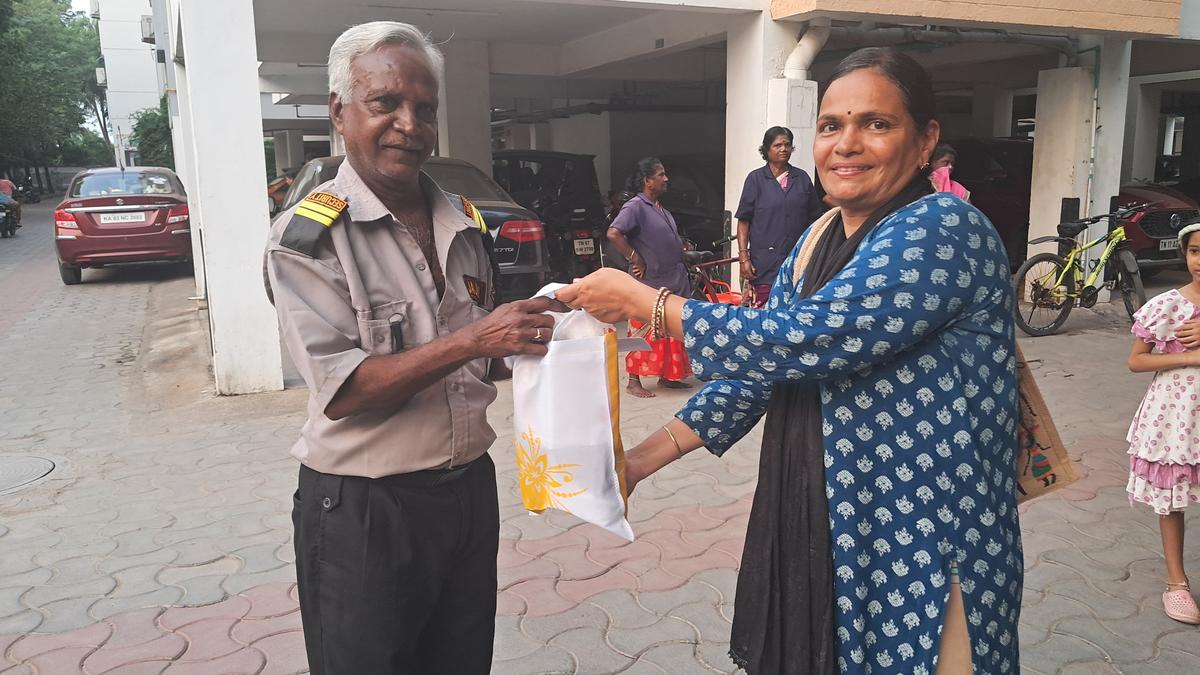
“They are not servants. They are helpers,” says Rakesh Ohri, president of the TCPS Owners’ Association, his conviction crystallised by the memory of many difficulties surmounted, and achievements scaled, all because these workers went the extra yard. Rakesh notes that when the managing committee is running the show, dignity of the workers can be safeguarded more easily. Residents are instructed not to scold workers; complaints are handled by the managing committee to maintain respect. He is of the view that a facilities management agency would not give this instruction to residents with the same emphasis.
A yard for a yard -- that is how it works. Loyalty is earned and goodwill returned. Rakesh notes that one sign of a happy workplace and even loyalty is that on an average, a worker stays on the team for 10 to 11 years.
If a worker hits a rough patch, the Association extends a financial lifeline — advances with a flexible repayment plan stretching up to a year. “Some repay earlier, some take the full period. And if they genuinely can’t pay for one month, we grant an extension,” explains Rakesh. Health insurance is another non-negotiable thread in this safety net. A group policy covers all workers. What is done for these workers in their darkest hour, returns as burnished loyalty.
“One of our plumbers lost his 25-year-old son recently to leukaemia” — the association had banded together to help the family with medical and other expenses.


Residents of Chettichavadi express concerns over deteriorating groundwater quality due to long-standing garbage dumping issues in Salem West.

Community Health Officers in Vijayawada protest for reduced workload and continued incentives amid growing dissatisfaction over salary changes.

Telangana faces 13,929 healthcare vacancies, primarily in doctors and nurses, as recruitment efforts aim to address the shortage.

For most patients with TB who are severely underweight, nutritional support is an essential and not optional part of treatment

Family of custodial death victims demands harsh punishment for nine convicted policemen to prevent future abuses of power.

Rajinikanth refutes TVK leader's claims about DMK threats preventing his political entry, expressing gratitude to supportive political figures.

CM announces Cabinet Sub-Committee on Musi rejuvenation; rehabilitation for all displaced

Ramanathapuram identifies 145 polling stations as sensitive, ensuring security with paramilitary forces ahead of assembly elections, says DEO.

BJP Puducherry president V. P Ramalingam files nomination for Raj Bhavan, joined by Union Minister Mandaviya and Khushbu Sundar.

History-sheeter 'Thoppai' Ganesh shot dead by police in Chennai after attacking officers during attempted escape.

The government plans to amend the FCRA, introducing new regulations for NGO asset management and accountability for key functionaries.

The draft policy for “Responsible Digital Use Among Students”, released on Monday by the Department of Health and Family Welfare, has recommended that parents set structured routines with clear screen-time rules and prioritise privacy, safety, and open conversation with children on digital well-being.

Police Observer Sushant Kumar Saxena conducts surprise inspection at Shencottai police station, reviewing warrants and security arrangements ahead of elections.