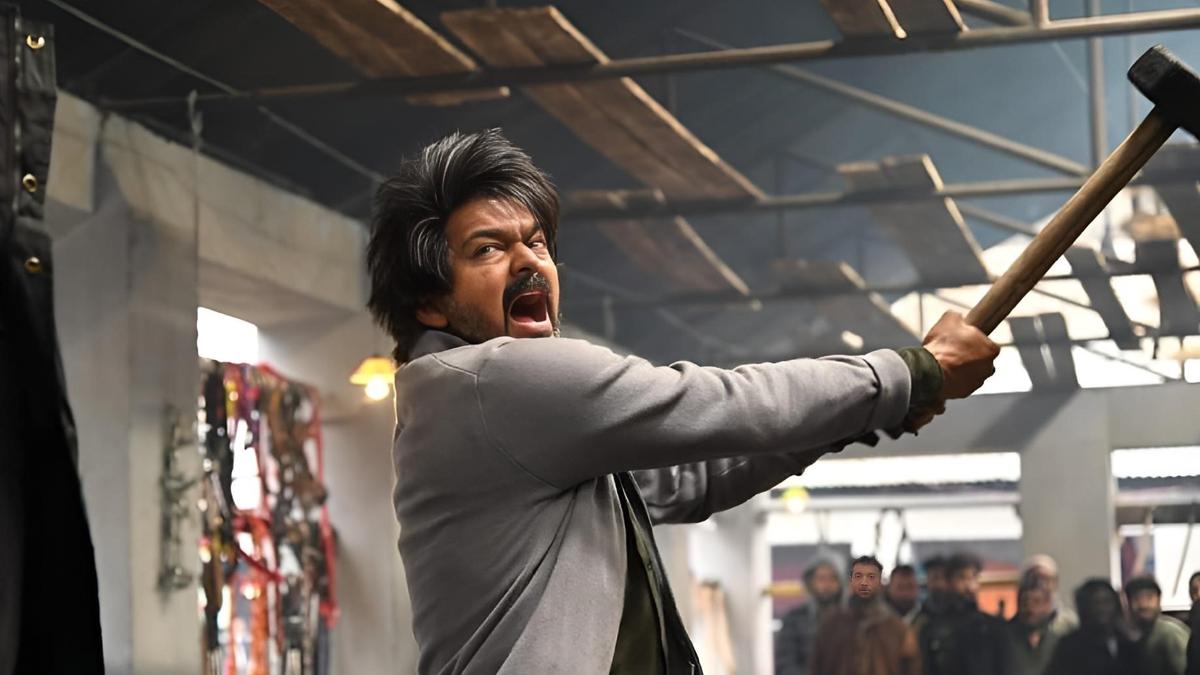
A history of violence: In defence of ‘Leo’ and Lokesh Kanagaraj’s penchant for the action genre
The Hindu
Ahead of the release of Lokesh Kanagaraj and Vijay’s ‘Leo’, there have been clarion calls on Tamil movies getting overtly violent, but don’t filmmakers and viewers need to share responsibility alike?
A bullied and disgruntled teenage boy watching Bruce Lee movies to learn some moves, could end up learning more about Lee’s appeal to peace and oneness, and fall in love with martial arts movies. Or, he might turn a blind eye to all that and stray onto a violent path. Or, he might yet realise that movies are just “24 lies per second at the service of truth.” Now, should Bruce Lee be held responsible for the kid’s newfound love of violence?
Thanks to recent films like Vikram, Jailer, Viduthalai, Saani Kaayidham and so on — and particularly due to the trailer of Leo, Lokesh Kanagaraj’s upcoming film with Vijay — there have been clarion calls on Tamil movies becoming more and more violent. Much of these concerns operate under the fair belief that cinema can influence people, and that such on-screen violence could result in a surge of criminal activities.
This is an unfair burden that several creators — from Quentin Tarantino to Anurag Kashyap to Park Chan-Wook — have been forced to deal with over the years; but there is a lot that has been overlooked also.
Whether movies can influence people is an inconclusive scrutiny with one too many factors to consider before turning to creators.
It’s reasonable to believe that movies can merely add up to the qualities we inherently possess or acquire as socio-political beings. An idea remains dormant unless we agree and choose to act upon it consciously. If a viewer turns a blind eye to Lokesh’s call for a drug-free society or the perils of a life in crime, and instead chooses to try out how pliers can tear through the heels of a man (in Vikram), what does it say about the said viewer?
Further, such an entertainment medium only reflects on the state of crime in society. If this is to be derived as an external incitement that can bring out the worst in people, is it fair to accuse only cinema — of all the many things that make up life — just because it reflects reality?
Not all kinds of on-screen violence get scrutinised under the same scale. What seems to be the concern is how explicit and disturbing the violence is; you wouldn’t flinch at the sight of Godzilla running across cityscapes, and action heroes normalised guns ages ago. An explicitly gory shot can make you even laugh if intended. Indeed, Tarantino, a name synonymous with this subject, always termed filming violence, “a lot of fun,” and his works are testament to that. In Kill Bill: Volume 2, when you’re just anticipating a sword fight between two women inside a trailer home, Uma Thurman’s blood-thirsty hero uses a brutal but hilarious tactic to win against her one-eyed nemesis and it works like magic. Even comic-book titles like Deadpool, The Boys and the animated series Invincible enjoy subverting their tropes with violence.


In ‘Jack Ryan: Ghost War’, John Krasinski is back as the savvy CIA analyst, diving headfirst into a high-stakes mission that unravels a deadly conspiracy and pits him against a rogue black-ops unit

Shriram Bharatiya Kala Kendra’s Shankarlal festival showcased rare ragas, radiant artistry, and inclusive performances, from Pt Madhup Mudgal’s serene morning ragas to Ramana Balachandran’s Saraswati veena.

Explore "Threads that Bind: The Kantha Project," an exhibition in Delhi reimagining kantha as a medium of repair and renewal.

Sean Penn skips the Oscars to meet Ukraine's Zelenskyy, who praises him as a "true friend" amid the war.

The teaser of Tamil star Suriya’s much-awaited film with director Venky Atluri, titled Vishwanath and Sons, was unveiled by the makers on Monday

A 'Golden' moment for a K-pop track at the Oscars.

Parvathi Nayar’s new exhibition, The Primordial, in Mumbai, traces oceans, pepper and climate change
Opened on March 12, the exhibition marks the artist’s first solo show in Mumbai in nearly two decades. Known for her intricate graphite drawings and multidisciplinary practice spanning installation, photography, video, and climate change, her artistic journey has long engaged with the themes of ecology, climate change and the natural world. In this ongoing exhibition, these strands converge through a series of works centred on water, salt, and pepper — materials that carry natural and historic weight across centuries.

Explore the highlights and key winners of the 98th Academy Awards, featuring memorable moments and historic achievements from Oscars 2026.

Spring season celebrated at Ramakrishna Mission Institute, Kolkata, with ‘Evening of Basant’

The Spirit of the Land, a solo show by artist Shivakumar Sunagar, is a vista of Nature-inspired emotions

Tal Fry is all set for an exciting new performance season

Netflix is making a bold move by snagging InterPositive, the AI filmmaking company founded by Ben Affleck, in a deal that could hit $600 million

Watch the eerie trailer for 'Hokum,' where Adam Scott faces a witch haunting in a mysterious Irish inn.