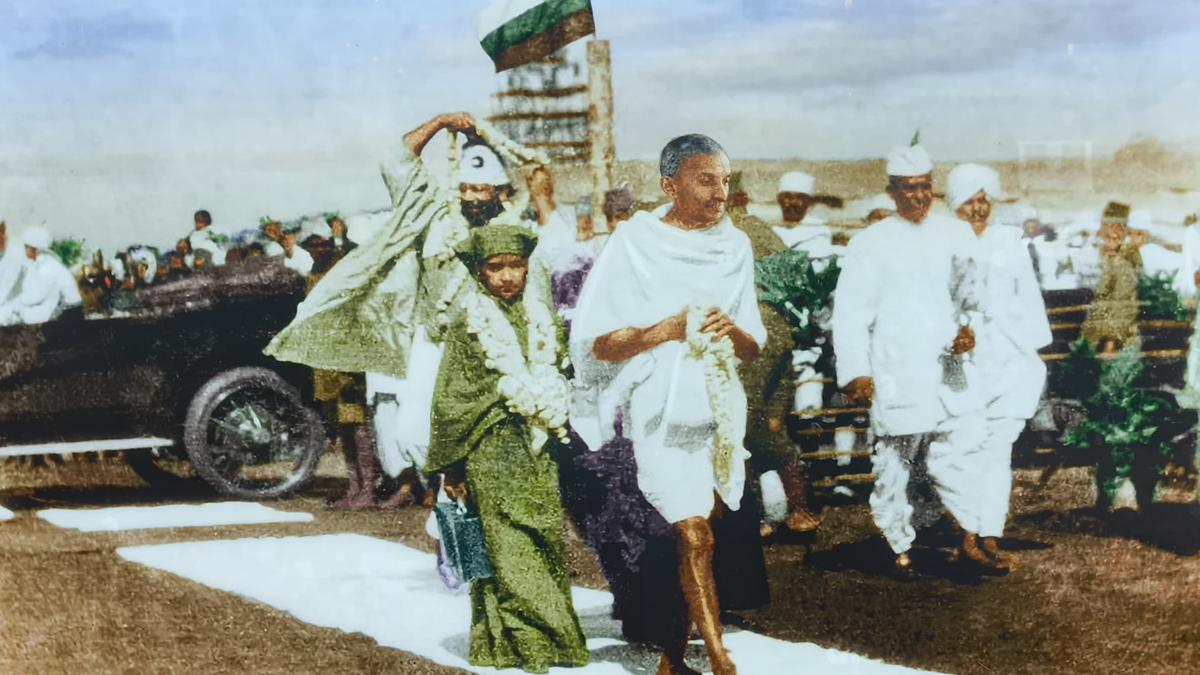
A flashback to Belgaum Congress session when Gandhiji refused to stay in ‘expensive’ hut Premium
The Hindu
The centenary celebrations of the Congress session in 1924, which was chaired by Mahatma Gandhi, at Belagavi (as Belgaum is now called), was inaugurated on December 26. The event concludes on December 27.
Months of hard work by several hundred workers and volunteers went into the successful organisation of the Belgaum Congress session in 1924, which was chaired by Mahatma Gandhi. The centenary celebrations of this event at Belagavi (as Belgaum is now called), was inaugurated on December 26. The event concludes on December 27.
Congress workers had back then created Vijaya Nagara, a new township on around 100 acres of land between the Military Camp and the Vaccine Depot Ground at Tilakwadi, for the plenary session.
Gangadhar Rao Deshpande, Congress leader and Khadi activist, was among Gandhiji’s close associates. Deshpande was the chairman of the reception committee for the 1924 session. A memorial hall in his name was inaugurated as part of the ongoing centenary celebrations.
Despande served as AICC general secretary along with other leaders like Jawaharlal Nehru and Saifuddin Kitchlew. At the 38th Congress session in Kakinada, Deshpande and his followers placed a demand for conducting the next session in Belagavi. They prevailed upon the senior leadership and outbid attempts by leaders from Mangaluru, Dharwad and Mysuru to hold the session in their cities.
He and his team worked for nearly 10 months to prepare for the two-day session. They dug out a huge well and named it ‘Pampa Sarovara’ to provide water for the delegates. This water body, now known as the Congress Well, continues to yield sweet water to this day.
However, tragedy struck during digging of the well. A nine-year-old boy, Babu Harapanahalli, fell into it accidentally and died. Some workers thought it was a bad omen. But Deshpande asked them to continue the work, saying there was no place for blind belief in such honest and good work.
Veteran Gandhians N.S. Hardikar and Kaka Karakhanis formed a team of volunteers that took up all kinds of work, including sanitation in the dry latrines. Gandhiji appreciated this with a special mention in the Young India later.


Explore the escalating Iran-Israel conflict, detailing key events and retaliatory actions over the first five days of war.

VCK will contest eight Assembly seats in Tamil Nadu's upcoming elections as part of the DMK-led alliance, aiming for victory.

Supreme Court reinstates FIR against IAS officer J. Manjunath, allowing bribery probe from 2022 involving Bengaluru Urban administration.

Telangana's screening reveals 26.9 lakh with hypertension and 14 lakh with diabetes, spotlighting a silent epidemic of non-communicable diseases.

KRG Studios appeals against leave granted to producer Kalaipuli Thanu for a suit regarding distribution rights of the film Max.

Supreme Court rejects petition for Q inclusion in census, citing concerns over social division and class creation.

Two RSS workers arrested for hurling a bomb at a policeman’s house in Kannur, Kerala; major tragedy averted.

Three youths radicalised by ISIS and AQIS arrested in Vijayawada for planning terror activities across India.

T.N. CM Stalin challenges PM Modi on government preparedness for West Asia crisis, emphasising leadership responsibility over public outsourcing.

Telangana DCA warns against unsupervised semaglutide use, stressing the importance of medical supervision and safe purchasing practices.

From origami classes at Rosary matriculation school to the two-day Makers Market in Mylapore, Chennai resident Priya Subramaniam has come a long way.

Election Commission bans exit poll results in Tamil Nadu from April 9 to April 29 ahead of Assembly elections.

Residents of Tambaram express concern over inadequate infrastructure amid rapid urban growth, highlighting traffic, drainage, and waste management issues.