A cowherd on call Premium
The Hindu
Nomadic shepherds are a common sight in the north Karnataka districts such as Belagavi, Bagalkot, Koppal, Dharwar and Haveri. They move with their flock for between three to nine months a year. Farmers are happy to host the shepherds and their flocks on their fields during the fallow period, as they have a symbiotic relationship. The sheep eat weeds and other vegetation, and leave behind manure that fertilises the soil. The shepherd gets paid, in what is a clear win-win situation.
Nomadic shepherds are a common sight in the north Karnataka districts such as Belagavi, Bagalkot, Koppal, Dharwar and Haveri. They move with their flock for between three to nine months a year. Farmers are happy to host the shepherds and their flocks on their fields during the fallow period, as they have a symbiotic relationship. The sheep eat weeds and other vegetation, and leave behind manure that fertilises the soil. The shepherd gets paid, in what is a clear win-win situation.
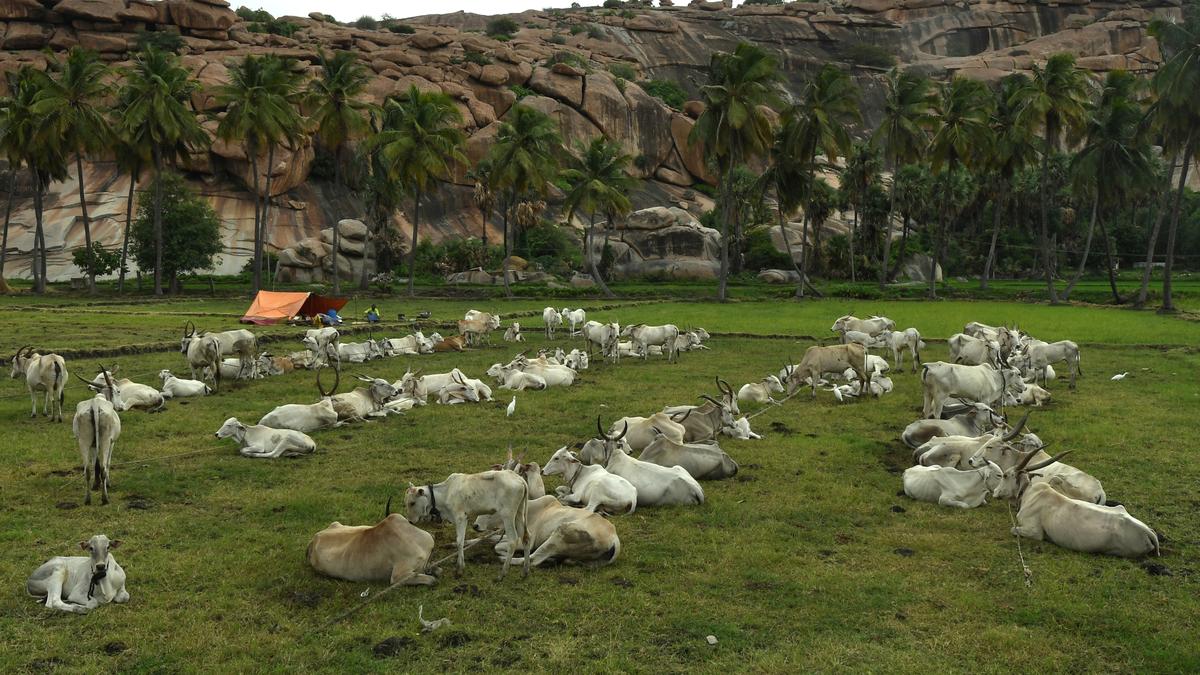
But 55-year-old Saranappa is seen in Anegundi Vijayanagara district with a big herd of cattle on a field. He has adopted the idea of nomadic shepards, but has replaced sheep with cows and created his own business model.
Saranappa, along with his son, collects cows from the people he knows in the village and takes them to different paddy fields around, and stays there for as long as the land owner wishes, charging ₹1,000 per day. The owner of the cow/cows will have to come in the evening to milk them if they want to, or else Saranappa offers to milk them himself and supply it to nearby milk cooperative societies, hotels or retail shops, giving a cut to the owner. When The Hindu caught up with him, Saranappa had more than 50 cows of different satisfied owners who trust him and are relieved of the problem of grazing them.
At a time when dairy farmers in Karnataka are finding it hard to sustain themselves amidst escalating input costs, despite the government giving subsidies, insurance, medical facilities etc., Saranappa’s innovation stands out. He says his success has inspired many people to take up this job.
Not that his job is easy. He lists out many professional hazards such as when cows give birth and owners expect him to take care of everything. He says even charging mobile phone is not easy, and he has to depend on some generous nearby house or shop owner. But there are pluses too. He says he likes to cook for himself and spend time watching news or a movie on his phone. Saranappa prefers to stay near a pond, so that bathing is no hassle.
Saranappa says with a laugh that people often pejoratively say “dana kaayi “ (“graze a cow”) to suggest that one is good for nothing, but his own case proves that there is room for innovation in the business of cow herding too.


Telangana's Rythu Bandhu budget allocation for FY 2026-27 is expected to decline, affecting agricultural support for farmers.

In Surendranagar, Gujarat, where only a handful of families continue to practise tangaliya weaving, we visit artisanal communities working with brands like Jaypore to revive the intricate craft for contemporary wardrobes

Madras High Court allows police to arrest YouTuber 'Savukku' Shankar if needed, dismissing claims of solitary confinement.

Lula leads Brazil's largest-ever business delegation to India, aiming for trade deals and global governance reforms amidst geopolitical challenges.

AIADMK reveals its first candidate list for Tamil Nadu Assembly election, featuring familiar names and few surprises.

A study reveals antibiotic resistance causes 87% of India's typhoid economic burden, significantly impacting children and families.

How Dikshitar was inspired by Vaduvur Rama to come up with a composition in a raganga raga

Lok Sabha passes Finance Bill 2026 with amendments, completing its budgetary approval before Rajya Sabha's consideration.

Karnataka government to consult legal experts on pursuing action against Adani Group's ACC Ltd. over ₹850 crore in disputed dues.

The FCRA amendment bill aims to create an authority for managing NGO assets after license loss, addressing misuse of foreign funds.

Telangana Minister assures adequate petroleum stocks for three months, warns against illegal fuel carrying amid panic buying rumors.

TMC calls for the removal of Bhabanipur returning officer, citing alleged ties to BJP and concerns over neutrality.

Kerala CM Pinarayi Vijayan condemns UDF's misogynistic attacks on CPI(M) legislator U. Prathibha, highlighting political degeneration.