A catch in A.P.’s aquaculture success story Premium
The Hindu
Aquaculture in Andhra Pradesh has led to contaminated groundwater, environmental destruction, and loss of livelihoods, highlighting the need for regulation and alternative livelihood options for farmers.
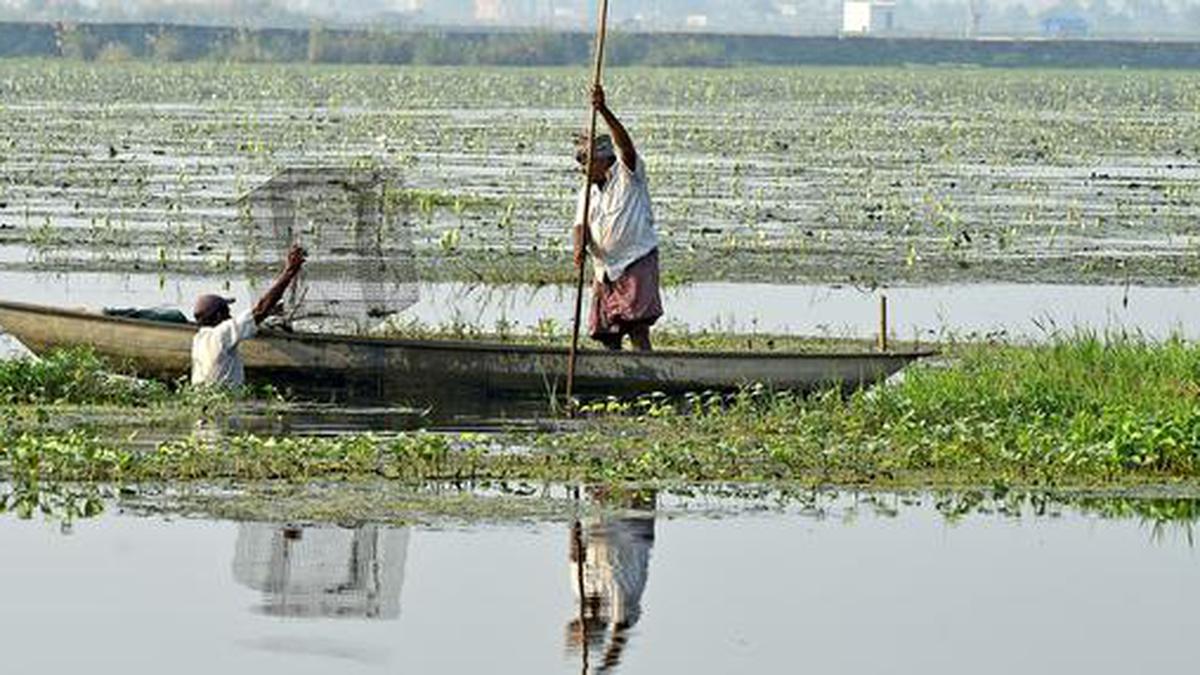
There is water everywhere, as far as the eye can see — in the fields, in the sea, in the canals and in the ponds. Yet, people here, at Antarvedi of Dr. B.R. Ambedkar Konaseema district, depend on tankers for drinking water. The region is lush with greenery, but here and there, the sight of dying coconut and palm trees, both inland and on the coast, is a warning sign. Conversations with people living in the composite districts of Krishna, East Godavari, West Godavari in Andhra Pradesh, reveal that the groundwater is contaminated with harmful chemicals, leading to skin allergies and loss of agricultural crops. The reason for this ill-health, of both land and locals, is high aquacultural activity.
The State, with a 974-kilometre coastline, the second longest in the country, had 2.12 lakh hectares of aquaculture area as of 2021, according to the National Fisheries Development Board website. Shrimp from here is exported to America and Europe. Andhra Pradesh produced 46.23 lakh metric tonnes (MT) of fish and shrimp in 2021, the highest in the country, and 6.40 lakh MT of the country’s overall shrimp production of 8.52 lakh MT in the same year.
Behind this data lies a story of destruction: of the environment, of health, and of livelihood.
“From the time it came into vogue in the 1980s, aquaculture has been a source of income for many farmers. A majority of farmers in coastal areas, where paddy is mostly grown, battered by frequent cyclones and low yield, turned to aquaculture for income and became successful. When others saw how quick success came to their neighbours, they also took it up,” says Y. Rajesh, State general secretary of Human Rights Forum (HRF), which has been raising awareness about the ill-effects of unauthorised aquaculture in the affected regions for more than five years now.
Aquaculture in coastal areas comes under the purview of the Coastal Aquaculture Authority Act, 2005. It must be taken up in designated aquaculture zones, and as per the rules, officials must ensure that agriculture, salt-pan areas, mangroves, wetlands, forest lands, and village lands are not used.
“But culturing of shrimp is done in non-aqua zones, without permissions. On paper they say it is a freshwater farm, but they do shrimp farming. There are several illegal ponds, converted from agricultural lands, where people mix fresh water with sea water,” Rajesh says.
Shrimp farming needs brackish water. Except near creeks, brackish water is not found in inland areas, says P. Ravi, who retired as a senior environmental engineer from the A.P. Pollution Control Board. In inland areas, the other way of accessing the salinity required for shrimp farming is to sink borewells 40-50 feet.


Telangana's revised pay scale implementation for employees will take timer. The tenure of Pay Revision Commission extended. Govt likely to take decision on reccomendation based on its report.

Vizianagaram's SP A.R. Damodar highlights 20 accident-prone areas and urges drivers to prioritize safety with helmets and seat belts.

Kerala HC stays disqualification of SNDP Yogam leaders, reversing a single judge's order regarding financial and regulatory compliance issues.

Karnataka announces daily supply of 10,000 LPG cylinders to hotels, easing the commercial shortage for the hospitality industry.

Malayalam superstar Mohanlal will be reuniting with filmmaker Priyadarshan, it was announced recently. It will mark the 100th film of Priyadarshan and is backed by Mohanlal’s longtime collaborator, Antony Perumbavoor

Gautham Vasudev Menon loses Madras High Court appeal, ordered to pay ₹4.25 crore to R.S. Infotainment with interest.

AIADMK faces its toughest challenge in 53 years as it prepares for the crucial 2026 T.N. Assembly elections.

Lakmé Fashion Week x FDCI 2026 in Mumbai: What worked and what didn’t

Telangana CM announces underpass beneath Begumpet Airport runway to alleviate traffic congestion in Hyderabad.

Congress leader Ramesh Chennithala claims an alliance between Pinarayi Vijayan, Modi, and Shah aims to undermine UDF in Kerala elections.

CCB arrests Bengaluru couple for running a fake government job scam, cheating over 100 victims out of crores.

The enduring legacy of Araiyar Sevai

Telangana integrates with the 'Vahan' platform and eliminates 2% tax on second vehicles, enhancing transport services and transparency.