A cancelled mission that succeeded
The Hindu
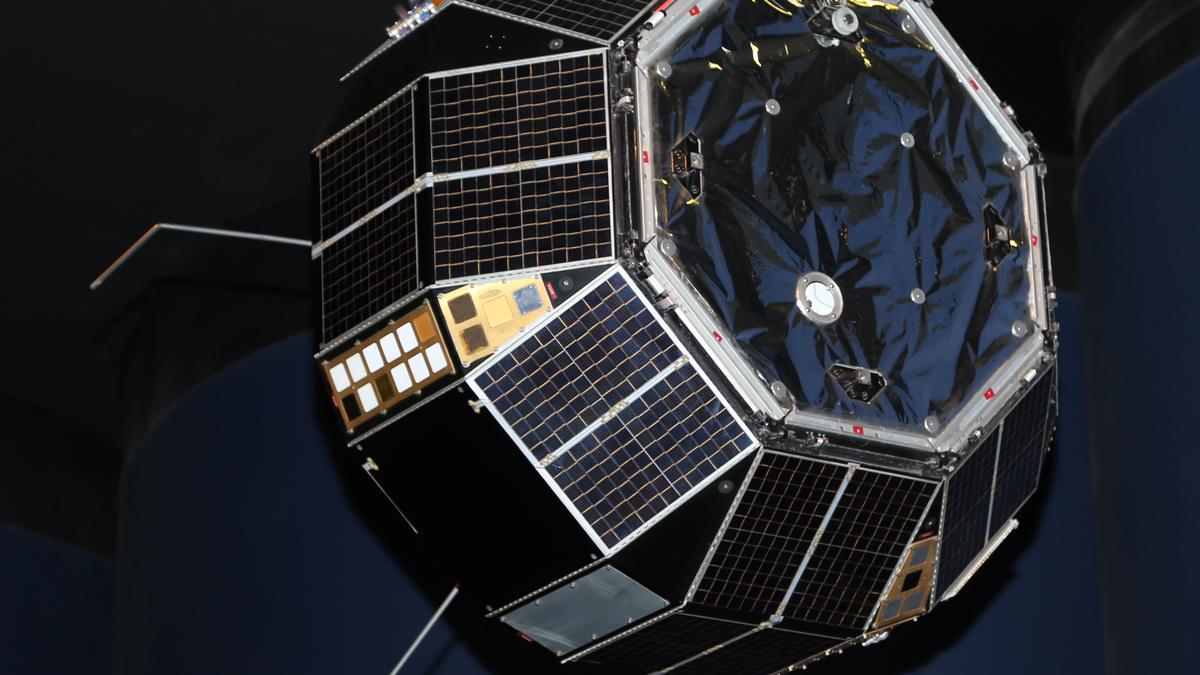
On October 28, 1971, Great Britain officially entered the space race, becoming the sixth country to place a satellite into orbit using their own launch vehicle. While the Prospero satellite had been successfully launched, the project responsible for it had been scrapped months earlier. A.S.Ganesh takes a look at a cancelled mission that still succeeded…
What were you doing when Chandrayaan-3 created history by landing near the south pole of the moon? This is one question that you might keep encountering throughout your lifetime. It is human nature to link, associate and talk about what we as individuals were doing when something historic pans out.
These things, however, are also a by-product of how we are made to feel about a particular event. For even when something historic takes place, it might not always create waves if there isn’t enough hype around it. The successful launch of the Prospero satellite is one such event.
The second half of the 20th Century was an exciting time in the space race. While the U.S. and the Soviet Union were at the forefront, the U.K. was only third to them in the field of rocket technology. Despite having a workable satellite launch programme and plans for human-based missions, it all came apart for Great Britain in a matter of years.
Britain became the sixth nation to place a satellite into orbit with a carrier rocket developed indigenously on October 28, 1971. Unlike the frenzy surrounding the success of Chandrayaan-3, there was little fanfare associated with it.
Even if we are to account for the half a century in between and the way in which news is disseminated with today’s technology and social media, what happened with Prospero would still be found wanting. While the American and Soviet space programmes of the time were being celebrated, Prospero’s successful launch was a low-key affair.
Regardless of how it was received, Prospero’s launch was a triumph. The scientists and engineers at the Royal Aircraft Establishment had been involved with the British space programme from late in the 1950s and all their skills had been invested on this satellite.
The Black Arrow rocket programme was a continuation of the U.K.’s missile defence programme. The first attempt to launch a satellite (X-2) was a failure in September 1970 as the second stage of the rocket failed to pressurise.


BTS’s comeback with ‘Arirang’ marks a major global music event. When does the album release, and where can you watch their concert live stream? We have all the details

The 2026 U.S. cholesterol guidelines urge starting screening and treatment at 30 to prevent cardiovascular disease effectively.

Olam Festival 2026 in Thiruvananthapuram returns March 27-29 with 120+ vendors, music, art, and cultural zones.

A few storytellers in Thiruvananthapuram share their journeys, challenges, and evolving methods on World Storytelling Day, inspiring young minds.

76-year-old Kurian Jacob from Kerala triumphs with seven medals, including five golds, at the Open Masters Games in Abu Dhabi.

Explore the nature of the human mind as an emergent property of brain activity and complex neural interactions.

CERN's Large Hadron Collider discovers the Xi-cc-plus particle, enhancing understanding of quantum mechanics and baryon behavior.

Vibha Batra’s latest book, Spotless (Hachette India) is a novel in verse for young adults

In its first edition, the Madras Art Salon spotlights the works of journalist and artist Narayan Lakshman at The Botanical Club, a social space in the British Deputy High Commission, Chennai

Cholesterol enhances melanoma cell invasion by making nuclei squishier, revealing a potential treatment target in cancer progression.

The designers reinterpret the Swedish artist’s symbolic forms and colour energy through contemporary resortwear silhouettes

Discover the inspiring legacy of Bibha Chowdhuri, a pioneering woman in physics and a trailblazer in STEM history.

Discover the inspiring legacy of Bibha Chowdhuri, a pioneering woman in physics and a trailblazer in STEM history.